0

Being a digital content professional is way more than just being good with words. If you’re working with one, they’re not just bringing you strong writing. They’re also bringing copywriting psychology into the mix.

At Tower, our team focuses on content marketing to create pieces that support your customer’s journey. But we also step into the role of copywriting, which requires a robust set of skills that often go unnoticed when executed correctly.

Below, we’ll look at what copywriting really means. Plus, I’ll break down seven psychological principles our team has found key in helping our clients create persuasive copywriting that accomplishes their marketing goals.

Copywriting vs. Content Marketing

Simply put, the difference between the two comes down to their objectives.

Content marketing is about your strategy. What does your target audience need and what format do they want to consume it in? It’s about informing and helping your audience through different touchpoints.

Copywriting is where writing psychology comes into play. What tactics can be used in the final piece to persuade and inspire the next step? It’s about getting someone to take action.

While some argue that these are separate practices that sometimes require separate people to execute, I’d make a case that a skilled content professional should be able to switch between both. 

For example, a blog should be developed strategically and shared in an appealing way to inform. (That’s the content marketing component.) But it’s also not a successful piece for your business if there’s no clear and compelling next step. (That’s the copywriting component.)

7 Copywriting Psychology Tactics & Examples

While there are plenty of discoveries we’re still making about ourselves, there are also some foundational psychological triggers we’ve established that work well in marketing. Below we’ll look at the top 7 psychological principles you should keep in mind to help make your copywriting more effective.

1. Social Proof (Informational Social Influence)

As humans, we are easily influenced by what others do. We also have the desire to make the right choice when we’re experiencing something unknown. Social proof is a psychological occurrence where a person looks to other people and follows their actions when facing an unfamiliar situation.

How Social Proof Originated

This term was penned in the ’80s by Robert Cialdini, an American psychologist,  who wrote the book Influence. This book looked at six key ways humans can be persuaded, and the idea of social proof was one of those tactics. 

He was inspired by lots of research examples, including a study that Stanley Milgram, Leonard Bickman, and Lawrence Berkowitz conducted in the ‘60s. 

To explain it simply, they had a single person staring up at the sky and most passersby ignored him. But when they had five people staring, more people stopped and looked up. And when they had 15 people looking up, you can imagine what happened — even more folks joined in than previously.

Ways It Plays Out In Marketing

You can leverage this in your copy in a few different ways. Some marketing social proof examples in action include: 

  • Including influencers & endorsements.
  • Incorporating customer reviews/testimonials.
  • Featuring certifications from trusted organizations in your content.
An example of a facebook post where a company is sharing a customer review as social proof of its service.
An organic Facebook post showing a social proof example in copy.

2. Marketing Scarcity Principle

One way to summarize this is the idea of “FOMO” a.k.a. “fear of missing out.” We naturally want what we don’t have, and when we feel like something is limited, we elevate its value.

One warning to go along with using this tactic is to make sure you use it wisely and tactfully. Be sure that you’re not being dishonest with it, as that’s something your target audience can (and likely will) pick up on. If people sense or feel that you’re trying to manipulate them, it’ll hurt your brand equity.

How Marketing Scarcity Principle Originated

The origins of the marketing scarcity principle are a bit more nebulous. Some attribute it again to Cialdini, however, the principle of scarcity has been a long-standing theory in economics since Lionel Robbins introduced and defined it

It’s safer to say that Cialdini saw how that economic principle could tie in with a psychological application. 

Ways It Plays Out In Marketing

Some ways you’ve likely encountered this principle in copy include:

  • Limited-time offers.
  • Limited stock indicators/messaging.
  • Low-stock banners or markers.
  • Countdown timers or flash sale banners.
An example of a social advertisment using marketing scarcity in its call to action.
An example of how to use marketing scarcity principle in ad copywriting.

3. Endowment Effect & Loss Aversion

The endowment effect is the idea that we tend to overestimate the value of something we own compared to how we would value it if we didn’t own it. And around it, the ideas of loss aversion and ownership tend to feed into this psychological tendency.

As humans, we tend to prefer avoiding loss and are much more in favor of gaining something. Some studies have pointed out that we lean toward avoiding loss even in scenarios where what we gain is of equal value. (And we’re not losing value in terms of the tradeoff.)

The main takeaway from this — interjecting the endowment effect and loss aversion is a great way to motivate someone to respond to your marketing with action. 

How Endowment Effect  Originated

Similar to the scarcity principle, the endowment effect principle, in conjunction with loss aversion, stemmed from the study of behavioral economics and eventually was adopted in psychological studies. And while it’s been in play as long as humans have been around, it became popularized by a study performed by Daniel Kahneman, Jack Knetsch, and Richard Thaler.

Ways It Plays Out In Marketing

This tactic can hold weight in how you approach copywriting. To leverage it:

  • Use “negative” framing and help your audience consider what they lose from not taking action. (As opposed to the “positive” of what they gain.)
  • Give your audience ownership in what they’re getting, either through customization or the steps they take to acquire what you’re offering.
  • Consider specific phrasing like “don’t miss” or “free” to trigger your audience.
A Facebook ad uses copy that shows the endowment effect in use.
A Facebook ad example showing the endowment effect in use.

4. Storytelling

In this age where binge-watching is a pastime we’ve all likely enjoyed, it’s no secret that people like stories. But the reason is much deeper than just their entertainment value. Stories are a framework that helps us connect and relate to other people or concepts, especially when we’re encountering something new.

An interesting NPR article on storytelling summarizes the science to show that the act of listening or reading a story involves a lot more of our brain than processing straight data or statistics. (It elicits the process of mirroring, putting us in sync with the storyteller.)  Even reading a story increases brain activity in the areas we use for deciphering and imagining. 

Plus, stories are more memorable and we’re more likely to repeat them. This means they can better reinforce a new idea and even change our perspectives and attitudes.

How Storytelling Originated

Stories are as old as we are, but one of the first recorded stories that are recognized by historians is The Epic of Gilgamesh and Homer’s The Iliad. Over time inventions like written languages, the printing press, motion pictures, and the internet have diversified how we tell stories and also made them easier to share.

Ways It Plays Out In Marketing

There’s absolutely a time and a place for listing out benefits. But if you can weave them into a story, there’s a chance it will help your marketing message stick better and persuade. Whether you’re working on B2B or B2C copy try:

  • Telling stories and weaving narratives in landing page copy.
  • Using video anecdotes.
  • Encouraging user-submitted stories on social media.
  • Using customer testimonials to tell a story.

Pro tip: to make your story even stronger try having it follow a clear arch or using the Zeigarnik Effect.

5. Autonomy Bias

At the heart of our actions, humans have a natural desire to want to be in charge of making our own choices freely. We like having a sense of power and control over our future. So this bias can look like us exercising our will over how, why, where, or what we do.

When you can pivot your copywriting to speak to this and even give your audience a sense of control in how they interact with it, the better.

How Autonomy Bias Originated

While it’s a principle as old as time, this term itself became popularized in psychology when Richard Ryan and Edward Deci developed the self-determination theory of motivation. Their work in psychology showed that reinforcing actions with rewards wasn’t the only way to motivate people. Their research was highly esteemed as a big development in psychology at the time as it brought these new and different theories to the table.

Ways It Plays Out In Marketing

In looking at how to use this tactic in copywriting, here are some suggestions to start:

  • Speak directly to your audience and frame the message of them being in control.
  • Use self-guided interactive elements.
  • Create a self-stepped form.
A custom door design gallery lets you select drawings in line with your vision to submit and get quotes on.
A site landing page leans into autonomy bias, putting users in control of picking and choosing the designs they want.

6. Information Gap Theory

Simply explained, the information gap theory is the idea that if someone is uncertain they will put in work between what they know and what they need to learn to make a decision. Gathering relevant information is a tactic people use and rely on when they don’t have the experience to go off of.

How information Gap Theory Originated

This principle itself seems to have first shown up in the scientific community during the ‘60s, but it peaked in popularity in the ‘90s. Perhaps that spike can be attributed to George Loewenstein of Carnegie Mellon since he popularized the term itself in the studies he presented in the mid-‘90s

Ways It Plays Out In Marketing

A few ways to leverage this natural tendency for curiosity include:

  • Using provoking questions in headlines and placing the answer in the body content that follows.
  • Incorporate it in the meta descriptions for landing pages leading to your site from search.
  • Craft it into your email subject lines and preheader text.
An email subject line says "Do-nut miss out" and uses an emoji to incite your curiosity of what the long john limited train ride event entails.
An email subject line uses information gap theory to persuade users to click and learn more.

7. Temporal Landmarks & Temporal Discounting

To put it simply, temporal landmarks are frameworks we mark time between our old self and future self. These are moments that stand out to us in time such as the start of the week, a new day, the new year, birthdays, and anniversaries, to name a few examples.

We use these to inspire ourselves to plan and begin taking specific steps, such as goal setting in the new year or starting a new diet at the start of the week. We’re more likely to do these things in certain times we associate as a meaningful break between the past and future, than choosing a random day to start.

On the flip side, temporal discounting gets at the idea that we’d rather have the gratification of something now instead of waiting, even if waiting ends with us getting slightly more. For example, taking a $100 check today instead of waiting six months for a $150 check. This all shows our relationship with time can be quite complicated.

How Temporal Landmark Theory Originated

Inspired by the work of psychologist Theodule Ribot, Nucgaek Shum wrote a popular paper in the late ‘80s on “The Role of Temporal Landmarks in Autobiographical Memory Processes.” As for where temporal discounting comes into play, it’s not clear exactly who first coined the term, but it initially came out of behavioral economic studies.

Ways It Plays Out In Marketing

A few ways you can find inspiration to use temporal landmarks and discounting in your marketing include:

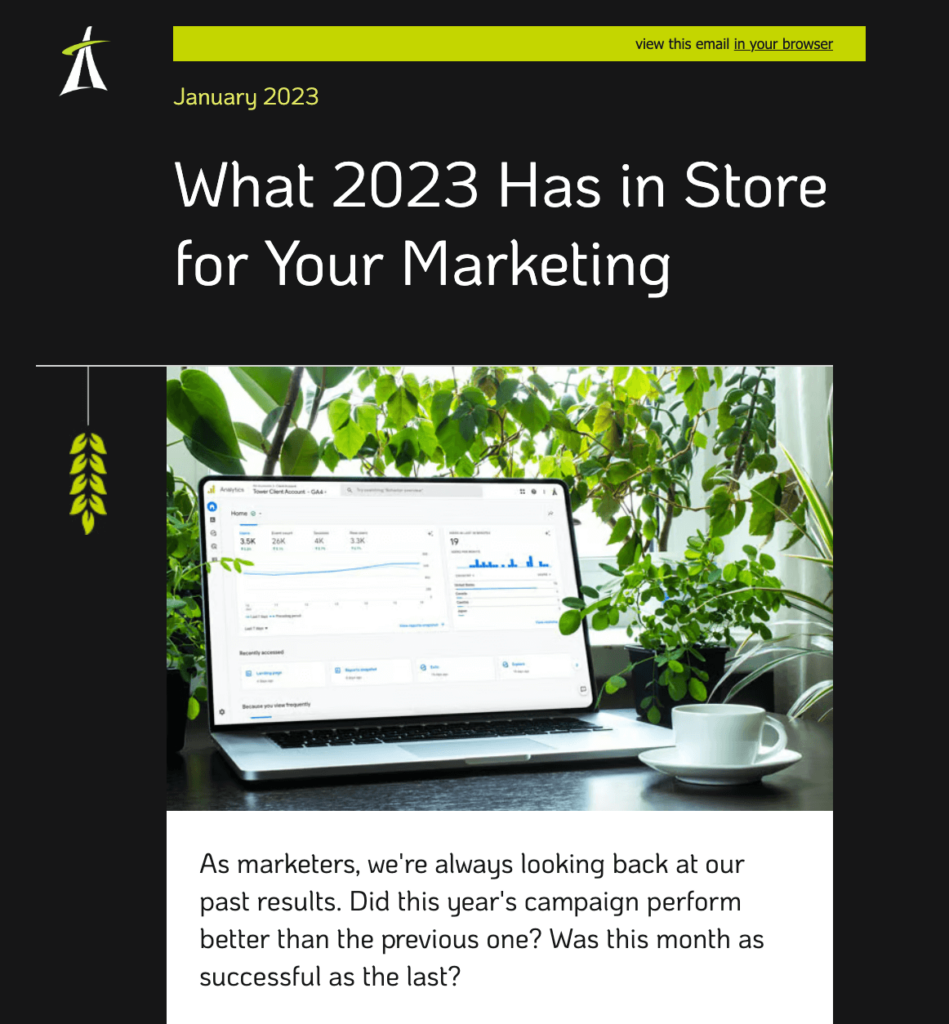
An email sent in January uses temporal landmarking of the new year to convey a timely message on 2023 marketing.
An email sent in January relies on the temporal landmark theory to tie its messaging into new year planning.

Need more help crafting the right messaging? Get support from an experienced content marketing team who can help you frame your message with the right copywriting psychology tactics.

Most people were unfamiliar with podcasts before 2005. But we don’t live in that world anymore. With over 383 million podcast listeners globally, it feels like everyone — from actors and comedians to talk show hosts and presidents — has a podcast of their own. While all this signal noise can make you feel like you’re too late to catch the podcasting wave, the data says differently.

In fact, that 383 million is expected to turn into 424 million in the coming year (with projections of continued annual growth). That’s why we’ve created a guide to starting a B2B podcast. We’ll help you understand what you need to get started, how to reach an audience, and how to track your results as you record, distribute, and record some more. Let’s get started.

B2B Podcasting — What Is It?

Before we dive into this guide to starting a B2B podcast, we first need to define the term. A B2B podcast is a podcast created and produced by a B2B (business to business) company. More often than not, it’s started with the intention of boosting brand awareness and building industry authority. It’s also a way to reach potential customers.

Different types of B2B podcasts will focus on different themes and subjects, and use different formats (audio or audio and video). The exact how and what of your podcast will depend on various factors we’ll cover below, including your vision, audience, and goals. However, at the heart of it, a B2B podcast is created with the intention of marketing your company by providing value to your target audience.

Is B2B Podcasting Worth It?

About 40% of all Americans listen to podcasts, a number that’s still on the rise. The audience is certainly there, so if you’re wondering if your podcast will disappear into the ether once you publish your first episode, it won’t (getting listeners is a different story, which we’ll cover below).

The most obvious reason to consider B2B podcasting is that it’s another weapon in the arsenal to help you get your business’s name, product, or service out there. It can help you attract new visitors, customers, and buyers. It can also serve as an excellent addition to your sales process. Additionally, podcasting can also help you network with other leaders in your industry.

Choosing a Team

Before you start thinking about equipment and distribution platforms, you need to think about building a strong team. Remember, your podcast host(s) make up the voice — and possibly, face — of your show. Decide whether you want to do a solo show or more of a roundtable discussion. 

There’s no right or wrong decision here, necessarily. However, unless someone on your team has enough of a personality to handle a whole podcast episode themselves, it may be better to start out with a few team members to keep the conversation alive.

If you’re leaning towards a group show, we recommend having no more than 3-4 people on at once. Too many voices on the show can make an episode feel crowded and chaotic.

Two young professionals recording a podcast in an office space with brick walls.

Getting Started: 3 B2B Podcast Tips

Okay, you’ve assembled the dream ensemble. Now what? Starting a podcast can feel overwhelming, and as B2B podcast production quality continues to improve, it’s natural to feel like there’s a lot to do just to get going. To help you on your way, below are 3 of the most important B2B podcast tips as you start your own podcasting journey.

1. Set Goals

Podcasting is great, but like any marketing initiative, you want to set clear, definable goals so you can make sure it’s worth your time. One way to do this is to use the SMART goals framework:

  • Specific. What needs to be accomplished? Who’s responsible for it? What steps need to be taken?
  • Measurable. Quantify your goals. Make it easy to track progress and reach the finish line.
  • Achievable. Is your objective something you can reasonably accomplish? Goals should be achievable and not too grandiose.
  • Relevant. Why are you setting the goals you’re setting? How do they fit into your business’s overall initiatives?
  • Time-bound. When will you know the project (i.e., podcast) has been a success? Set realistic goals so you don’t give up after a month but also don’t continue with the same strategy indefinitely if it’s yielding no results.

Also, this is a good time to ask yourself what exactly you want to get out of your podcast. For instance, do you want to:

  • Build relationships with your customers?
  • Grow your audience for brand awareness purposes?
  • Highlight your business’s product or service and drive demand to it?

If your answer is a mix of the above, that’s totally fine. Just be sure to define your goals ahead of time. Also, your goals may change along the way, which is totally normal. The only real failure at the outset of B2B podcast production is failing to set clear expectations and goals for yourself. Doing so could leave you 6 months down the line wondering if what you’re doing is having any effect at all.

2. Find Your Niche & Develop Your Vision

Next up on the list is finding your voice. Unless you want your podcast to speak very generally about your industry with no specific angle, you’ll need to find what makes you worth tuning into. To do this, ask yourself the following questions:

  • Who is my audience?
  • What is my expertise?
  • What value can I offer my audience?

Let’s start with the audience. If possible, reference your company’s buyer personas to help you understand who may tune into your podcast. This will help you craft your voice for the show (serious, light-hearted, somewhere in between) and understand what challenges the audience faces that you can speak to.

Next up, you need to be honest about your expertise. This can include any collective industry knowledge, career history, and anything your business brings to the table that speaks to the needs of your target audience. 

This question may also influence our section above on choosing your team. Having the host(s) of your podcast come to the podcasting table with enough industry knowledge and expertise to speak authentically and authoritatively can certainly impact the final product.

However, don’t allow a sense of imposter syndrome to prevent you from getting started. Nothing is perfect, and seldom is any endeavor excellent from the get-go. Sometimes the best way to learn is to five right in.

Finally, understanding the value you bring involves understanding what’s already been done among your industry’s top podcasts. While some overlap is natural, take this time to think of how to create something fresh. You certainly don’t need to reinvent the wheel, but a strict copycat model isn’t the most valuable approach. Instead of “brand-new”, think “brand-better”.

Take some time to listen to the top podcasts in your area of expertise. What are they doing right? Anything they’re doing wrong? From there, incorporate what works and learn to include what the current key players are missing.

3. Get Your Gear

When you’re brand new to starting a B2B podcast, you probably aren’t interested in contracting out and spending money recording at a third-party studio. In fact, one of the benefits of podcasting is the low-overhead it offers. Plus, given the fantastic tools on the market today to create a polished recording sound, you can get stellar sounds for relatively inexpensive.

To make sure you’ve got your tech stack covered before launching your podcast, you’ll want to have the following:

  • Recording software. For Mac users, Garageband is a free tool that comes with your computer that will suit all of your podcasting needs as your start out. Other popular recording software includes Audacity and Adobe Audition.
  • Editing software. This can and will often be the same as your recording software. Using a platform your can record and edit with makes the process even simpler, especially as you’re starting out. Riverside wrote a great blog on some of the top podcast recording software currently on the market!
A female business professional recording a podcast and filming herself on a digital camera.

Launching Your Podcast: 3 More Steps

The next steps in this guide to starting a B2B podcast is to focus on how to actually get your podcast up and listenable for your audience. From hosting to scheduling and style guides, here are 3 more B2B podcast tips to get you from the studio to the internet. 

1. Choose Your Hosting & Distributing Platforms

Wondering how to distribute a B2B podcast? It’s actually pretty simple, and there are more than a few platforms available to choose from. Below are five of the most popular podcast hosting platforms:

  1. BuzzSprout.Often ranked as the best overall hosting platform for podcasts.
  1. RSS.com. This platform is very affordable and easy to use.
  1. Podbean. Growing in popularity in recent years, this platform is easy to use. It also supports video.
  1. Libsyn. At $5 a month, this is one of the most affordable podcast-hosting platforms.
  1. Soundcloud.This platform offers you the opportunity to upload your podcast directly to Soundcloud and sync your RSS feed with distributing platforms like Apple Podcasts and Spotify.

All of the platforms mentioned above are known as hosting platforms. They allow you to upload your podcast so people can listen to it on the platforms they most frequently use. They’re not, in and of themselves, the platforms your listeners will most likely flock to.

This is where a podcast-distributing platform comes in. We recommend starting out with Apple Podcasts, Spotify, Google Podcasts, and YouTube (if you’re recording video). To get your podcast on a distributing platform, all you need is the RSS feed link generated by your podcast hosting service. From there, just submit the link to each aggregator.

2. Develop a Publishing Schedule

Once the more technical side of getting your podcast started is complete, you want to turn your attention to brainstorming B2B podcast topics and developing a schedule. Popular podcasts will often publish one episode a week. However, it may be better to start out by publishing one episode a month. Just figure out what works best for your schedule and do your best to stick to it.

From a branding perspective, it’s better to start by uploading less frequently but more regularly, instead of recording an episode every week and trailing off after two months. Everything — including the flow of your podcasts, the topics covered, and the production quality — will improve the more you stick with it.

Monday.com offers a great podcast planning template to help you get started!

3. Create a Style Guide

A style guide could include your podcast’s logo, the editing style, and even the set design if you’re doing a video podcast. Whatever it is, we recommend creating a style guide to make sure the podcasts stay consistent.

Something as simple as creating a folder in Google Drive is a good place to start. Have a folder for your podcast’s logo, a Google Doc that describes your podcast’s tone of voice/aesthetic, and anything else that can help other members of your team best represent your brand when they work on the podcast.

Remember, it doesn’t need to be anything too fancy at the start. It’s better to just get started and hone your craft from there, instead of waiting for all the housekeeping items to be in order.

An up-close picture of a studio microphone and a computer screen running recording software on it in the background.

Once you have your first episode uploaded (congratulations, by the way) you should consider how to promote your podcast. Sharing your podcast organically on social media platforms is a good way to get started (especially on LinkedIn). Instagram is another great platform for this, especially if you’re doing a video podcast since you can share smaller clips of each episode on your feed and your account’s story.

Once you have a few episodes recorded and you’re proud of the finished product, you may also consider turning to social media advertising to target a relevant audience. Once again, LinkedIn advertising is a great platform for this, but you may also consider Facebook ads and Google Ads.

Report & Measure the ROI

Any marketing initiative is best when backed by data. Recording your podcast may be fun, but as with any endeavor, you may get to the point where you’re wondering if the input is worth the output. How do you measure your podcast’s success? We recommend tracking ROI with these four frameworks:

  1. Track your show’s downloads over time.
  1. Compare your podcast data to your other marketing channels.
  1. Compare your podcast data to benchmarks of other shows.
  1. Track any leads/customers that found you through your podcast.

Taking a look at the world’s largest podcasts receiving millions of downloads in a month isn’t going to help you determine whether your podcast is successful or not. The only shows you should focus on are yours and podcasts very similar to yours. From there, simply focus on providing value and building relationships with your ideal customers and clients.

Welcome to the World Of Podcasting

While this guide to starting a B2B podcast has all the things you need to get started, it isn’t intended to be the be-all and end-all of your podcasting journey. Take the B2B podcast tips we’ve shared in this blog and apply them to your project. You’ll most likely experience some roadblocks along the way — and that’s okay. Just keep working at it and refining your strategy as you go. Happy ‘casting!

Join Team Tower over at After Hours to learn more about promoting your brand and elevating your business through content, social media, and PPC.

Ever wondered if there’s merit to updating old blog posts for SEO instead of always focusing on new content? One of the most popular questions we hear from a review of our content calendars is “why are we doing a rewrite — do we need to do that?” (The short answer? Yes!) 

When it comes to your blog, new isn’t always better. Sometimes there’s value in refurbishing what you have.

That’s why we’re going to take a closer look at the top 5 benefits of rewriting blog content. And towards the end, you’ll find tips on how to update blog posts for SEO in a way that can help your performance in search.

1. It Can Boost the Performance Of Your On-Page Optimizations

If your blog was published several years ago, you likely have some new competition trying to rank for the same query. But with some research into keywords, you can assess what kind of keyword updates will help your content writing strategy.

Plus, since our language is always evolving you’ll be able to capitalize on new ways of speaking about a topic. That way you’re capturing trending terms in your industry.

Keywords aside, you can also look at re-organizing the internal links used in your blog. An up-to-date internal linking strategy is important since it creates a better journey for visitors navigating your site. Plus, you can include new, relevant pages that were created and those pages will also benefit from being linked to applicable blogs.

And last but not least, when you update a blog you have a fresh chance to look at the schema. That way you can make changes that will positively affect which queries the blog is showing for. (And make sure it isn’t showing in the wrong searches, which can frustrate users.)

2. It Creates A Positive UX (User Experience)

Old blogs can have a few problems, such as:

  • Broken links
  • Dense content (with no/few headings or images)
  • Poor display on mobile

But fortunately, when you go to update a blog there are some workarounds. To start, you can use this handy tool to find any broken links. And while you’re revising the writing, you can also look at doing more visually with the blog.

With the help of tools like Canva, Unsplash, and Pexels, you don’t need to be a designer to create infographics or pay for an expensive subscription to find stock images. Although, when possible it’s better to use in-house over stock imagery, since it lends a more authentic feel.

Either way, including multi-media content in SEO-optimized content can extend your reach. Using rich media like videos, infographics, etc., can help your blog get pulled into different types of search features.

Visuals aside, make sure you consider mobile visitors. Keep paragraphs extremely short (2-3 sentences) so they don’t appear as walls of text on someone’s device. Otherwise, you risk someone immediately leaving because of how difficult the blog is to read.

Ultimately incorporating these practices will help ensure that anyone finding your content has a better experience. Which can affect important digital marketing metrics, like reducing bounce rates or creating a higher pages per session.

If you want more ways to improve your site’s UX, read our blog on 7 easy UX improvements to make on your site.

3. It Can Boost Your Brand’s Credibility

In Netflix’s show “Inventing Anna” (based on a real story) there’s a moment where a journalist is discussing the effects of content and the internet. She tells her husband “People forget but people use Google… and Google never forgets.

And as a marketer, I couldn’t help but resonate with that line and commit it to memory. It’s easy to forget all the blogs published on your site once you have a lot of them — but Google doesn’t. 

This means that an old piece from several years can still pull into a search, even if some of the information is a bit dated. And that in turn can dilute your brand’s reputation as a credible expert.

A good blog content strategy will help boost your E.A.T. (expertise, authority, and trust) on different search engines. But old blogs with incorrect information can degrade that among users.

Any time you see new research released or notable consumer shifts, take note of older pieces that should be revisited. Make sure the content you have in them holds true to the current industry. 

It can definitely be difficult to keep tabs on your content library if you have a lot. So we recommend setting up a content index where you at minimum log details on the pieces you’ve created, keywords targeted, and publish dates. 

That will help you identify blogs that need rewriting. And further down we’ll also look at how you can use Google analytics to spot potential targets for updating as well.

A woman checks her phone.

4. It Can Increase Your Click-Through Rate in the SERPs

At the end of the day if two pieces are pulled into a search and look fairly similar, but one was published more recently — which one do you think users will pick?

In the SEO world, fresh content is a google ranking factor. Google (and other SERPs) will tend to show more recent results at the top of searches. Keep in mind that you can’t trick the system and just re-do the publish date on a blog to take advantage of this. 

Based on how search engines crawl your content, they’re also looking to see significant content updates paired with that date change. (Something we’ll discuss below in getting started updating blogs.)

5. It’s A Time-Saving Content Creation Tactic

If you’re in charge of any marketing efforts, you know that some seasons are busier than others. An added benefit of working blog updates to your blog publishing schedule is that they are typically faster to do than starting from scratch.

Where to Start: How to Update Old Blog Posts for SEO 

Now that you have an idea of the benefits of rewriting content, you may be curious how often should a blog post be updated. There’s certainly no hard or fast rule, but what we find works best is a blended approach.

For example, in a 6-month content calendar, you could work on 2 blog rewrites and 4 new blogs. That way you’re still creating truly fresh content, but you’re holding your business accountable to keep older pieces in good shape.

As you look to get started, here is some helpful advice to guide you.

Tips For Identifying Blogs To Update

The most successful way to create a content strategy that wins in the SERPs is to identify your topics based on data instead of gut decisions. So you’ll want to make sure that you have a content reporting system in place to track the performance of what you’re publishing.

Once everything is tracking properly, you can identify blog updates in a few different ways:

  • Find low-ranking queries on Google Search Console and see if there are opportunities.
  • Identify blogs with an extremely high bounce rate. (Above 90%, since blogs typically have bounce rates between 70-90%.)
  • Find blogs getting the top clicks from queries and spot-check titles to find ones you know are old but are still getting a lot of traffic.
A marketer reviews her reporting.

Steps For Updating Old Blog Posts for SEO

Whether you’re wondering how to republish a blog on WordPress or update one on a different CMS system (Shopify, Squarespace, etc.), here are some tips to keep in mind.

Step 1: Find the original blog and make sure that when you have content finalized, you update it directly in that post.

Step 2: Revisit your original primary keyword and do research. Is it still relevant or is there a new one with more opportunity?

Step 3: Re-write the content as you see fit. Keep the parts you think work well, but create new content wherever it’s needed. 

Step 4: Once it’s ready to post, go into your post and replace the old blog with your rewritten one. 

Step 5: Make sure to add an editor’s note at the bottom of the updated post to clarify. That way if someone finds your blog but sees comments on it from before the publish date, it doesn’t look suspicious. 

Eg., editor’s note: “This blog was originally published on April 25, 2019. It was updated on March 25, 2022.”

Step 6: Keep the URL as is if possible. If not, update it but make sure you have a redirect put in place, in case someone saved that old link and tries to access the piece.

Step 7: Adjust the blog snippet to ensure it accurately describes the updated blog when users find it in SERPs.

Step 8: Revise the publish date to reflect the date you’re pushing the rewritten blog live and publish the piece.

Looking to elevate your blog strategy to better compete in the SERPs? See how our content services can support your business by creating optimized content that helps you connect with your audience online.

Whether you listen to Christmas music year-round or dread the holiday rush, there’s no denying that the holidays are the most profitable time of year for many businesses. In fact, estimates from the National Retail Foundation attributed between $755.3 to $766.7 billion in sales last holiday season alone.

In order to capitalize on some of the biggest shopping days of the year, here are a few of our favorite holiday marketing ideas and advertising tips.

General Tips for Holiday Advertising

Before we dig into the tactics that can help boost your business during the holiday season, it’s important to understand the bigger picture of marketing during the holidays. Here are five goals to keep in mind when planning your holiday marketing campaigns.

1. Be Timely

It’s never too early to start planning your holiday marketing ideas and initiatives. Pages can take up to 45 days to rank, so we recommend moving any web-based tactics live no later than mid-October. While Christmas isn’t until the end of December, many people start shopping in early- to mid-November, well before Black Friday deals hit.

2. Be Brief

With advertising competition at an all-time high, attention spans are short. Keep your messaging short, sweet, and impactful for the best results.

3. Stay Focused

Online noise and increased ad costs mean that your holiday advertising ideas have to be sharply focused to make an impact. If you have a limited budget, focus on a few key days of sales based on historical data from years past.

If you’re looking for the strongest return possible on a small budget, remarketing is another great option, as you’re likely to see a higher conversion rate by advertising to former and current customers.

4. Respect Your Brand

Just because it’s the holiday season doesn’t mean that your blue brand has to transform to red and green! Consider what the holidays look like visually for your business, and allow your foundational brand to shine through in every marketing initiative you undertake.

Here are some holiday angles to consider:

  • Feel-good, charitable, emotional, and grateful
  • Exciting, flashy, and full of great deals
  • Fun, bright, and family-focused
  • Non-denominational, winter-focused, or inclusive of all winter holidays

When choosing a direction for your holiday marketing ideas, always consider your business’s brand, tone, and overall marketing goals. Slapping a graphic Santa Claus on your year-round advertising simply doesn’t cut it.

5. Be Truly Competitive

Don’t expect to own the market and see a massive boost in sales if you’re only willing to offer 10% off and free shipping. In order to succeed at marketing during the holidays, you’ll need to be generous with your sales and special offers, especially to loyal customers who have waited all year to make a big purchase and get a great deal.

If you’re a service-based company, consider offering vouchers or pre-orders that customers can buy now and use later. Not only does this create urgency and encourage sales, but it allows you to pre-schedule and guarantee your next year of business ahead of time.

In order to rank during the competitive holiday season, you’ll need to foster strategic search engine optimization (SEO) on your website year round. That being said, here are a few considerations to keep top-of-mind to expand your optimization during the holidays.

Holiday SEO & PPC Strategies

SEO and PPC should be a major focus when it comes to holiday marketing ideas. Making timely gift guide landing pages for holiday search terms is one of the best ways to capitalize on the busy shopping season.

Fill these pages not only with best-selling products but thoughtful content that will help customers who are unfamiliar with your business make a quick and easy purchase. And, be sure to focus on internal linking and all of the usual SEO-boosting suspects to get your pages ranking.

Keep in mind that like with any paid medium during the holidays, you’ll pay more per click than you do during other times of the year. The heavy competition can be discouraging when deploying your holiday marketing ideas through PPC, but it can pay off big if you are strategic in your keywords and bids.

The Merits of Google My Business

An often-overlooked element of your website’s search engine optimization is your Google My Business (GMB) profile. This panel allows customers to view your company’s store hours, reviews, and updates without even having to click through to your website.

Be sure to complete your GMB profile before the holiday season begins, and revisit it frequently to ensure your hours, contact info, and other store details stay up to date.

Holiday Email Marketing Campaigns: Signups & Savings

The holiday season is one of the best times to grow your email list organically. The trick? Offering direct, valuable savings to customers to encourage them to sign up. Once you have a customer hooked, here are a few tricks to prevent them from unsubscribing:

  • Use subject lines to create urgency around sales and deals
  • Create email automations for abandoned carts
  • Offer valuable content like gift guides and product tips

Inboxes are especially cluttered this time of year, so be sure that each email you send has a true purpose and won’t simply frustrate your customer to the point of unsubscribing.

Holiday Social Advertising Strategies

With high costs and oversaturated platforms, social advertising during the holidays can be incredibly competitive. You’ll have to be at the top of your game if you want to stand out among the crowd.

Giveaways, contests, and other content that encourages audience engagement can be particularly helpful in breaking through the noise. While you have limited space to get your message across, try to think about your audience and speak directly to them in a novel and creative way to grab their attention. At the end of the day, authentic ads that showcase great deals will do far more than screaming at users with all caps and bright flashing signs.

Writing Content for the Holiday Season

When it comes to holiday marketing ideas, content is everything. Here are three tips to keep your content thriving and bringing in new customers.

1. Be Timely

We can’t stress enough the importance of timeliness when it comes to seasonal content. It can take weeks or months for your content to be indexed and served to users. And, many users start researching holiday decorations, gifts, and more up to two months before the big day. 

That means any search-driven content you have planned needs to go live no later than October. It may feel strange working on holiday copy before fall has even arrived, but it will pay off big time come the holiday season.

2. Consider Your Unique Holiday Customers

During the holidays, millions of people shop for gifts at stores they’re unfamiliar with. One of the best ways to earn a new customer is to make sure they have everything they need to make a decision (and a purchase), even if they’re unfamiliar with your industry.

Consider building out your product pages further to aid in product comparison and streamline decision-making. Product guides that go over sizing, features, and the differences between product models can also make online shopping a breeze for those unfamiliar with your store.

3. Utilize Internal Linking

Internal linking is one of the top ways that Google understands the architecture and content relationships on your website. This means that high-quality internal linking can help your holiday-themed blogs gain traction faster when every day counts.

Use links with purpose. No reader wants a constant bombardment of product links without any explanation to help them make a decision. Be sure to include plenty of helpful and educational content links, as well.

Breaking the Mold with Creative Holiday Campaigns

With so much noise online, you’ll need to think differently when brainstorming holiday marketing ideas if you want to stand out in your customers’ eyes. Consider the go-to marketing tactics of competitors and industry leaders, and then brainstorm adjacent or opposing ideas to get started.

One of our favorite innovative holiday marketing strategies over the years was a digital holiday card we created for local law firm Barley Snyder. They wanted a unique and memorable way to wish their clients and colleagues a happy holiday season. We planned, designed, and animated a custom digital greeting card that was equal parts meaningful and charming.

Barley Snyder Winter Holiday Wishes 2019

Check out the full Barley Snyder case study. 

Dreaming of an amazing holiday marketing campaign but don’t have the time or resources to bring it to life? See how our team can help!

While you might think branding is more about your logo and other visual elements, content marketing plays an essential role in establishing your brand’s image too. Branding through content marketing allows you to tell your unique story, which can bring you closer to prospects and customers. In fact, research shows that 40% of brands stand out for memorable content, 33% for having a distinct personality, and 32% for compelling storytelling.

In this blog, we’ll explore the relationship between content marketing and branding to help you strengthen your relationships with customers and your overall brand identity.

Content Marketing vs. Branded Content

Let’s start by laying out the differences between content marketing and branded content.

Content Marketing

Simply put, content marketing refers to creating, publishing, and sharing educational content crafted specifically for your target audience. Producing high-quality content allows you to demonstrate your expertise, which positions you as an authority in your industry. Types of content marketing include:

  • Blogs and articles
  • On-page content
  • Whitepapers
  • Infographics
  • eBooks
  • Webinars
  • Videos

Depending on your objectives, you can use content marketing to achieve any of the goals below:

  • Grow brand awareness and expand your reach
  • Attract new prospects
  • Convert leads into sales
  • Nurture relationships with your existing customers
  • Cultivate brand loyalty

Consistently producing relevant content your target audience finds useful and informative helps you stand out from the competition. It also makes you more memorable, as readers will associate you with innovation and quality.

Branded Content

Branded content (and branding strategy) shares many of the same objectives of content marketing, like increasing brand awareness and engaging prospects. However, branded content focuses more on directly promoting your business’ products and services. It should still provide some kind of educational value for readers, though.

Because it helps you forge emotional connections with your audience, branded content allows you to demonstrate and connect with human feelings and values. And studies show that 71% of consumers are more likely to recommend brands with whom they have an emotional connection. Branded content is often humorous or entertaining, especially when it takes the form of videos, photos, surveys, and quizzes.

If you’re looking to quickly create a positive reaction within your audience that boosts brand loyalty, you should seriously consider branded content.

The Importance of Having a Brand Story

Every brand has a story. Customers want to know where you started, how you got to where you are, and what you believe in. Sharing your story helps humanize your brand and gives audiences a clear picture of the people behind the business.

Content Marketing Branding 3 jpg How to Enhance Your Storytelling with Content Marketing and Branding

Telling your brand story also allows you to relay what might otherwise be dry, uninteresting information in the form of an engaging narrative. At the end of the day, a compelling, relatable brand story plays a central role in customers choosing you over the competition. This can take the form of joining your email list, downloading a lead magnet, or making a purchase, among other actions.

How to Tell Your Brand Story with Content Marketing

While it isn’t as directly promotional and brand-focused as branded content, content marketing tactics can still help you tell your brand story. Here are a few ways you can tell your brand story by leveraging the relationship between content marketing and branding.

Tailor Your Content to the Buyer’s Journey

One of the pillars of strategic content marketing is producing useful content that’s relevant to users at their specific point in the buyer’s journey. For example, content in the awareness stage should educate users while gently introducing them to your brand. On the other hand, decision stage content should clinch the sale by concretely showing users what sets you apart from the competition.

Integrate Customers Into Your Brand Story

Producing helpful, relevant content starts with keeping users at the forefront of your mind (and brand story) at all times. Stay focused on your audience’s specific needs and pain points, and position your brand as the solution to their problems.

Doing so helps you build trust and makes them more likely to turn to you when they encounter similar obstacles in the future. In fact, 51% of consumers expect brands to create products and experiences they want before they even realize they need them.

Let Your Brand’s Passions Shine Through

A final effective way to establish branding through content marketing is to share your passion and excitement with users. Get them as excited as you are about your products, services, and the industry as a whole. This will humanize your brand by making you more relatable and positioning you as someone who understands their pain points.

How Your Voice, Tone, and Style Impact Brand Storytelling

Every brand has their own voice, tone, and style in both their spoken and written communication. Your company’s unique tone of voice encompasses how you speak to your audience and heavily influences how you’re perceived as a business. Your tone of voice also conveys your personality and values, both of which are key to branding strategy and content marketing.

A distinctive and memorable tone of voice allows audiences to recognize you without seeing your name or logo. It also helps you stand out from the competition because you stay top-of-mind with interested prospects.

Let’s take a closer look at the three most important technical elements of brand storytelling: voice, tone, and style.

Voice

Voice refers to the personality, rhythm, pace, and vocabulary behind how your brand speaks to the world. When creating written and spoken content, it’s crucial to remember that every choice you make impacts how your audience perceives you. Being thoughtful and intentional with your brand voice can be the difference between connecting with audiences emotionally or alienating them entirely.

As a general rule, you should avoid overly-technical language or industry jargon, unless it can be understood by most of your readers. Using simpler language also makes you feel more relatable and transparent. Don’t be too colloquial, though, as expressions change over time, making you seem dated.

Content Marketeing Branding 1 jpg How to Enhance Your Storytelling with Content Marketing and Branding

Tone

Tone (also known as tone of voice) is the emotional inflection (or lack thereof) that guides your brand voice. In other words, it’s how you express your voice within the context of a specific situation. You’ll want to adjust your brand’s tone of voice based on who you’re talking to, your subject matter, and your medium. However, your overall brand voice should remain consistent across every interaction you have with your audience.

Your brand’s tone of voice is composed of four main dimensions:

  • Funny vs. serious
  • Formal vs. casual
  • Respectful vs. irreverent
  • Enthusiastic vs. matter-of-fact

How you leverage these dimensions and blend them together to create your brand’s tone of voice is entirely up to you. But when developing and refining your tone of voice, you should pay close attention to:

  • The way your writing sounds when you read it out loud.
  • The etymology of your writing and which words are best suited for different situations.
  • The syntax of how your words are arranged within sentences.

Most importantly, remember that creating a trustworthy and authentic tone of voice is one of the most important facets of strategic content marketing for brands.

Style

The final piece of the puzzle when it comes to telling your brand story, style refers to what your writing looks like. Essentially, it’s the way your messaging is written and includes things like capitalization, spelling, grammar, and vocabulary.

Your style signals to readers what you’re about and gives them a preview of your brand voice when they start reading your content. Make sure your style aligns with each person’s position in the buyer’s journey to maximize your relatability.

Look to Your Audience When Developing Voice, Tone, and Style

The most effective way to develop your brand’s voice, tone, and style is to closely analyze your target audience. Ask yourself questions like:

  • What communication channels does my audience prefer?
  • What social media platforms are they most active on?
  • How do they communicate with one another?
  • What brands do they engage with on social media?
  • What do they “like” and “dislike” on social media?

You’ll also want to create a unique persona for each of your target audiences that includes criteria like gender, marital status, educational background, income level, and interests. Personas help you better understand your ideal customers (and the differences between them), so you can produce relevant content that achieves your goals within each stage of the buyer’s journey.

When you’re intimately familiar with your customers’ wants and needs, you can also adopt their language and work it into your messaging. This makes you much more relatable, while also helping you build trust and demonstrate empathy.

Ready to use content marketing and branding to enhance your storytelling? Our team of content marketing specialists is ready to help you achieve your marketing goals.

You’ve probably heard of the consideration stage of the buyer’s journey, and we all move through it on a near-daily basis. But have you taken the time to think about the important role it plays in the experience you provide for your customers?

The consideration stage sits in the middle of the buyer’s journey and plays a crucial role in positioning you as a viable option for prospects. It’s the point in their journey where they’ve identified their problem and are ready to explore every potential solution.

In this blog, we’ll explore the consideration stage and the vital role content marketing plays during this period. You can take what you learn to improve your middle of funnel content and position yourself as a strong competitor moving into the decision stage.Have you read our blog about creating effective content for the awareness stage of the buyer’s journey? It provides an overview of the buyer’s journey, buyer personas, and what you need to know about awareness stage content. Check it out!

What is the Consideration Stage?

Prospects enter the consideration stage of the buyer’s journey when they’ve pinpointed a specific problem. In the awareness stage, they realized there was something in their life they wanted to change. Now, they’re ready to learn about all of the possible solutions to solving that problem. Many buyers take the time to review several options in depth before moving on to the decision stage.

It’s important to remember that consideration stage prospects are focused on finding potential solutions, rather than making a purchase. If you want them to seriously consider you as a potential solution, demonstrate empathy by showing them that you understand their problem.

Person typing on laptop

Why is Content Marketing Important In the Consideration Stage?

The best way to demonstrate empathy to prospective customers is through strategic content marketing. Don’t push your brand prematurely or go for the hard sell with invasive, aggressive advertising. Instead, provide educational content that explores all of the potential solutions to their problem. Ultimately, your goal is to make the short list of options they’re considering as they move into the decision stage.

How to Create Effective Consideration Stage Content

You know that your consideration stage content should impartially educate prospects on potential solutions to their problem. But how can you go about creating that content? It all begins with understanding your audience.

Start by thinking through all of the different options your prospects might consider as the solution to their problem. Can they solve it on their own, or do they need outside help? Is the solution sold off-the-shelf, or is it customized to their specific needs? Try to put yourself in their shoes. Which questions are they asking? What are their most pressing concerns? What are their deal breakers?

Identifying the questions that prospects ask themselves in the consideration stage can help you stick out in their minds moving into the decision stage. You’ll be able to create messaging that speaks directly to their concerns and narrow your target audience to qualified leads who can actually use the solution you have to offer.

Questions to Ask Yourself As You Create Consideration Stage Content

It’s important to be thoughtful and deliberate when creating content for the consideration stage of the buyer’s journey. Your goal is to provide prospects with as much detailed information as possible about each of their options. To do so, ask yourself the following questions about your prospects’ problem:

  • Which specific solutions are they researching?
  • How do they go about researching these solutions?
  • How will they decide which solution is right for them?

Answering these questions helps you nurture relationships with qualified prospects who are most likely to buy from you. And research shows companies that excel at lead nurturing generate 50% more sales-ready leads at 33% lower cost. Ultimately, focusing on your prospects’ pain points allows you to subtly position yourself as the best solution moving forward.

What to Avoid When Creating Consideration Stage Content

The most important thing to avoid in the consideration stage is being pushy or salesy. Instead, nurture prospects strategically and consider the long game. Provide them with relevant information at the right time to stay top-of-mind as they move towards the decision stage. Here are a few things to avoid as you create consideration stage content:

  • Producing content that sounds like an infomercial
  • Overselling or underselling your brand
  • Overtly promoting yourself as the best solution
  • Creating content that’s too general to provide value

What Content is Most Effective During the Consideration Stage?

There are a variety of types of content you can leverage to your advantage during the consideration stage. We’ll take a closer look at a few consideration stage content examples below.

Live Webinars / Product Demonstrations

Webinars and product demos provide a valuable opportunity to show prospects how your offerings work and benefit their lives. And because they’re online, webinars are accessible to everyone, not just those who can travel to an in-person seminar.

Downloadable Resources

These include things like Ebooks, original research, how-to guides, tip sheets, templates, checklists, and slideshares. Providing valuable information free of charge not only helps you educate prospects, but presents you as a trustworthy authority that has their best interests in mind.

Videos

Videos can be a concise, visual way to explain your products or services. And in some cases, they’re a more effective way to tell your story than blog posts, articles, or case studies.

Testimonials / Customer Reviews

Testimonials provide valuable social proof from people who have actually used your product or service. And studies show that a whopping 90% of consumers read online reviews before making a purchase. Prospects are more likely to listen to their peers than aggressive marketing pitches, making customer reviews the perfect way to establish trust.

Case Studies

Case studies are a great way to showcase your past successes to prospects. They’ll be able to see exactly how your product or service benefitted a past customer, helping you build credibility. Proving your worth also helps improve your reputation and grow brand awareness within your industry.

Free Trials

If possible, offer qualified prospects a free trial of your product or services. This demonstrates goodwill and positions you as a trustworthy candidate in their search for the solution to their problem.

Ready to create consideration stage content marketing for your business? Our team of content marketing specialists is here to help.

You’ve just uploaded your content and it looks beautiful—the headlines are sharp, the images practically jump off the page, and the SEO is on point. Your team spent hours creating and proofing it, and now it’s finally published.

But is good writing enough to make you stand out online? Or does the real power lie in how you use content marketing distribution channels to get your message directly in front of your audience?

According to cloud service DOMO, here’s an average of what’s being created and shared in just one minute online

  • Instagram users are sharing 46,740 photos
  • Twitter users are producing 456,000 tweets
  • YouTube users are watching 4,146,600 videos
  • Internet users are conducting 3,607,080 Google searches

And that’s only a snapshot of a few platforms.  If you don’t understand and use content distribution channels, and only ever worry about publishing it online, there’s a risk the very people you put together content for will never read it amidst all the noise of online platforms.

What Are Content Marketing Channels

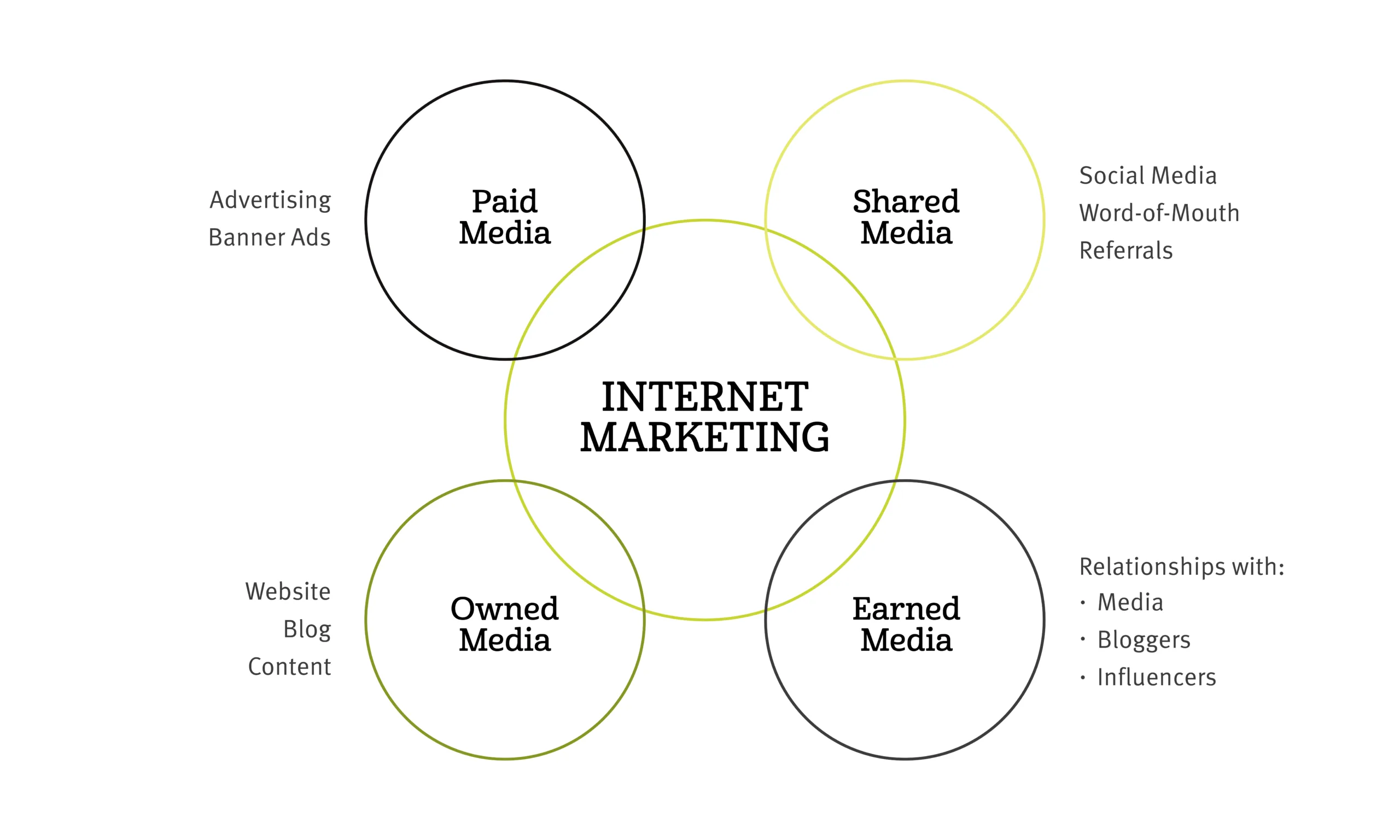
Content distribution channels are the places your audiences go to when searching for information, and therefore the places you should be promoting your content. There are four content distribution channels you can use to increase your reach:

media structure 01 scaled Do Content Marketing Distribution Channels Actually Matter?

Paid Media

Paid media is a method where businesses pay a channel to promote their content.

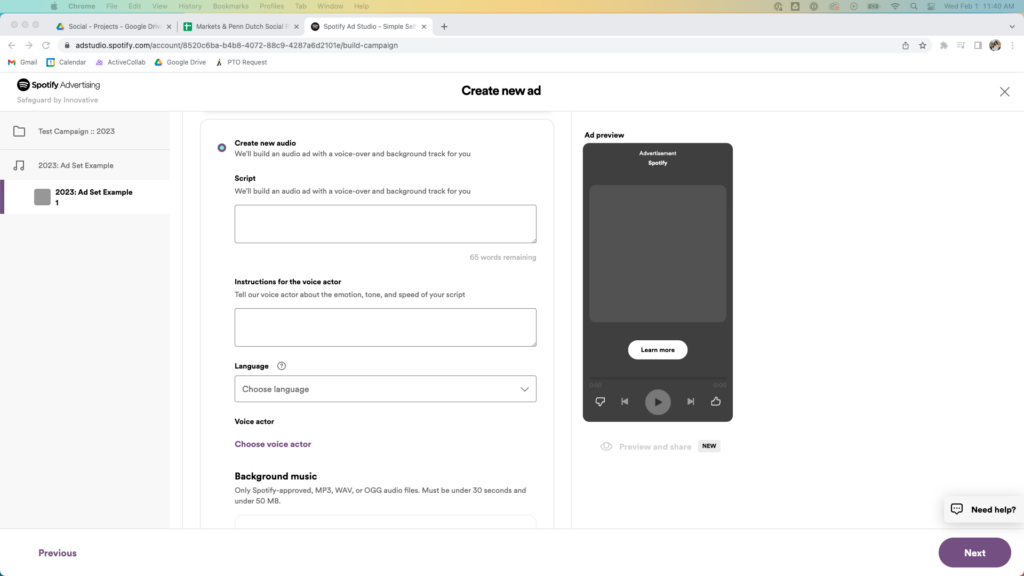
Examples: paid Facebook ads, Pinterest ads, Google ads, Podcast ads, Sponsored Instagram content, or Sponsored videos.

Advantages: Speeds up the process of acquiring audience attention you haven’t been able to reach organically.

Disadvantages: This option can become very expensive and sometimes have little ROI if you’re not targeting the right audiences.

Earned Media

Earned media is a method where third parties with influence promote or share your content by their own will.

Examples: A popular blogger links to your piece, an Instagram influencer shares your content in a story, or a news outlet promotes your content.

Advantages: Your content gains exposure to new audiences at no cost.

Disadvantages: You can’t control who promotes or shares content, which can be a problem if the person sharing it is controversial.

Shared Media

Shared media is a method where you place content on platforms, like social networking sites, and then users themselves continue distributing it. It also includes user-generated feedback. Social media optimization is continuing to be a major factor in helping businesses be found online.

Examples: Users share a Facebook post, Instagram users tag someone on your post, or someone leaves a review on Google to share with others.

Advantages: This option is either free or at a low-cost to you and since users distribute or generate content about your piece, it can build trust in your brand.

Disadvantages: You can’t control the spread of shared media that’s tied to negative user feedback. The best you can do is be vigilant for any negative shared media and then respond appropriately.

Owned Media

Owned media is a method where you are in full control of the content and you’re handling the publishing and distributing yourself.

Examples: Publishing a blog on your website, creating a landing page for an event, publishing a whitepaper in your resources, or producing your weekly podcast.

If you interested in learning to start your own podcast, our B2B podcasting guide covers everything you need to know before you take the deep dive into podcasting.

Advantages: This option is either free or at a low-cost to you (if you’re paying someone to manage your owned media channels). You also have full control over this channel and how content is distributed.

Disadvantages: Distribution is limited. Only audiences who are visiting that site or know about the content are finding it. It’s limited to the people who already know about your content or happen to find it while searching online.

The best distribution plan isn’t limited to one of these channels. Instead, it takes a multi-channel content marketing approach and combines the channels. Just using one channel will limit your reach, but by combining the channels you can continue driving traffic to a piece of content long after it’s published.

The Importance of Content Distribution

Envision this. Your team has spent hours working on a video. You got the staff together to make it, coached them during filming, and then spent time editing it to create an informative piece of content. 

Now imagine what happens if you just publish it on your website and make one Facebook post announcing it. Ultimately, you’ll see the video’s traffic spike. That’s great right? 

Except when you go to check on it days or weeks later, you’ll likely find traffic has dropped. And if you check that video maybe even a year later, it might not even have any traffic. 

Too many businesses think it’s enough to post content on their site and then promote it in one post on their social media account. When you spent all that time, money, and effort creating content, did you really want it to only be viewed for just a few days after it’s posted?

Now Imagine you did the following instead with your video:

  • You publish the video on your website highlighting a service.
  • You post on Facebook to draw attention to its release.
  • Your followers respond to it, some comment, and a few share it.
  • You decide to use it in a targeted ad and it reaches a new audience.
  • After the ad runs, data shows an increase in traffic for that service.
  • You work it into an email campaign.
  • You later see an influential person in your industry shares the video on their own will.
  • After that figure shares it you see your traffic increase again.
  • Later you’re answering a question on Quora and link to the video to help explain.
  • After linking your content on Quora you notice traffic again rises upward.

Because you used a multi-channel content distribution strategy your work engaged current clients, reached potential audiences, and earned the attention of an industry influencer and his or her followers.

The importance of content marketing distribution channels shouldn’t be overlooked, because by using them you ensure audiences actually see what you create. Why create something if no one is seeing it? If you simply post content on your site and move on to the next piece, your current and potential audiences won’t know it exists.

The old way of thinking says “content is king”, but marketer Ross Simmonds has coined a more accurate mantra for content creation. He pushes creators to abide by “D.R.E.A.M – distribution rules everything around me.”

A man sits by a wall thinking with a lightbulb drawn above him.

What Type of Content Should You Be Creating?

Distribution aside, you still need to be creating good content that’s worthy of sharing. If what you’re sharing isn’t put together well, a diverse strategy across content marketing distribution channels won’t fix the fact that what you created doesn’t add value to the conversation. There are two strategies you should use to create valuable content.

First, create content that aligns with the awareness stage of a buyer’s journey. There are a lot of nuances to that journey, but clients typically move through four phases:

  1. Awareness Stage
  2. Consideration Stage
  3. Decision Stage
  4. Post-decision Stage

When you set out to make content, think about what phase your client is at when they’re looking for information on that topic. Then create and answer the questions you think they’d have at that stage.

Second, use the “Skyscraper Strategy” to create content that will perform well. A simple Google search will show you the top-performing content. Especially when writing, the skyscraper technique primarily helps you see what those articles at the top of google cover.

After reading through some of those pieces, write something better! You can see what they’ve done well and what basic information you should cover. But what do those resources miss? Now is your chance to include that information, go more into detail, and as a result become the new authoritative resource.

Pros and Cons of Different Content

So what content should you be creating to share in the first place? That looks different for every business, so you really need to pick and choose based on the resources you have and your audience.

We’ve broken out popular types of content and what you should consider before creating them, so you can decide what works best for your business:

Blogs

Pros: Good way to share educational information about your industry, easy to create and distribute, a good way to be seen as an expert source

Cons: Lots of competition online, time-consuming, requires writing skills

Videos

Pros: Visual, engaging, higher conversion rates on certain platforms (like social media)

Cons: Need special equipment, editing footage can take time, requires visual & auditory skills

Podcasts

Pros: Engages with a fixed audience, no ad competition, builds intimacy with listeners

Cons: Need special equipment, editing sound can take time, requires auditory skills

Ads

Pros: Extends your reach, allows for specific targeting, quickly increases brand awareness

Cons: Can be costly, requires the right messaging

Infographics

Pros: Engages people visually, captures attention

Cons: Take time to create, requires design and editing skills

Where to Distribute Digital Content

Once you’ve created content that aligns with your business’ ability and the needs of your audience, it’s time to get down to actually distributing it. You understand the content marketing distribution channels and have created your distribution strategy, but what are the actual platforms you can use?

There are plenty of options, and new platforms are created every year that rise to popularity. Here are some ideas of a few you can get started with to distribute your content. Remember to always look out for emerging platforms that’d be appropriate for reaching your audience.

Blogs

The best platforms you can use to distribute your blog content include:

Videos

The best platforms you can use to distribute your videos include:

  • Your own website
  • Youtube (offers paid and organic posting)
  • Vimeo
  • Facebook
  • Instagram (for short content)
  • TikTok
  • Snapchat

Podcasts

The best platforms you can use to distribute your podcasts include:

  • Apple podcasts
  • Spotify
  • Google Play Music
  • Overcast
  • Stitcher

Ads

The best platforms you can use to distribute your ads include:

  • Facebook
  • Pinterest
  • Instagram
  • Google Ads
  • Bing Ads
  • Quora
  • Answer.com
  • Reddit
  • Twitter

Infographics

The best platforms you can use to distribute your infographics include:

  • Your website
  • Slideshare
  • Quora
  • Pinterest
  • Instagram

Paid vs. Free Content Distribution

Every business is different, so there’s no exact rule on how much of each to use. The best advice is to just make sure you use both methods. Over time collect data and see what content does better for paid vs. free content distribution. Then plan and continue experimenting to find what works.

By organically distributing content for free, you can connect with loyal followers and build relationships with influential people. It’s important to gain an understanding of this type of distribution since it will save your business money.

However, paid distribution is worth it if your budget allows for it. It offers a way to take those start pieces of content and place them into potential audiences you haven’t been able to reach organically. And it helps you grow your followers more quickly.

A woman runs up imaginary steps on a wall.

Automated Content Distribution

Content distribution can become a chore in itself. If you’re finding that it’s hard to devote enough time to distributing, consider ways that you can automate the process. Take advantage of tools that will let you schedule distribution ahead of time, so you can plan it for weeks at a time. 

First, assess what task you’d like to save time doing. Then research to see if there are automated platforms you’d trust to handle that type of distribution.

For example, on Facebook you can use the publishing tools to schedule posts promoting content. You can choose everything down to the date and time of distribution. That way you can frontload your work and not have to constantly devote time to going in and posting every week.Platforms like Hootsuite will even allow you to manage scheduling posts on different social media platforms from the same place. Other pieces of content, like email marketing, can also be automated with a third-party service, like Active Campaign.

Yes, Content Marketing Distribution Channels Matter

Look at it this way – are you creating content you want people to see? Chances are you answered yes and that’s why publishing should never be the last step when you’re creating a content marketing strategy. If you don’t have a multi-channel distribution process, you’re just wasting a lot of effort creating work that no one will engage with. There’s a risk they won’t even know it exists.

However, if you do have a distribution plan it’s likely that you won’t just get engagement from your current audiences, but that you’ll also find new ones! Your content is a valuable resource for growing your audience base — that’s why you should prioritize distributing it.

If you find your team is lacking the time and manpower to manage distribution, consider if hiring a digital marketing agency is right for you. By doing so, you have a team of experts handling the details of creating relevant content and distributing it effectively.

By relying on an agency, you can free your team to focus on product and service development instead. Your content ultimately wins too because you have experienced professionals using their industry knowledge and strategies to boost engagement and ensure it is actually reaching your audience. Remember, content is only worth it if it’s actually being seen.

Need help distributing your content? Talk with our team of experts to learn more about how you can increase your work’s visibility online for your audience.

If you’re familiar with the phrase UX (user experience), you probably relate it to the design elements of a website.  More specifically, you may associate UX with how users navigate a site and how easily they can find the information they want. UX is such an important element to website design that it has spawned new a new career field :: UX Designer.  Through user research, testing, and analysis, UX Designers create user-friendly websites that meet and exceed user expectations.

Good UX, however, goes beyond the design elements of a website and extends to the content you include on your site. The content you provide and how you serve it up to users is incredibly important to the success of your website.

What is UX Writing?

UX writing, or UX copywriting, ensures that your website includes the content that users are looking for and that it’s formatted and presented in a way that drives action. Many people believe that UX writing is solely focused on the bits of micro-copy that are often overlooked on a website, CTA copy on a button, the “no thank you” copy on a pop-up, or error messages on a log-in or contact form. These are all examples of the concise, to-the-point copy that spurs users to make one decision or another.

The principles of UX writing should also encompass other areas of web content. Even on pages that include more in-depth copy, you can still incorporate the same UX writing techniques that you would on small snippets of content. This includes writing content that users can quickly absorb (through the use of subheads and bulleted lists) and providing content that funnels users through the buying journey.

Why Is UX Writing Important?

wireframe of website homepage with no ux copy

This wireframe graphic that we use on our homepage is a great visual representation of how hard it can be for a user to navigate your site when UX copy is absent. While this is a bit of an extreme example, it shows why UX writing is such an important part of the overall user experience.

As we mentioned above, strong UX writing, when paired with good UX design, creates an optimal online experience for your web users. It encourages them to make decisions that funnel them through your site and take the desired action – whether that’s to purchase something, download material, or signup to receive more information.

Smart UX writing is essential in capturing and keeping users’ attention.  If your website copy isn’t engaging, doesn’t immediately show the user how they benefit, or is too long and cumbersome, they will bounce from your site (and may never return).

Finally, powerful UX writing makes the user feel that you understand their problem or need and demonstrates how your brand can help them find a solution. When a person feels understood or if they know others have had success solving the same problem, they are more likely to trust your brand.

UX Writing Best Practices

As you begin evaluating the UX writing on your website, take a look at these copywriting tips and see how many are implemented on your site. If the answer is “not many,” don’t feel discouraged. You don’t have to go back to square one. I think you’ll find that with a few small changes, you’ll see a big improvement.

Content First

This is a “chicken vs. egg” debate that we often have internally. Should content be written first, or should design be completed first? In most cases, it’s beneficial to have content first so you can ensure that the design allows enough space for your key messages. Even when you’re working with small segments of microcopy, make sure to create your message first and build the design around it.

Humanize Your Brand

UX writing is an excellent opportunity for your brand to show its human-side. Use these points of engagement to create a conversational tone, or even incorporate humor. UX copywriting often involves bite-sized amounts of copy, but they are often memorable. This example from our Contact page shows how we incorporated Tower’s personality into our page headers:

example of UX copy on a Contact Us page header

Be Concise

The goal of UX writing is to drive action, so you don’t want your users to get lost in blocks of text. Of course, there will be areas of your website where long-form content is necessary for informing and educating users, but when it comes to the final call-to-action, you need to keep it simple. “Check Your Score,” “Watch Our Video,” or “Let’s Get Started” are short, to-the-point, and let users know what to expect.

Show That You Understand

Users on your website have a problem, and they are looking to you for a solution. So it’s important to show empathy and let them know that you understand their struggle. As we wrote the content for our internet marketing service pages, we thought about the questions and concerns that we hear most often from our clients and addressed them right from the start. It showed that we understood the challenges they were facing.

example of UX writing on a services pages

Create Hierarchy

We mentioned that UX writing is meant to drive website users through the customer journey, and to be successful, you need to organize your content using the AIDA funnel (attention, interest, desire, and action). Start with a headline that draws attention, lead into informational content that builds interest, provide an offer that sparks desire, and finish with a call-out that initiates action. It might seem like a lot to fit into a small amount of copy, but this example from Moz Pro shows that it can be done.

example UX copy following AIDA funnel

Focus on Positive Language

Have you ever encountered a sign-up form for a health-related product (whether it’s a meal planning guide or an online exercise program) that offers two options :: “I’d Like More Info!” or “No Thanks, I Want to Stay Unhealthy!”? It’s the worst, and it’s not a motivator. Don’t insult people who aren’t interested in your offering at this exact moment, as you may lose them as a customer for life.

Avoid Technical Jargon

Your website users will have varying degrees of knowledge about your products, services, or industry as a whole, so you need to be careful with the terminology you use in your UX copy. Avoid unfamiliar acronyms, technical phrases, or industry buzz words. If they cannot be avoided, take the extra step and provide information that your users can read, watch, or listen to learn more. Here’s an example of how we accomplished this:

example of UX writing

While domain authority isn’t exactly industry jargon, for someone who is not familiar with the term, we included a link where they could read more about it.

Do A/B Tests

As with all elements of your website, UX copy should not be static. If you’ve identified a button, sign-up form, headline, or other content areas that users aren’t responding to, switch it up. Use different calls-to-action or headlines over the course of several months, and then review your site’s Google Analytics data to determine which copy options drove the most user engagement.

UX Writing Tools

As you get started in your UX writing process, these tools can help you implement several of the best practices outlined above.

Crazy Egg This is just one example of a heat map tool that can zero in on the areas of your webpage that users’ eyes are lingering on. You’ll quickly see reading patterns emerge that show how users are skimming your page content.  The red/orange “hot” areas are prime real estate where you should be sharing your most important content.

Headline Analyzer This simple tool offers so much useful feedback on the headlines or email subject lines you write. It identifies uncommon, powerful, and emotional words that will resonate with users.  It also rates whether your headline or subject lines give off a positive, neutral, or negative sentiment.

Hemingway This UX writing tool will determine how complicated your content is for your user to comprehend. It identifies lengthy sections of text that can be broken down or text that’s too dense and complicated for your average reader.  It also rates your content with a grade level readability score.

If a brand new website isn’t on the horizon, implement a UX upgrade instead.

Have you ever used direct mail marketing for your business? In the digital age, many marketers avoid direct mail because they think it’s old-fashioned and can’t compete with other channels. Other companies have used direct mail before, but weren’t happy with their ROI because their campaign wasn’t well executed.

If you’ve ever asked “what is direct mail marketing?” or want to learn more about this time-tested marketing channel, we’re here to help. This ultimate guide provides the basics you need to understand direct mail marketing. We’ve also sprinkled in tips and advice that will help you execute your next campaign like a pro.

What Is Direct Mail Marketing?

Before we can get into the details, it’s important to define direct mail and direct mail marketing. Let’s start by answering a common question :: what is direct mail?

Direct mail is print marketing that’s sent out in the mail (usually via the USPS). It can come in a variety of formats, such as postcards, brochures, and parcels. Direct mail can contain coupons and offers, or it can be purely informational with a soft call to action (CTA). Direct mail is sent to a predefined group of people on a mailing list or carrier route (a smaller segment of a ZIP Code).

Direct mail marketing is a form of direct marketing that targets people with direct mail pieces sent in the mail. Like any marketing channel, it has its own set of best practices. We’ll take a closer look at two of them below.

Direct Mail Best Practice :: The 40 / 40 / 20 Rule

When it comes to direct marketing, the 40 / 40 / 20 Rule is one of the oldest plays in the book. This guideline was developed in the 1960s by marketing pioneer Ed Mayer. Basically, the 40 / 40 / 20 Rule provides advice on how marketers should break down their direct marketing efforts.

While the 40 / 40 / 20 Rule was created in the pre-Internet age, it’s still relevant today — especially for direct mail marketing. The 40 / 40 / 20 Rule breaks successful direct marketing down into three main elements :: audience, offer, and everything else.

  1. Audience. You should focus 40% of your attention on choosing the right audience for your direct mail piece. Even if your mail piece is perfectly designed, your efforts will be wasted if you send it to people who aren’t interested or can’t use your offer.
  2. Offer. Mayer recommends putting 40% of your energy into creating a relevant offer. Providing recipients with an appealing offer they can actually use encourages them to take action. Including a CTA with your offer is very helpful because your audience knows their next steps.
  3. Everything else. Dedicate the final 20% of your time and energy to the details. This includes elements like direct mail format, design, and copy.

Direct Mail Best Practice :: Reach vs. Frequency

Balancing reach with frequency is also critical to any direct mail marketing strategy. Here’s what we mean by reach and frequency:

  • Reach is the number of people you send your direct mail piece to. In other words, it’s the number of people on your mailing list or carrier route. If you mail to 2,500 people, your reach for that campaign is 2,500.
  • Frequency is the number of times you send your direct mail piece to the same person. If the same person sees your ad two times, the frequency for that campaign is two.

It’s easy to fall into the trap of thinking reach is more important than frequency. You want to get in front of as many people as possible, right? Not necessarily! According to the Rule of Seven, people must see your brand at least seven times before they notice it and take action. That’s a lot of impressions!

With this in mind, you should always prioritize frequency over reach when sending direct mail. Mail to a smaller group of people several times, instead of a large group of people one time. Like any marketing channel, consistency is key to your success because it helps you stay top of mind.

Can Direct Mail Marketing Work for My Business?

Direct Mail scaled What is Direct Mail Marketing?: An Ultimate Guide

Yes! Direct mail works for businesses and organizations in every industry you can think of. Here’s a short list of businesses and organizations that can benefit from direct mail:

  • Restaurants
  • Gyms
  • Grocery Stores
  • Churches
  • HVAC Companies
  • Landscaping Companies
  • Accounting / Tax Firms
  • Automotive Shops
  • Dentists
  • Salons

Whether you’re looking to boost sales, increase brand awareness, or reactivate lapsed customers, direct mail can do it all.

Not convinced yet? Just check out these direct mail response rates from the Compu-Mail. The response rate to direct mail can be as high as 37%. Direct mail also pairs well with digital marketing. And Merkle reports that campaigns using both direct mail and digital marketing saw a 118% lift in response rates, as opposed to campaigns that only use one advertising channel.

Who Should I Send My Direct Mail To?

Figuring out who to target with your direct mail is the first step of any successful campaign. Who you mail to varies based on the goals of your direct mail campaign, which we’ll discuss later. First, let’s look at three common methods marketers use to segment their direct mail audience.

Ways to Segment Your Direct Mail Audience

There are a variety of ways to segment your audience into groups with shared characteristics. Here are three of the most common:

  • Geographic segmentation. This method is exactly what it sounds like and involves targeting people within a specific geographic area. This might be people who live within a specific ZIP Code, carrier route, or radius of your business.
  • Demographic segmentation. This method breaks people down into groups that share specific personal characteristics. These can include gender, race, income, education, and employment.
  • Firmographic segmentation. This method is used in business-to-business (B2B) marketing. It breaks companies into groups based on traits like industry, location, customer type, legal status, and performance.

Putting Audience Segmentation Into Action

So, what does audience segmentation look like when it comes to direct mail marketing? Here are a few examples:

  • New mover campaigns. These help you drum up business with people who are new to your area. You can purchase a mailing list of new movers and get to them before the competition.
  • Grand opening campaigns. Opening a new location? Use geographic segmentation to target people who live within a certain area of your new location.
  • Abandoned cart campaigns. Use your eCommerce platform to identify people who have abandoned their online shopping cart. Mailing them a special offer for the product / service they were interested in can get them to complete their transaction. Abandoned cart remarketing is commonly done via email, but direct mail is also a great option because most companies don’t use it for this purpose.
  • Birthday campaigns. Obtain a list of prospects with birthdays or mail to your existing customer database during their birthday month. Making this personal connection can encourage them to take action on your CTA.
  • Rewards club / loyalty program campaigns. Show appreciation for members of your rewards club or loyalty program by sending them special offers. This is a great way to upsell, since they’re already brand advocates.
  • Upsell campaigns. Send existing customers an offer for an item that complements something they recently bought from you. For example, if someone purchases bait from your sporting goods store, send them an offer for a fishing rod. Even if they aren’t in the market for a rod at the moment, they’ll be reminded of your brand and may purchase from you again in the future.
  • Winback campaigns. Since you already have data on lapsed customers, it’s easy and inexpensive to create a personalized offer they’re likely to respond to.

What Are Direct Mail Formats?

So, you know who to mail to and the campaign type that’s best for you. But which direct mail format should you choose? This is a very important decision, and the format you choose can have a big influence on whether your campaign is successful. Here are a handful of the most common direct mail formats.

Brochures / Menus

Brochures have more space than some other direct mail formats, so they’re perfect for sharing detailed information about your products / services. If you run a foodservice business, your brochure might take the form of a menu. Menus help boost brand exposure because recipients may put them on the fridge or in a kitchen drawer.

Letters

Because they’re sealed in an envelope, letters can feel more confidential than other formats. They also offer a lot of personalization options. They’re great for things like prospecting and upselling to existing customers.

Postcards

Postcards work well for prospecting because they’re an inexpensive way to get in front of people who may not be familiar with your business yet. Make a great introductory offer, and you may just get them through your doors. You can also send postcards to existing customer lists, like people with birthdays or members of your loyalty program.

Direct mail postcards have evolved far beyond the traditional 4” x 6” postcard. Today, companies can send interactive postcards that play video content or have scratch-away stickers with special offers printed underneath.

Periodicals

According to the USPS, periodicals are newspapers, magazines, and other publications sent to a list of opt-in subscribers. Businesses use periodicals to stay top-of-mind with existing customers, boost brand awareness among prospects, and provide information on their products or services.

Direct Mail Packages jpg What is Direct Mail Marketing?: An Ultimate Guide

Packages

Businesses that sell expensive products / services might send parcels (like gift boxes) to high-value customers / prospects. This usually costs more than sending other direct mail formats, but it can pay off if customers make repeat purchases or if your product / service has a high price point.

Which Direct Mail Mailing List is Right for Me?

Once you know who you’re mailing to, you’re ready to get your direct mailing list. Like we said before, your target audience plays a key role in the mailing list you choose. Let’s take a look at two common mailing list types and the USPS Every Door Direct Mail® (EDDM®) service.

Targeted Mailing Lists

Like the name suggests, these mailing lists target specific people based on shared traits. Say your business designs and manufactures high-end navigational systems for yachts. You wouldn’t mail to just anybody, right? Instead, you’d get a targeted mailing list comprised of yacht owners or people who have expressed interest in nautical navigation systems in the past.

As you can see, targeting a specific group of people with shared traits helps you reach individuals who might be more receptive to your offer. Knowing their names and a few personal traits also helps make your direct mail more personal, which can increase response rates by up to 36%.

Targeted mailing lists can be expensive depending on how specific they are. A house customer list is another example of a targeted mailing list, but it’s free since you already own the names on the list.

Saturation Mailing Lists

Saturation mailing lists contain the names of people who live within a certain geographic area. As a result, they help you blanket specific areas with your direct mail campaigns. Saturation lists work best for businesses that offer a product or service almost anybody could use, like restaurants and auto shops.

Because they’re less specific, saturation mailing lists usually cost less than targeted lists. However, you can still do some targeting when you use a saturation list. You can remove the following address types from a saturation list:

  • Business addresses
  • PO Boxes
  • Some residential addresses (i.e. apartments, seasonal dwellings, drop addresses)

If you do choose to remove address types from your list, make sure you still adhere to the 90 / 75 Rule to get the best postage rates. This stipulates that you must mail to 90% of all residential addresses or 75% of all business and residential addresses on your chosen carrier route

Every Door Direct Mail® (EDDM®) (No Mailing List)

EDDM® is a DIY USPS direct mail service. Unlike campaigns that use targeted or saturation mailing lists, EDDM® does not require a mailing list. That’s because your direct mail is delivered to nearly every address / door along a carrier route.

You can still do some audience segmentation with EDDM®, even though there’s no mailing list. The USPS EDDM® tool allows you to segment by the following median demographics:

  • Address types (residential or business)
  • Age
  • Household size
  • Household income

Keep in mind that because EDDM® uses median figures, your pieces will reach people who may not be interested in your offer. Direct mail sent via EDDM® is addressed to “Local Postal Customer” since there’s no mailing list. You’re also restricted when it comes to the size and format of your pieces. You can only send flats, which are large envelopes, newsletters, and magazines.

How Do I Get a Direct Mail Mailing List?

You’ve chosen the type of mailing list you want to use. But where do you get a direct mail mailing list? There are several mailing list sources, which we’ll review below.

Use Your House List

Direct Mail Mailing List scaled What is Direct Mail Marketing?: An Ultimate Guide

Don’t overlook your house list of existing customers or people who have expressed interest in your business in the past! This free option can be very effective because you already have information on these individuals. Here are a few examples of house lists:

  • Active customers
  • Past customers
  • Prospects who provided you with their contact information
  • Members of your rewards club or loyalty program
  • One-time customers

You own your house list, so make sure you keep it clean and updated. Here are three mailing list data hygiene best practices:

  • Make sure your mailing list is CASS (Coding Accuracy Support System) certified. CASS standardizes your addresses for the USPS to ensure deliverability. This process includes things like adding ZIP + 4 codes and IMBs (Intelligent Mail Barcodes) to your mail pieces.
  • Run your mailing list through the NCOA (National Change of Address) database. This service provides up-to-date information on people who have moved within the last four years. That way, you don’t waste money mailing to people who no longer live at an address.
  • Deduplication allows you to pinpoint and merge duplicate records, which saves you money because you’re not mailing to the same people twice.

If you don’t want to use a house list (or if you don’t have one yet), you can also rent or buy a mailing list.

Rent or Buy a Mailing List

If you only plan on mailing to a group of people one or two times, renting a mailing list is a smart option. While you don’t own the names on the mailing list, you do own any information you get from the people you mail to. You don’t have to maintain the list yourself, and rented lists typically cost less than purchased lists.

If you plan on using a list many times, buying a mailing list is usually your best bet. You’ll own the names on the mailing list and any information you gather from recipients. You’ll need to perform your own list hygiene, though.

There are two main types of rented or purchased mailing lists: compiled lists and response lists.

  • Compiled lists contain the names of people with similar interests, like rock climbing, tennis, or gardening.
  • Response lists contain the names of people who have purchased from or requested information from businesses offering products / services that are similar to yours.

How Do I Track My Direct Mail Campaigns?

Direct mail tracking is very important, but many marketers overlook it. Don’t make this mistake! When choosing a tracking method, make sure you consider the format of your piece and the goals of your campaign. Make sure you’re using different tracking codes for each direct mail campaign so you can differentiate between them.

Here’s a short list of methods you can use to track your campaign:

  • Trackable phone numbers. Adding a trackable phone number to your piece allows you to determine how many calls you receive as a result of your direct mail. This helps you tweak future campaigns because you’ll know what is and isn’t working.
  • Trackable URLs or PURLs (personalized URLs). These are another easy way to track the effectiveness of your campaign. Adding a name to a URL (i.e. https://www.towermarketing.net/norafulmer) and greeting them by name on the landing page helps you speak to people on a one-to-one level.
  • Trackable email addresses. Like trackable phone numbers and URLs, printing trackable email addresses on your pieces helps you track response rates for your campaign. Use it to look for trends that you can use for future audience segmentation and tracking.
  • Coupon codes. If your direct mail piece includes coupons, make sure each coupon has its own unique code. Whether recipients redeem the coupon in person, over the phone, or online, make sure employees are meticulously tracking coupon codes. This helps you determine which offers are getting results and which ones aren’t.
  • QR codes. QR codes are easily trackable and help you glean valuable information on your direct mail campaigns. Plus, they’re easier for prospects / customers to follow up on, since they don’t have to type a URL / PURL into their web browser. All they have to do is scan your QR code with their smartphone camera or a QR code reader app.

How Much Does Direct Mail Cost?

This is one of the most frequently asked questions when it comes to direct mail marketing. However, there’s no one-size-fits-all answer. As you’ve learned, there are a wide variety of components involved in any direct mail campaign. Everything from your mailing list type to the format you use affects your cost. That’s why working with an agency that offers direct mail marketing services (like Tower!) is a great way to lower your expenses. We use our experience and connections with vendors to get you the best results at the lowest price point.

Want to try a direct mail campaign for your business? Contact our print media experts today to start the conversation!