0

If you’ve ever Googled something before, you’ve probably noticed how popular brands are ranked higher on your search page. 

You may ask yourself, “Where do I start?” Or, “How can I get users to see my page on top of search results?” 

We’ll guide you through our 10-step keyword research checklist to help answer those questions and create a solid foundation for your SEO content strategy. 

What Is Organic Keyword Research & Why Is It Important?

Organic keyword research is the process of analyzing data on user search queries and determining what phrases are key to use in your content. Doing this helps enhance your site’s Search Engine Optimization (SEO), naturally boosting it higher on search results without paying a cent. 

It’s important because people are constantly searching for words or phrases to find what they’re looking for. That’s essentially your job when doing organic keyword research – to give people the information they’re looking for. 

You can also rank higher on paid search results, but for this blog, our focus is on your organic keyword strategy. 

Benefits Of Organic Keyword Research

  1. Increase Organic Traffic 

Organic keyword research will help you rank higher in the Search Engine Results Pages (SERPs) for relevant keywords. When you rank higher, you’ll likely see an increase in organic traffic to your site. 

  1. Increase Conversion Rate

After an increase in organic traffic, you’ll likely see an increase in conversion rates because your keywords will be specific to your user’s needs. They’ll find what they’re looking for on your site and will be more likely to take an action, such as purchasing your product or service. 

  1. Stay Up-To-Date With User Behavior  

After following our keyword research checklist, you’ll be able to keep up with your target audience’s current search behaviors. By analyzing keywords your users are actively searching for, you’ll gain valuable insights into your audience’s current interests or needs to create effective marketing strategies.

shutterstock 695980678 1 Keyword Research Checklist: 10 Easy Steps to Boost Your SEO

Need a simple summary of our keyword research checklist?

10-Step Keyword Research Checklist

Want to learn how to do keyword research? Follow these 10 steps to build a foundation for your SEO content strategy. 

Step #1: Brainstorm Topics Or “Seed Keywords”

To start your keyword research process, think about your business goals. You understand your business the best, so make a list of potential topics to target. 

Seed keywords are broad topics related to your business. Put together a list of words or phrases you think users will search to find your website.  

How To Start Brainstorming Seed Keywords: 

  • Use Google SERP features by typing in one of your seed keywords. You’ll see what ranks high or low based on your search term. 

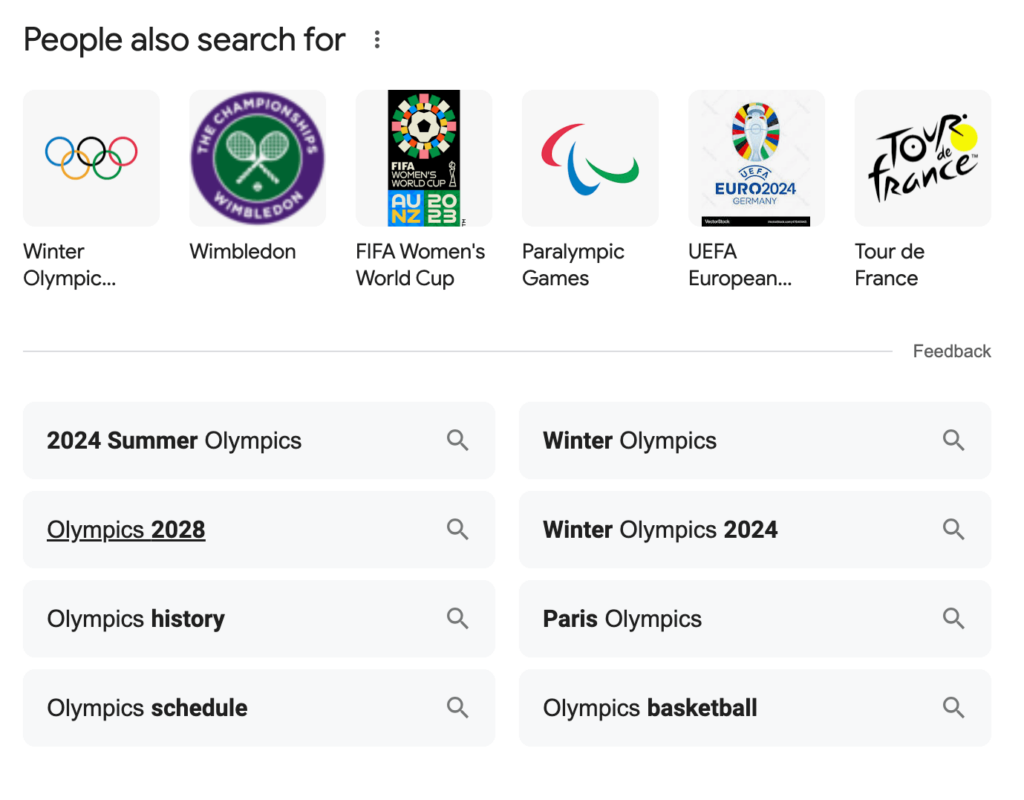
You can also scroll down to the bottom of the search page to see what “People also search for…” 

Google Search Engine Results Page feature showing what people also search for when searching Olympics
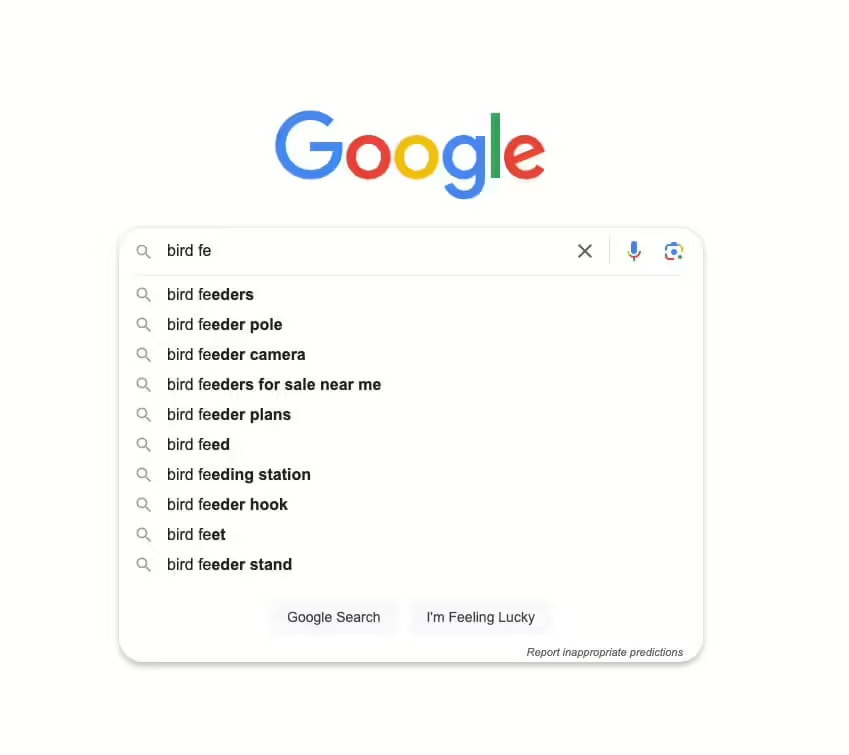
  • Google Autocomplete shows you what users are searching based on the word or phrase you’re using.
Google Autocomplete showing what people might search when looking for bird feeders
  • Browse your seed keywords in an incognito window. 

We do not recommend relying on ChatGPT to give you a finalized set of keywords because it can give you misinformation. It also limits you on keyword relevance because AI can’t give you search volume. Use ChatGPT as a guide to help brainstorm ideas, and remember to fact-check answers. 

Brainstorming is the starting point – keep following our keyword research checklist to reach the finish line. 

Step #2: Understand Keyword Intent

After brainstorming topics to rank you higher on SERPs, it’s time to understand your user’s keyword intent. 

Keyword intent helps you know where your user is in their decision-making process. Determine the purpose behind your user’s search using the 4 different types of keyword intent.

  1. Informational 
  2. Navigational
  3. Commercial
  4. Transactional

You can narrow this down by further understanding the different marketing funnel stages. Are they showing awareness, consideration, conversion, loyalty, or advocacy? 

Ask yourself “Who exactly am I writing to, and why are they searching for x, y, z…?”

Understanding your user’s keyword intent helps you target keywords to meet their needs and improve your website visibility. 

Step #3: Use Long-Tail Keywords 

Long-tail keywords are specific phrases or questions targeting more unique and detailed searches. 

They have less volume and less competition because they’re more precise and less commonly searched. This makes visitors searching for these terms more likely to make conversions because they’re interested in what you have to offer. 

Once you know your user’s keyword intent, prepare a list of long-tail keywords they might search to find an answer. 

Step #4: Understand What Search Engines Are Ranking 

Google ranks websites based on relevance, authority, and volume. There are also some other ranking factors to take into consideration. 

Your keywords and phrases must be relevant to your business, but most importantly to your target audience. Focus on what the user wants, not the search engine. Use keyword intent to impress Google with relevant content. 

Use internal and external links to boost your topical authority and expertise. Have your external links going to reputable sources, and create concise content that’s easy to read. 

Focus on the search volume for keywords you want to use in your content. Knowing the volume for keywords helps you gauge the relevance and demand for your topic. 

Person looking at marketing metrics on a computer

Step #5: Take Note Of The Metrics For Each Keyword Or Phrase

Now we must measure the metrics for Google ranking factors. 

Focus On Monthly Search Volume (MSV) And Keyword Difficulty. 

MSV is the average number of searches per month. Keyword difficulty shows how competitive it is to rank for a specific keyword or phrase. 

Websites like Nike and Apple rank higher on SERPs because their brand is well-known to users and Google. Their topical authority is strong, and they most likely use keywords with high volumes and higher difficulty percentages. 

If you know your topical authority isn’t as strong as Nike’s or Apple’s, prioritize long-tail keywords. 

*General rule: choose keywords with a high volume and low difficulty. 

Step #6: Compare With Competitor Keyword Research

Find what your competitors are ranking for with competitor keyword research. Search for terms you want to use in your content and compare them with current keywords competitors are using. This will help you compete for keywords and identify keyword gaps

Step #7: Finalize Your Keyword List 

After completing steps #1-6 of our keyword research checklist, you’ll have a strong list of keywords and phrases to use in your content. 

Tips to finalize your keyword list:

  • Have 1 primary keyword with high volume and low competition.
  • Have a longer list of secondary keywords to use throughout your content.

Secondary keywords must be relevant to your primary keyword and should help you create sections within your content. They can have higher difficulty percentages since your focus is ranking for your primary keyword. 

Step #8: Incorporate Keywords Into Your Website 

Want to learn how to incorporate your list of keywords and phrases into your website? Use strategies like keyword clustering and writing for featured snippets. 

Keyword Clustering 

Cluster your keywords by grouping them together into similar categories. Your primary keyword is the main topic you want to rank for, while secondary keywords are meant to complement and enhance your primary. 

For example, if your primary keyword is “home workouts,” secondary keywords might be “cardio workouts at home” or “work out equipment for home.” You can take those keywords and organize them into clusters to build your content and rank for multiple search terms at once. 

Avoid Keyword Cannibalization 

Although keyword clustering is beneficial, you want to avoid keyword cannibalization. 

Keyword cannibalization is when multiple pages on a website target the same keywords. This confuses search engines because they won’t know which page to show in SERPs, leading to reduced rankings. To avoid this, create unique and individualized pages with separate keywords.

Write For Featured Snippets

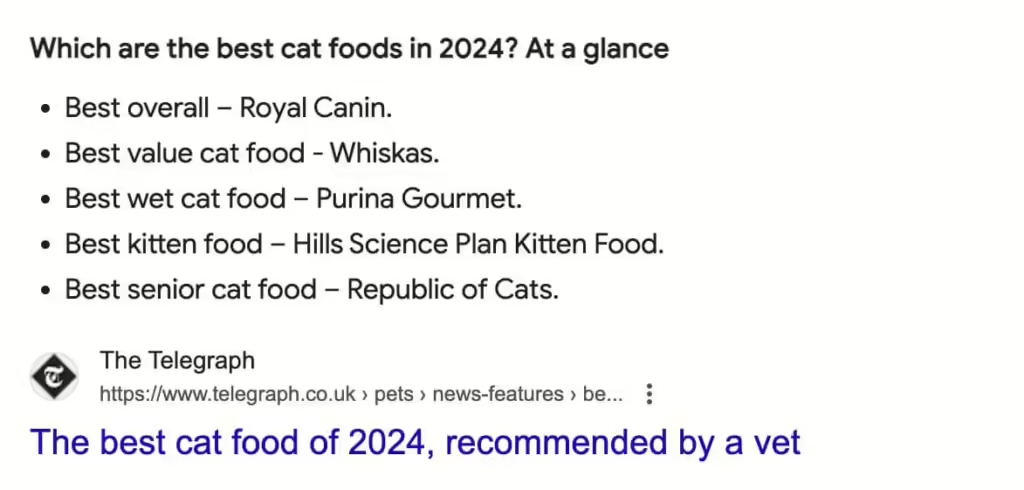
A featured snippet is another Google SERP feature used to boost ranking. For a chance to have Google highlight your page as a featured snippet, include simple bullet points, numbered lists, short concise paragraphs, and of course, your primary keyword.

Featured snippet giving users a bulleted list for the best cat foods in 2024

Step #9: Use Free Keyword Research Tools 

Resources are available to help complete your keyword research checklist. Many of these have both free and paid plans.

Step #10: Track Your Positioning 

After publishing your website page, we recommend tracking your progress to see any changes in current marketing trends. 

Ask yourself:

  • Are your keywords still effective? 
  • Are they relevant? 
  • Are they still ranking high on SERPs?
  • Do they enable you to show up for any SERP features?

Tracking allows you to improve future SEO efforts. We recommend using Google Search Console to monitor this.

Need help using our keyword research checklist to master your SEO content strategy?


Where’s your cell phone right now? It’s probably within an arm’s reach, definitely close enough to hear the ping of a new text message. 

Across the globe, over 6 billion text messages are sent daily. If you work in digital marketing, you can use this to your advantage. 

Think about how often you pick up your phone a day. Now think about the visibility your messages could have if you can reach people through text.

If you’re looking for an effective customer retention strategy to keep your audience engaged, text marketing can be a powerful channel to invest in. From best practices to tips on growing your contact list, explore how SMS marketing campaigns can transform your business.

SMS Marketing: The Basics

Short message service, or SMS, marketing is a form of mobile marketing that uses text message campaigns to send information to a consumer’s cell phone. This could include anything from discounts and order confirmations to business updates and customer feedback surveys.

Much like email marketing, SMS messages are managed in a CRM where texts can be sent manually or in bulk. Unlike emails, however, SMS marketing campaigns are simpler, more concise, and more likely to be opened.

Text campaigns have a nearly perfect open rate of 98%. Of those opens, 97% happen within the first 15 minutes of delivery; 90% in the first 3. No other distribution channel comes close to an open rate this high.

Bottom line: it’s one of the most powerful digital marketing tools because it puts businesses in direct contact with customers on a channel that’s proven to capture attention. 

Types of Campaigns

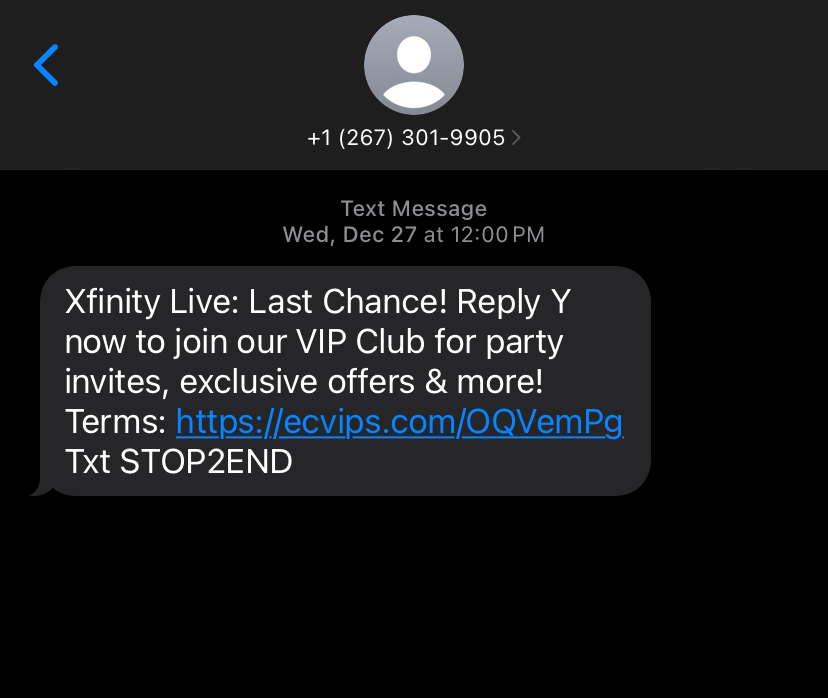
SMS marketing campaign messages usually fall into 1 of 2 categories: promotional or transactional. Let’s take a look at how they’re used. 

A screenshot of a text message from Xfinity Live, asking to join their VIP Club.

1. Promotional

Anything that pushes the sale of a product or service — discounts, coupon codes, limited-time offers — is categorized as a promotional message. These have a clear marketing intent: user engagement. 

Whether it’s to make a purchase, fill out a survey, or opt-in to a loyalty program, promotional messages are sent with conversions in mind. 

Some examples of promotional text message campaigns might include:

  • Coupons 
  • Flash sales
  • Sweepstakes
  • New product announcements
  • Event promotions
  • Loyalty program invitations
  • Early access deals

Overall, promotional campaigns help keep your business top of mind and are popular for driving engagement with new and repeat customers. 

Promotional SMS Marketing Compliance

Just like email marketing, the Telephone Consumer Protection Act (TCPA) lays out clear opt-in and opt-out requirements for text message campaigns. Sending unsolicited promotional messages without permission is illegal and punishable by some hefty fines

To stay compliant, businesses must obtain explicit consent from users before any communications are sent.

From a marketing standpoint, sending messages without permission could be detrimental to your brand reputation as well. Text inboxes are perceived as more personal than email inboxes. Sending a text to your customers without an invitation is an invasion of privacy and could cause them to think about your brand differently. 

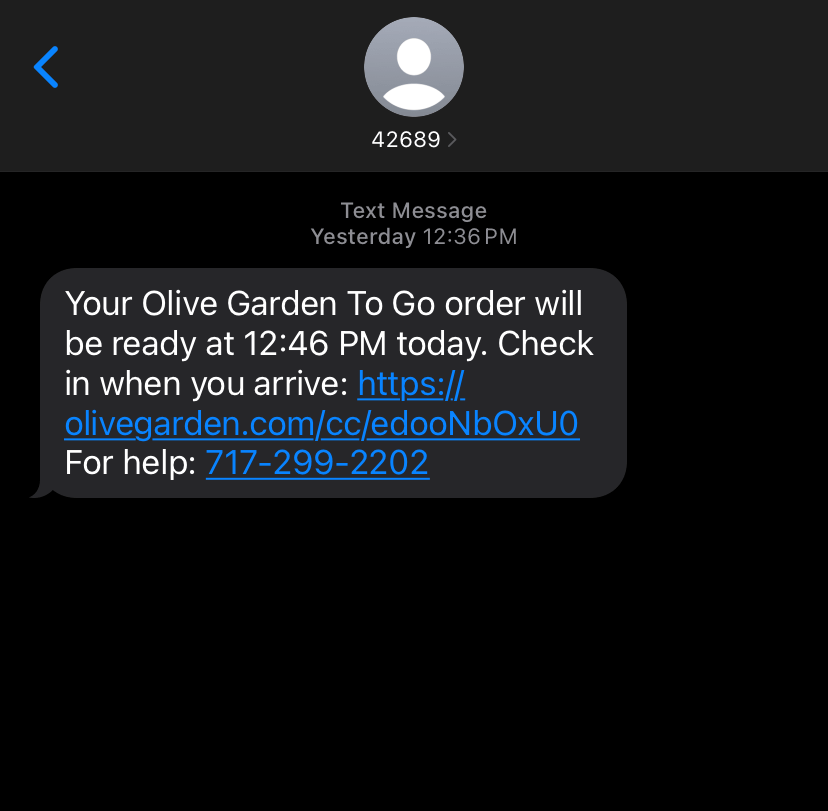
A screenshot of a text from Olive Garden saying your to go order will be ready later today.

2. Transactional

Transactional SMS marketing campaigns happen after the purchase or desired action is taken. They are often automated, and sent in response to an action being taken

Some common examples of transactional messages could include:

  • Order/booking confirmations
  • Shipping & delivery updates
  • Billing information
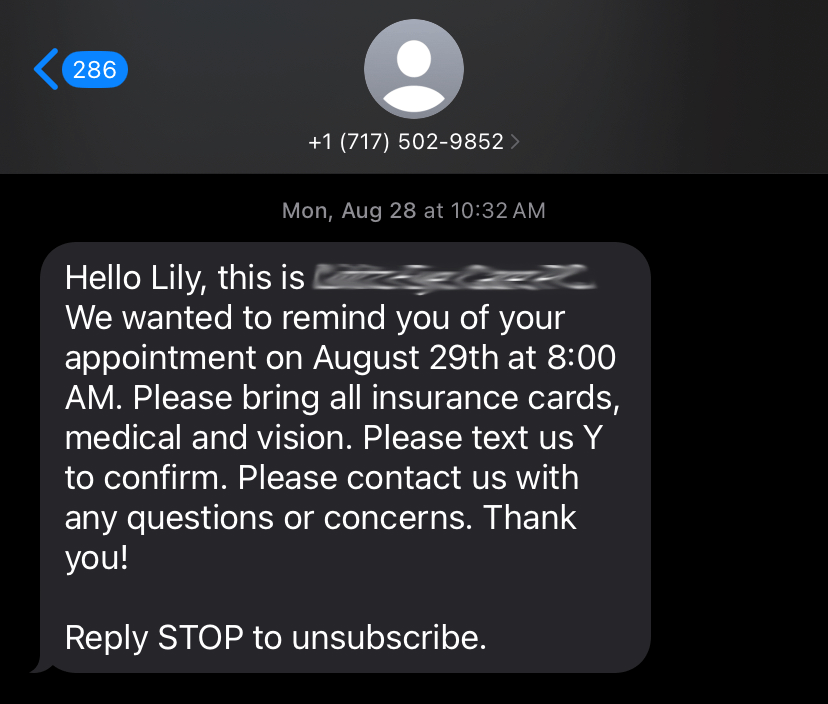
  • Appointment reminders/confirmations/cancellations 
  • 2-factor authentication (2FA) or verification codes

They differ from promotional SMS marketing campaigns because their marketing intent is simply customer care. The message content delivers essential information to support the customer’s journey with your brand

For this reason, they are a valuable customer service tool that can help boost customer satisfaction and trust. 

Transactional SMS Marketing Compliance

Unlike promotional SMS text regulations, transactional compliances are a bit more flexible because they’re seen as an expectation. Consent can sometimes be implied because communications provide convenient updates for recipients about their orders.

As a best practice, however, it’s still highly encouraged to obtain expressed consent. It shows your customers that you value their privacy and boundaries, and it protects your business from any possible legal infringements.  

Benefits of SMS Marketing Campaigns

Now that you have a better idea of what text campaigns are and how they can be used, let’s take a look at why you should use them. 

A screenshot of a text from a doctor reminding Lily of her upcoming appointment. The name of the business is blurred out.
  • Allows for personalization: The key to any effective marketing campaign is personalization. Consumers love a message or deal that’s tailored to their interests, and at this point, it’s an expectation. Adobe reports that 76% of users are “frustrated” when brands don’t personalize their messaging.
  • Builds loyalty: Through personalization and respecting communication preferences, text campaigns can make your customers feel valued. The more important they feel, the greater the chances they’ll become a repeat customer. 
  • Supports other channels: On its own, SMS campaign performance is strong. But it can also be used to boost your performance on other digital channels, too. You could run a promotional SMS marketing campaign to get users to subscribe to your email list or to follow your social media accounts. 
  • Easy to create: Character counts and other content constraints make SMS messages easy to produce. They must be short and to the point, which can save time and get time-sensitive messages to your contacts faster.  
  • Accessible for any industry: Whether you work in retail, finance, tourism, or healthcare, text campaigns can support communications in any B2B or B2C industry. 

Disadvantages of SMS Marketing Campaigns

Though the list of advantages is long, there are a few drawbacks to also consider.

  • Permission-based: Explicit consent is required to send text campaigns. If you’re building your contact list from scratch, finding customers to opt-in can be a challenge. 

But don’t let this stop you — according to an Attentive Mobile Consumer Report, over 91% of survey respondents expressed interest in receiving SMS marketing campaigns from businesses. 

  • Message limitations: Most CRMs have text limitations in place, which can complicate the delivery of certain messages via SMS. Standard plans require texts to contain 160 characters or less. Anything exceeding that limit will be sent in a string of 2 messages and will cost 2 SMS credits. 

Character limits are even more restrictive if your text contains Unicode. Messages with Unicode must be kept to 70 characters or less. (Emojis are considered Unicode and are counted as 2 characters, so craft your messages wisely!)

SMS Marketing Strategies

After you’ve decided to add SMS to your business toolkit, it’s time to perfect your strategy. Below, we’ve outlined some best practices to follow when it comes to building lists and improving engagement.

Building Your Contact List

Building your contact list starts with awareness. Your target audience must know that you have a text message option available. In that same vein, it’s also a best practice to let them know how you intend to use their number. 

Any additional information you can provide about the type of messaging and the frequency of messaging could be a determining factor in getting users to join your list. Transparency = trust = conversions.

So how do you get users to join your list? There are plenty of strategies your business can try.

  • Text-to-join: The most basic, but tried and true method for getting users to join your SMS contact list. It requires users to text a keyword to your SMS short code or 10-digit number to opt-in 
  • Sign-up forms: Get users to sign up using a form. Try embedding forms on your homepage, site footer, or in blog content. 
  • Use your email list: If you already send newsletters to an email list, use that to your advantage by encouraging them to sign up and stay connected via SMS. (Note: Even if they consented to receive email communications, it cannot be assumed they want to receive text campaigns, too. Consent is still required!) 
  • Checkout opt-ins: If you have an eCommerce site, ask users for their phone number during checkout. Add a check box near the number entry for users to check yes or no to consent to receive SMS communications. 
  • Incentives/exclusive discounts: With a little extra incentive, like offering opt-in discounts or running deals for only your SMS contact list, more users are likely to sign up. 
  • Promoting on other channels: Raise awareness for your SMS program by promoting it on social media. For the best results, try running a paid ad on your preferred social media platform. If you don’t have the extra budget, promoting it organically will work just fine. 

Best Times to Send

Like your email marketing strategy, the success of text marketing campaigns relies heavily on being sent at the right time. Textedly suggests limiting send times to regular business hours for promotional SMS campaigns. Transactional, on the other hand, can be sent at any time since they’re typically sent by an automation triggered by a user action. 

Audience Segmentation

If you’re looking for additional ways to optimize your SMS campaigns, audience segmentation can be crucial. Segmentation is the process of categorizing your target audience into additional smaller subgroups based on interests, behaviors, or other criteria. 

To get started, here are some basic ways to categorize your contact lists:

  • Engaged/unengaged users
  • First-time/repeat purchases
  • Location/time zones

You can use these categorizations to help improve your personalization strategy. If you know how they’ve engaged with your SMS marketing campaigns in the past, you can send personalized offers based on what you know they’re most interested in. 

Drive Results with an Integrated SMS Marketing Strategy

SMS is proven to be a highly effective tool for driving results, especially when integrated to assist your existing marketing efforts. If you want to boost your brand visibility and meet your users where they are most active, it’s time to tap into SMS marketing. 

Explore how your business can benefit from text marketing. Contact our team of specialists to start seeing results.

The average person spends 152 minutes on social media daily. That’s 2 hours and 32 minutes of consuming content on any given day. 

And if your business is lacking an effective social media optimization strategy, that’s over two and a half hours you could be missing out on to nurture customer relationships. 

Social media optimization (SMO) — not to be confused with search engine optimization (SEO) — is essential to your business’s organic social media strategy. If your account isn’t designed to be discoverable and shareable, the odds of new users finding your account are left merely to chance.  

Luckily, there are some fool-proof steps that you can take to boost those odds. Unlock the secrets to expanding your messaging, strengthening your credibility, and nurturing customer relationships through SMO. 

What is Social Media Optimization (SMO)?

You’ve heard of word-of-mouth advertising. When it’s done right, it can be an extremely powerful and free marketing tool. Think of SMO as the digital version of word-of-mouth advertising. 

Put simply, SMO is the process of refining your organic social media accounts to increase your brand’s reach and visibility across various platforms. 

It goes beyond the basics of simply existing on a social platform. It’s deeply understanding your target audience and crafting valuable content for them to engage with and share on the platforms they are most likely to be on. 

To help better explain the concept, let’s clarify what SMO is not

SMO vs. SEO

Though SEO and SMO have similar intentions, they are two different marketing tools. SEO is the strategic process of maintaining site health through technical improvements and writing content to boost website visibility in search engine result pages (SERPs). 

In the same way that SEO keywords help users find your site in the SERPs, SMO helps users find and engage with your business on social media

They are both long-term strategies intended to drive traffic organically to their respective channels. 

SMO vs. SMM

Unlike SMO or SEO, social media marketing (SMM) is usually a paid social media effort with a pointed objective. The goal of SMM is to drive web traffic, generate leads, or raise brand awareness to a targeted audience through paid social marketing channels.

You’ve probably seen SMM hard at work on your own social media feeds. Because businesses are paying to reach their desired audience, SMM is almost impossible to avoid. You’ll know it’s a paid effort because it’s labeled as “sponsored content”.

SMO on the other hand, will always be discovered organically because it’s a free marketing strategy. 

8 Benefits of SMO

Optimizing your social media accounts can benefit your business in many ways. Aside from boosting your brand awareness, SMO can help your business:

  1. Reveal a personal side by participating in online conversations with your audience.
  2. Acquire intelligence by listening to customers and observing competitors.
  3. Establish trust and credibility by solidifying your online reputation.
  4. Increase the influence, shareability, and linkability of your content— a great way to work in tandem with SEO! 
  5. Establish your business as a trustworthy, authoritative resource.
  6. Identify valuable users who can act as potential brand ambassadors.
  7. Analyze your target audience and how they associate with your brand.
  8. Find, learn about, and create compelling content that may be overlooked by Google.

If those benefits sound desirable to your business, stick with us to learn how to achieve them.

SMO Strategies

When it comes to putting SMO into practice, there are on-page and off-page optimizations that are recommended to boost your brand’s awareness. Therefore, a comprehensive SMO strategy is two-fold: it requires optimizing your social media accounts and your website. 

Social Media “Off-Page” Optimizations.

With “social media” in its name, you’ve probably made the connection that SMO requires work on your social media accounts. There are so many things to optimize for on your social media sites that it helps to split the off-page SMO strategies into 4 buckets:

  1. Profile Optimizations
  2. Content Optimizations
  3. Post Engagement Optimizations
  4. Community Building

1. Profile Optimizations

Profile optimizations refer to refining your social accounts to accurately describe your business. This includes ensuring all business information — name, address, phone number, and site URL — is up-to-date and the same across all platforms. 

It also includes crafting an engaging bio or “about” section on the platform to help your account get found in search. Your bio should answer the following basic questions:

  • Who you are
  • What you do
  • Where you’re located 
  • How to reach you

If your company is already utilizing an SEO strategy for your website, try to use a primary keyword that you use on your homepage in any of those descriptions. This should help boost your visibility when people search for a related keyword.

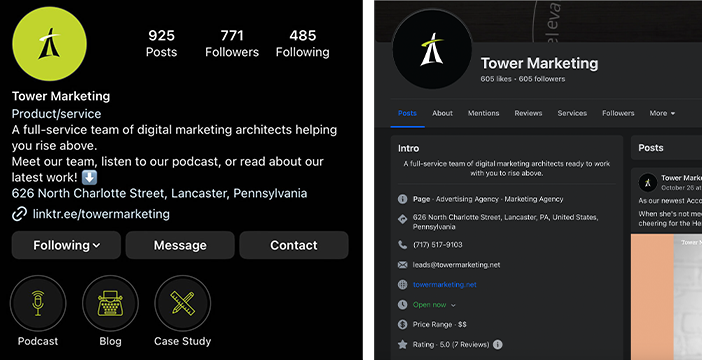
screenshot of Tower Marketing's Instagram and Facebook profiles

In this example, you can see that Tower Marketing uses consistent keywords, such as “full-service team” and “digital marketing,” to describe who we are and what we do. The address indicates where we are located, and our contact information makes it easy to reach out.  

2. Content Optimizations

Content optimizations are related to the nature of the content you’re posting on your accounts. Are you posting topics that your intended audience is interested in? Do the graphics fit your messaging and reinforce your brand voice?

Understanding the desires of your target audience is incredibly important to your SMO strategy. If users aren’t interested in your content, they won’t share it and you won’t actually be expanding your reach. 

After you’ve nailed down the content you should be posting, it’s time to optimize your content for engagement. 

3. Engagement Optimizations

Engagement optimizations refer to the strategies your business can use to boost the performance of your posts. Perhaps the most obvious engagement tool you can use on social media is hashtags.

That’s right, hashtags are still effective in 2023! They help categorize posts into a digital filing system so that when a person uses a social platform as a search engine, all posts using that hashtag are accessible in one place. 

Adding hashtags to your posts can ensure your content is filed in the digital system, increasing the chances of having new users discover your account. Experts recommend using 3-5 hashtags per post

 Aside from hashtags, two of the most important engagement tactics to consider are the frequency and timeliness of posts. 

You’ll need to find the balance between posting regularly to keep your business top of mind without coming across as spammy. Determine the number of posts you’re comfortable with publishing per week or month and stick to it. 

In addition to the volume of posts, the time that you post can directly impact engagement. If you’re posting on a day of the week or at a time when your audience is least likely to be active on social media, the post’s engagement will likely suffer. 

Using industry research is a good place to start, but don’t be afraid to fine-tune your strategy based on the analytics you observe. Take note of high- and low-performing posts and analyze what factors contributed to their success. 

When you can pinpoint what works and what doesn’t, you have a roadmap of dos and don’ts to implement in the future. 

Also, keep in mind that every platform’s user demographic and algorithm is different, so your cross-platform strategy might have to vary slightly, too. 

4. Community Building

Once you’ve done your due diligence to refine your profile, content, and engagement strategies, the final off-site SMO strategy is community building.

Remember, social media is an extension of your business, so the way you present yourself can impact your online reputation. The best way to ensure that your reputation is positive is by actively engaging with your followers.

This can include a plethora of things:

  • Liking and responding to comments/questions promptly. 
  • Responding to direct messages. 
  • Sharing other posts that your audience might be interested in.
  • Creating private groups for followers to engage with you and other like-minded users.

When you engage with your followers by showing interest and empathy, you’re building a reputation of trust. 

In recent years, many social media platforms have introduced features to help with audience engagement. For example, LinkedIn, Facebook, Instagram, Pinterest, and X (formerly Twitter) all have a poll option, which invites users to share their opinions.

a screenshot of Tower Marketing's LinkedIn poll

Here’s another example from Tower Marketing’s LinkedIn account, asking users to share how they help get out of a creative rut. 

When you utilize these features and ask the right questions, you’re showing your audience that you care about hearing from them and not just sharing about yourself — something that can be a powerful tool for maintaining your community.

Website “On-Page” Optimizations

On-page SMO focuses on your website. More specifically, it entails optimizing the shareability of your content to control the way your posts are shown, shared, and displayed when distributed to a third-party site or social media platform. 

Use Sharing Buttons

Making a webpage easy for users to share is a no-brainer. If you don’t already employ social sharing buttons on your website, that is the first on-page optimization you should be implementing. Adding social sharing buttons to your website content makes it simple for users to distribute your content to their networks.

In the same way that you should link to your website on social media, your website should link directly to your social accounts, too. Most businesses do this by nestling buttons in the site footer. 

a screenshot of HubSpot's website footer that shows links to their social media accounts

Here is an example of how HubSpot displays the links to their social media accounts. The icons are subtle but large enough to easily be found. They also communicate to site visitors what platforms they can find your business on. 

Utilizing Rank Math SEO

If you use WordPress as your CMS, the Rank Math SEO plugin is a great way to optimize your pages and posts for social media. Rank Math adds a tag to your website that allows your business to edit how your site content is displayed on social media and/or search engines when shared.

Using Rank Math’s social tab, you can

  • Create a custom title, description, and image.
  • Generate social media images.
  • Customize Facebook or Twitter cards based on your needs.
a screenshot of Rank Math's social optimization tab

Why does this matter? Because when you don’t optimize for SMO, it can look messy. Long headlines or descriptions might be truncated, leaving out important information intended to garner interest. 

Previewing your posts using Rank Math’s social tools tab allows you to adjust your content and ensure the most important information is visible to your audience.

screenshots of Rank Math's SMO tab

Here’s an example of using Rank Math to shorten the blog title and description for the Facebook card. On the left, you can see how the text is cut off because it’s too long. On the right, the description text and the title were both shortened to keep the social display less wordy and to the point.

SMO Tips & Takeaways That You Can Start Implementing Today

I don’t think enough businesses are strategically thinking through the opportunities available when they optimize their website and content for social. Here are some final SMO tips and actionable tactics that your business can start employing today.

Tactical Optimization Tips

  • Focus on what matters most. It’s not about optimizing for everything — it’s about optimizing for what you want to be known for. Write content that is specifically for your audience.
  • Be social. Remember that SMO isn’t about sales. It’s about people and creating relationships and trustworthiness. Connect, interact, and most importantly, be human. Sales will come as a result.
  • Try different calls to action. A good CTA helps increase engagement, so it’s figuring out which CTAs work best for your audience to click through.

Visual Optimization Tips

  • Use the right image dimensions when posting images on different platforms. This maintains an organized feed and ensures no images are cut off or distorted. 
  • Post high-quality images. If you can, posting your own images tends to do better than finding and posting an image from Shutterstock. Authenticity is honesty is trust. 
  • Keep your branding consistent across all of the platforms you’re active on. Don’t confuse your users. Colors, logos, and images should emulate your website.

Topic Optimization Tips

  • Use social media chatbots. Not everyone has time to respond to every user on social media. Social media chatbots are a great way for you to respond to users by programming responses based on frequently asked questions. 
  • Use keywords from organic search and PPC. Including well-known search terms is a simple (but effective) way to optimize your social profile pages.
  • Learn from your competitors. What sort of posts are performing well for them? Who do they interact with the most?

Audience Optimization Tips

  • Know your audience. Use analytics tools that are freely available to create content that you know your audience is interested in.
  • Learn from your community. Ask questions and get firsthand insight from those who engage. Use this information to improve your products/services and business offerings.
  • Look for opportunities to engage. Find people you want to connect with and figure out how to start a conversation with them. Be social.

Conclusion

If you want your website to be found by the right people — the users who matter — SMO is essential to your marketing strategy. Great content can only be great if it’s found. 

Does your business need help implementing on-site or off-site SMO strategies to expand your reach? Our full-service digital marketing team is equipped to help. Reach out to a team member to schedule a consultation. 

This blog was originally published on December 18, 2019, and rewritten on November 3, 2023.

If you work in business, you’ve probably heard the terms “marketing mix” or “the 4Ps of traditional marketing” at one point in time. But with the booming success we’ve seen in the digital marketing industry, have you considered how to integrate those concepts into your internet marketing strategy?

Learn how the digital marketing mix uses the 4Ps —plus 3 additional Ps — to master the nuances of successful online marketing.

The 4 Ps of the Traditional Marketing Mix

The traditional marketing mix is defined by Phillip Kotler as a “set of marketing tools that the firm uses to pursue its marketing objectives in the target market.” That “set of marketing tools” is what’s commonly referred to as the 4Ps.

The 4Ps are the foundation of any successful marketing plan. They include:

  • Product
  • Price
  • Place
  • Promotion

For years, the 4Ps have been the go-to model for building a marketing strategy. But, in the era of internet marketing, referring to only the 4 Ps can limit your brand’s reach. 

According to WordStream by LocaliQ, 72% of marketing budgets are reserved for digital channels, increasing digital marketing’s share of advertising to 55%. With that increase, the concepts of product, price, place, and promotion also needed to grow.

The digital marketing mix is an expansion of Kotler’s traditional marketing tools. The 7 Ps of digital marketing include product, price, place, promotion, people, process, and physical evidence. 

Defining The 7Ps of The Digital Marketing Mix

Let’s jump into defining the digital marketing mix and explaining how using these 7Ps can help you build on your existing approach to better reach your customers. 

1. Product

Product refers to the ‘thing’ you offer that your target audience wants. This can be a physical, tangible item, or an intangible service. From clothing or water bottles to home insurance or a digital marketing agency, a product is the item or service the user seeks to fill a need.

If it helps, think of the product in terms of supply and demand. All consumers have wants and needs. You are in business because you offer something that is wanted or needed by a consumer. Your product supplies that consumer’s demand.

Focus on the Consumer First

A lot of businesses think they have a great product and then try to market it to the public and fail. Harvard Business School professor, Clayton Christensen, reports that over 30,000 new products are launched every year, only 5% of which succeed. 

Most times, it’s because of poor market research. They have not asked the fundamental question: Why do people want this? 

If there’s no need for your product, it won’t sell. Understand the consumer demand first and then design your product around that need. From there, identify your unique selling point (USP) that makes your product valuable to buyers and differentiates you from competitors.

Product Questions to Ask Yourself:

  • What does the customer want from my product? What need(s) does it satisfy?
  • What is my USP?
    • What advantages does my product offer to meet the user’s needs?
    • How do I differentiate my product/service from competitors?
    • Are there features a competitor product has that mine does not? Are there features that the consumer does not deem valuable or worth paying for?
  • Does my product have a name? How is it branded?
  • How do I intend consumers to my your product? Are they using it correctly? Where will they use it?

Answering these questions can help you understand the end user’s view of your product and can help drive additional marketing decisions because you understand what problem your product solves.  

2. Price

Price is what the consumer is willing to pay for your product. While it’s a generally easy concept to understand, it can be tricky for many businesses to apply — prices that are too high push users to search elsewhere; prices that are too low cut into your profit margins. 

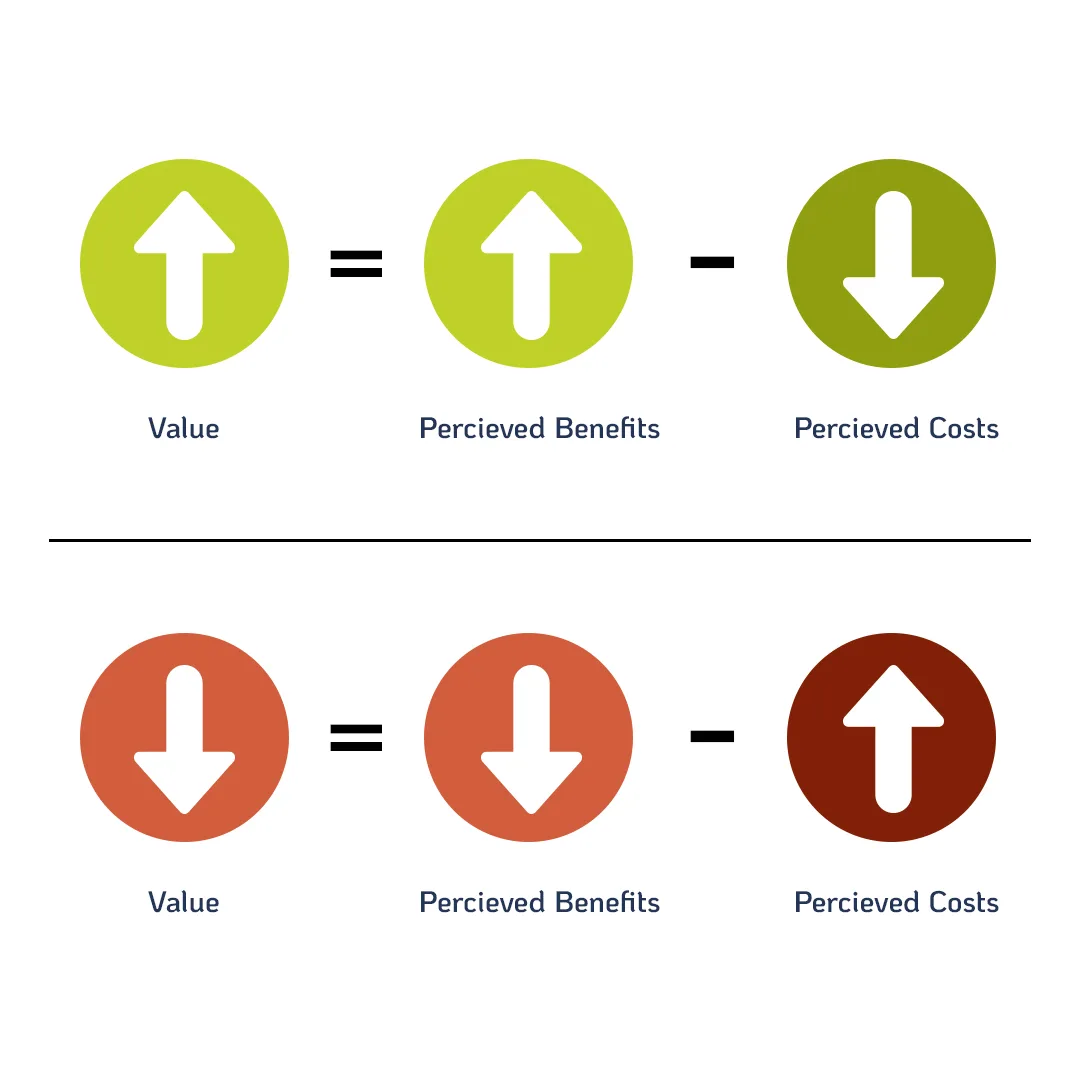
Understanding your target audience and the relationship between perceived benefits, price, and value can help simplify the process. If perceived benefits increase or price decreases, the perceived value should generally go up. But if perceived benefits decrease or the price increases, the perceived value goes down.

Tower Social July Benefits 1 jpg The Digital Marketing Mix: How the 4Ps Have Evolved in the Age of Internet Marketing

If consumers don’t see any perceived benefits in your product, or if they decide the benefits aren’t worth the price, your product’s value will decrease and you’re less likely to make sales. 

Opportunity Cost

Since a large part of the pricing model relies on what consumers perceive as valuable, your business needs to understand what the consumer feels they are losing out on by choosing your product over the others — also known as the opportunity cost. 

Here’s an example: I have $350. I can spend it on Facebook ads that might generate leads, or I can use it on Google text ads. If I spend the money on Google ads then I forfeit the opportunity Facebook ads might bring in. The loss of those potential Facebook leads is the opportunity cost.

In this situation, I have to make the decision of what I find more valuable. Will Google or Facebook get me the leads I need? Which is the most cost-effective? Which is easier to manage? Where is my target audience most likely to be?

Your customers will ask themselves similar questions before making a purchase: will this product make my life easier? Am I getting my money’s worth? If you can anticipate those opportunity costs, you can use them to your advantage to choose a price that’s appropriate in your market.

Factors That Affect Product Pricing:

There are so many factors that can impact the price of your product, some of the most common including

  • Competitive offerings and prices
  • Market share
  • Product branding and quality
  • Materials or input costs
  • Customers’ perceived product value and fair price.

Depending on the factors that are most important to you and your target market, you can price your product appropriately using one of the following approaches:

  • 1. Demand-oriented pricing: set the price based on the demand for the product or service. If demand is high, consumers might be willing to pay more for the product.
  • 2. Cost-oriented pricing: consider how much it costs to make your product and markup accordingly so you see a profit.
  • 3. Profit-oriented pricing: determine your business’s profit goals and test out prices that yield your desired return on sales (ROS). 
  • 4. Competition-oriented pricing: price your product similarly to your competitors to compete with their market share.

Pricing Questions to Ask Yourself:

  • What is my product’s perceived value in the eyes of the consumer? 
  • What is the lowest cost I can charge while still selling enough to be profitable? 
  • Is my target market price-sensitive? What effect will changes in price do in the marketplace? 
  • Should I increase or lower the price?
  • Are my prices competitive?

Don’t forget to also consider making adjustments to your price. Seasonal discounts, trade-in deals, and other cost-saving measures can prove to be successful in many markets. Make sure you have a plan in place to monitor your price to handle the ebbs and flows of demand.

shutterstock 102061732 jpg The Digital Marketing Mix: How the 4Ps Have Evolved in the Age of Internet Marketing

3. Place

Place refers to where the consumer is able to purchase your product. It solves the complicated process of getting the product from the manufacturer into the hands of buyers. 

Traditionally, place referred to strictly brick-and-mortar locations. But the internet has added some complexities to this principle of the digital marketing mix, opening the door for many more distribution channels to meet consumers where they are. 

Ecommerce sites can be an incredibly useful place to sell your product. In 2021, retail eCommerce retail sales exceeded $5 trillion US dollars globally — a number that’s projected to rise above $8 trillion by 2026. 

If your site is lacking online retail capabilities or you’re not selling your product through third-party marketplaces online, you’re limiting your place strategy. It’s one of the easiest ways to increase your brand’s reach.

Places and Accessibility

Smartphones (and the internet in general) allow the consumer to have a 24/7 marketplace accessible from anywhere at any time.  It is critical that your brand exists in the digital space. Not only that, your business should easily found and active in that space.

Examples of Online Places Include:

  • Websites displaying interactive ads
  • Search engines highlighting shopping ads
  • Google search results
  • Emails
  • Social channels such as Facebook, Instagram, or Pinterest

Making your products accessible to the users at a time and place that is most convenient to them will give your business a competitive advantage. 

Place Questions to Ask Yourself:

  • Where is my target market searching for products? Are consumers looking in brick-and-mortar stores? Online? Direct sales?
  • Do I have access to the medium or channel? Do you have expertise and knowledge of how these channels perform? Can I optimize the efficiency of these distribution channels?
  • Where are my competitors most active? Where do they push their products? Are they utilizing a channel that I‘m not?

Because there are so many more “locations” or channels for the consumer to find your product, deciding on the placement of your product can be a challenge. It’s crucial that you get to know your target audience to determine which distribution channels are most likely to convert into a lead or sale.

Erica screenshot The Digital Marketing Mix: How the 4Ps Have Evolved in the Age of Internet Marketing

4. Promotion

Jim Blyth defines promotion as “the marketing communications used to make the offer known to potential customers and persuade them to investigate it further.” Simply put, it’s your strategy for getting people to notice your product or service. 

Thanks to modern technology, businesses have more channels than ever to communicate through. A few examples can include Google My Business listings, sponsored ads, Instagram posts, email newsletters, and much more.

These tools can help your brand personalize your marketing by tailoring your message to a specific user. Using GA4 and consumer engagement reports, you can even determine where your audience is most active and segment them according to mobile devices, browsers, and operating systems.

Which Channels to Use

When deciding on distribution channels, it’s important to make sure it fits your audience and your brand. Here are some major online distribution channels:

  • Search Engines
    • Organic search results (e.g. Google and Bing)
    • Paid/sponsored listings (e.g. Google and Bing)
  • Display Ads
    • Banner Ads
    • Interactive Ads
  • Social Media (posts and Ads)
    • Facebook
    • Instagram
    • LinkedIn
    • Twitter
    • Pinterest
    • YouTube
  • Digital word-of-mouth
    • Forums (e.g. Reddit)
    • Wikis
    • Influencers (e.g. bloggers)
    • Business listing (e.g. Yelp)

Promotion Questions to Ask Yourself:

  • What potential channels are available to communicate my message?
  • Where are my competitors promoting their products or services? Where are they active that we’re not?
  • Which is the most effective channel to communicate through? 
  • What is an appropriate cadence for our promotion? 

How you choose to promote your product or service can make all the difference in converting leads into sales. 

5. People

In the digital marketing mix, people refers to anyone who represents your product and comes in contact with the consumer. Aside from your customer service team or sales force, people can include your employees, business partners, or anyone that consumers associate with your brand. 

It’s important you’re hiring people who understand your brand’s vision and believe in your goals. You should be able to trust that when they come in contact with customers, they’re representing your brand in a positive light. 

This is increasingly important if your brand is on social media. 

Social Media Relationships

Social media, online forms, emails, and other internet platforms have created a way to interact with customers directly. These added relationship factors give your brand the ability to:

  • Respond quickly to users asking questions on Facebook, Instagram, Reddit, etc.
  • Add insightful recommendations via Quora
  • Respond to negative reviews on Google Reviews or Yelp 

Businesses that are utilizing these platforms can leverage the power of relationship-building where customers are active. Interacting with your customers directly on these platforms can strengthen trust and keep consumers coming back to your brand.

People Questions To Ask Yourself:

  • Do my employees understand our brand identity?
  • Do my business partners understand our company goals?
  • Is our company culture positive?
  • Are my employees skilled in basic social media strategy
  • Have I set clear expectations for my employees to follow when interacting with customers?

The bottom line: your people represent your brand. How they interact with customers can make or break their perception of your product or service. 

shutterstock 2277964435 jpg The Digital Marketing Mix: How the 4Ps Have Evolved in the Age of Internet Marketing

6. Process

Process is defined as the core tasks and operations required to deliver the product or service to your customer. This can refer to anything from logistics and shipment and delivery to wait times and check-out processes. 

If your customers find your processes to be too complicated — for instance, the time from placing an order to receiving it is too long — you’re likely to lose out on future sales. 

To optimize your processes and create the best experience for your potential customers, it’s critical to understand the user journey. If you can simplify the sales funnel and make the process from initial brand discovery to purchasing feel natural, the greater your chances are to convert. 

Process Questions To Ask Yourself:

  • How easy is it to navigate through our website? Is it easy to make a purchase online?
  • How long are our delivery times? How does this compare to competitors?
  • Do we have enough staff to cover the amount of purchases/requests being made?
  • Are there any internal process barriers keeping us from delivering customer value?
  • Have our customers complained about our process? Where are they dissatisfied? 

Listening to customer feedback can be a really useful tool for defining your process strategy. Take customer complaints as an opportunity to reevaluate your current process and strategize how to fix it. 

7. Physical Evidence

The final P in the digital marketing mix is physical evidence. It’s the proof that your product or service exists and is credible. In the online universe, your brand’s digital footprint can serve as your physical evidence. 

Your website is the most important measure of physical evidence for most people. If it’s up-to-date and easy to navigate, your brand can seem more trustworthy. 

Personal touches like thank you notes, confirmation emails, and receipts after a purchase can be another piece of physical evidence to keep your brand top-of-mind for customers. 

Additionally, it’s important your brand is represented on social media. You should be prioritizing creating solid brand awareness across multiple platforms and channels. Existing on these platforms and staying active can build credibility.

Physical Evidence Questions To Ask Yourself:

  • What post-purchase procedures do we have in place? Is there anything we could improve on?
  • Are we represented across multiple channels? Is our branding consistent across each?
  • Does our website provide a positive first impression? Is the UX positive?
  • Are we actively responding to customers on social media or via email? 

The more time you spend expanding your message across multiple channels and platforms can greatly increase the value the customer finds in your brand, product, or service. 

An Integrated Marketing Approach is Best

Increase your share of voice by choosing an integrated marketing approach. When you start using the 7Ps of the digital marketing mix, you can multiply your reach using a consumer-centric strategy.

computer displaying analytics

Digital Marketing Mix Checklist

  1. Identify the product or service. What is the Unique Selling Proposition (USP)?
  2. Research and understand your target audience. Who are your potential customers? What do they search for? Is your product relevant to their needs?
  3. Research and understand your competition. Is the market highly competitive or are you a pioneer? What can you learn from other businesses competing in this space?
  4. Assess the channels (space) where your customer engages with your product. Understand the pros and cons of each platform/place.
  5. Test your digital marketing mix. Ask customer-focused questions:
    1. Does the product meet the user’s need(s)? (Product)
    2. Is the pricing right? Or does it need to change? (Price)
    3. Where are the consumers? Are your marketing channels delivering as expected? (Place)
    4. Is your marketing message resonating with the target audience? Do they understand? Do they feel confident in making a purchase? (Promotion)
    5. Do my employees positively represent our brand? (People)
    6. Is it easy to purchase and receive our product/service? (Process)
    7. Can we be found across multiple marketing channels? (Physical Evidence)
  6. Review your marketing plans & adjust each of the elements to cater to your user, market, and business needs.

Need help implementing an integrated approach to your marketing plan? Our digital marketing team has been solving that problem for our clients for over 25 years. Contact our team for a consultation.

Editor’s note: This blog was originally published on June 16, 2020. It was updated on July 28, 2023.

Traditional radio still exists, but it’s like a flip phone. It’s still on the market, but why would you spend money on one when the smartphone exists? If you’re a marketer trying to reach listeners through traditional radio you might be wasting your budget. 

But that doesn’t mean that you should scrap radio from your advertising budget altogether. It simply means that advertisers must evolve their marketing distribution channels. In the era of music streaming, marketers can leverage internet radio to reach their desired audience. 

Because let’s face it — music and sound are captivating. Learn the properties of sound that make audio ads so effective and how to create Spotify ads that help you achieve your marketing goals.

What Makes Sound Effective?

Imagine you’re driving and you hear a fire siren. What are your first thoughts? You might be able to infer (1) there’s been a fire, (2) it’s within miles, and (3) that help is on the way. When you hear the siren, what do you feel? Maybe you feel uneasy or that danger is near. That’s the impact that sound can have on our minds. 

Sound has the power to deliver information and evoke a feeling — we can observe that in the siren example. If your businesses can leverage those same elements of sound in your marketing, the return can be abundant.

Following the logic of the siren model, your company can communicate information about your brand and evoke a feeling from your listeners through sound, too. Using Spotify’s self-serving advertising platform, you can easily create Spotify ads that drive brand awareness and influence consumer behavior.

Advertising On Spotify: The Basics

Before jumping into how to create Spotify ads, there are some basics to understand about the platform, including how ads are delivered, the different ad formats, and their costs.

Spotify’s Ad Delivery Model 

Like most software as a service (saas) companies, Spotify uses the “freemium” business model. This means users can join to experience the basic product features for free. To use the advanced options, they are incentivized to upgrade to a premium subscription.

In Spotify’s case, users can set up an account to listen for free. Among other restrictive features, freemium listeners are severed 15- to 30-second ads throughout their listening experience; and yours can be one of them.

Types of Spotify Ads

There are four types of Spotify ad experiences that your marketing team can consider when building out your ads:

1. Audio Ads

These are the most basic ads that brands can run on Spotify. They are audio spots, up to 30 seconds long, that Spotify plays in between songs. They’re sometimes referred to as “all-platform” ads because they’ll run on any device, in any environment, and at any hour of the day. 

If you’re just starting out, audio ads are a good place to begin because they are inexpensive and Spotify can guarantee your ad will be heard, since they are only delivered to “in the moment” listeners. This means the ads are only played for users in active sessions. 

The minimum budget for running a basic audio ad is $250. 

2. Video Ads

Video takeover ads merge the strengths of audio and video to reach listeners. In this model, you have the ability to show listeners about your brand, not just tell them. The nature of video ads requires that they’re only shown to users actively browsing with the screen in view. 

In some ways, the delivery model for video ads can limit your ad’s reach. But, in a study conducted for Dentsu International’s Attention Economy series, researchers found that Spotify video ads improved the platform average for holding users’ attention by over 150%.

If your brand has the production means and budget to create a video takeover ad, it could be worth the investment. Keep in mind, the minimum budget to run this type of ad is $250, plus whatever you spend on production.

3. Podcast Ads

Spotify premium promises “ad-free music listening,” but they don’t mention ad-free podcast listening. That means if you elect to run podcast ads, you have the ability to reach freemium and premium Spotify users. 

Being able to reach premium and free listeners doesn’t mean your ad will be more successful, however. All users have the ability to pause, fast forward, and rewind to any part of the podcast episode, meaning you might be risking the chance for your ad to be heard at all. 

The minimum budget to run this type of ad is $500.

4. Custom Experience Ads

Sponsored playlists, overlays, homepage takeovers, and leaderboard ads are some of the custom experiences Spotify offers to advertisers. They are multi-format ads designed to be more unique to your brand. 

To put together a custom experience ad, marketers must work with a Spotify ad specialist, so this is not a true self-serve option.

How To Create a Spotify Ad

Now that you understand the basics of how Spotify advertising works, let’s jump into the actual process of creating your ads. We’ll outline how to create a Spotify ad in 6 steps and provide visual examples from our team. 

1. Create Your Account

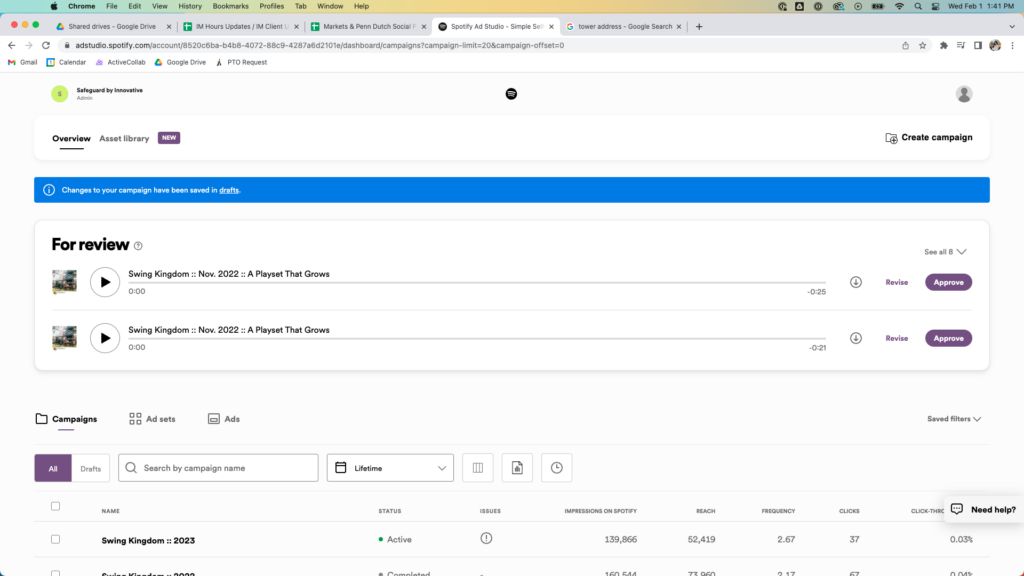
If you don’t have one already, the first step is to create your account. You’ll be prompted to fill out some basic information about you and your brand. Once it’s created, you’ll be directed to your dashboard.

Screenshot 2023 02 01 at 1.41.33 PM 3 How To Create Spotify Ads: A Complete Guide on Leveraging Sound in the Age of Streaming

2. Create Your Campaign

Now it’s time to create your first Spotify ad! You’ll start by creating a new campaign. If you’re familiar with Meta’s ad manager, the hierarchy of campaign > ad sets > ads is the same. 

For general organization and tracking purposes, we suggest creating a single campaign per year, and simply creating a new ad set for each new ad during that year. This can help you compare ad performance year over year. 

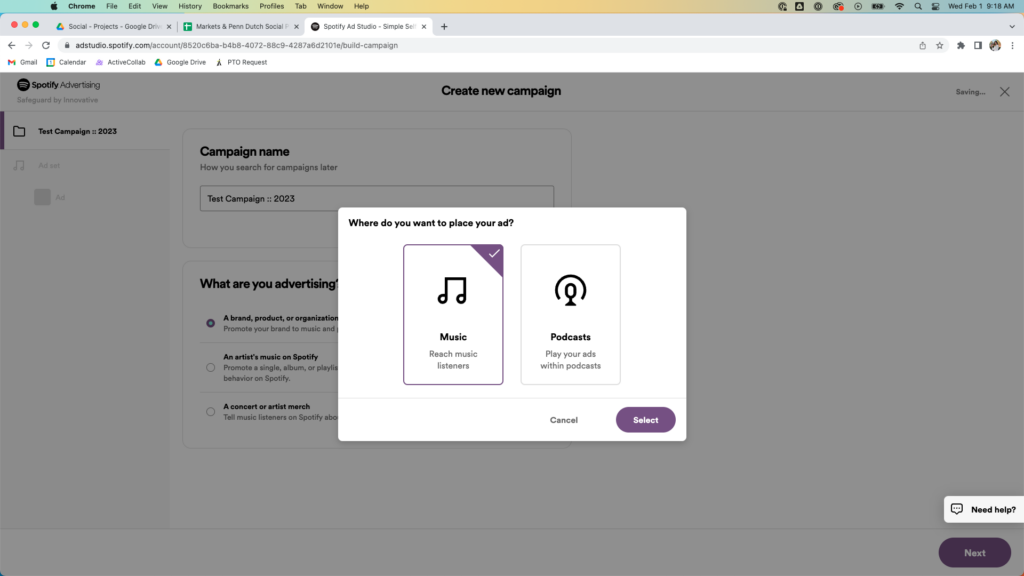
Click “Create Campaign” in the upper right corner of the screen. After you name your campaign, you’ll have to select the objective and placement of your ads. In this case, we selected “A brand, product, or organization” as the objective and “music” for the placement, but feel free to adjust accordingly.

Screenshot 2023 02 01 at 9.18.24 AM 3 How To Create Spotify Ads: A Complete Guide on Leveraging Sound in the Age of Streaming

3. Update The Ad Set

At the ad set level, you will determine your ad format, audience, budget, and schedule. 

Ad Format

With music selected as your ad placement, you can choose between audio or video ad formats. We recommend starting with a basic audio ad to run across all platforms. 

If you need to update the platforms, know that the option is available to you, but Spotify (and us) recommend maximizing your reach with all platforms especially since you’re just starting out. 

Audience

Here, you’ll choose your target audience. You can do this by selecting 

  • Locations
  • Ages
  • Genders
  • Interests
  • Behaviors
  • Postal Links

When setting your age preferences, you’ll have to select by predetermined ranges. Spotify doesn’t have the option to set your own, so you can’t narrow it down quite as much as some other platforms.

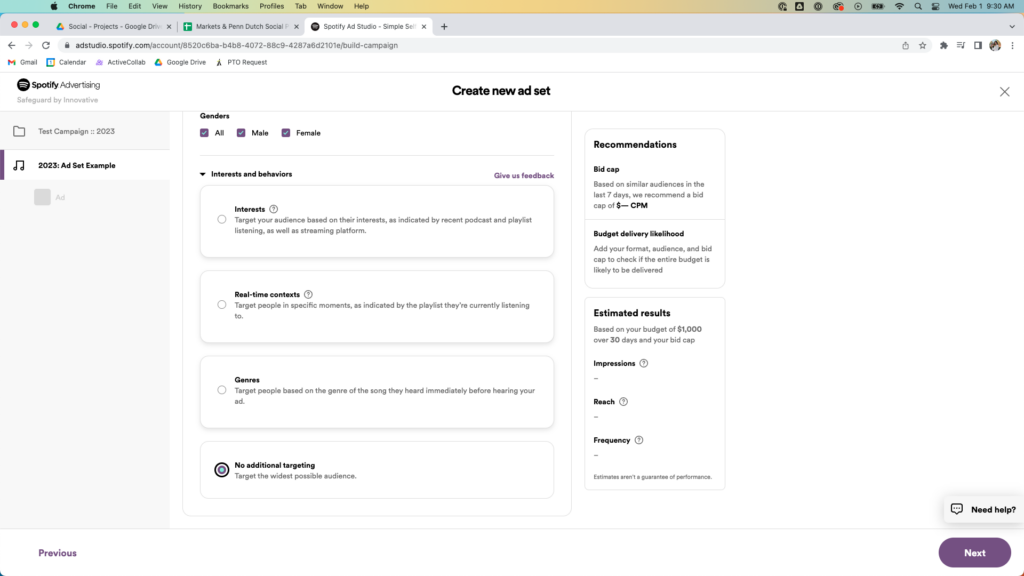
Where you can really start to define your audience is under the “Interests and behaviors” section. You can narrow it down by topics of interest, music genres, or real-time contexts.

Screenshot 2023 02 01 at 9.30.50 AM 3 How To Create Spotify Ads: A Complete Guide on Leveraging Sound in the Age of Streaming

If you’re in a niche that Spotify’s preset options support, real-time contexts could be something really cool to explore. This feature allows Spotify to deliver your ad to people participating in specific behaviors based on user-curated and Spotify-curated playlists. 

Budget & Schedule

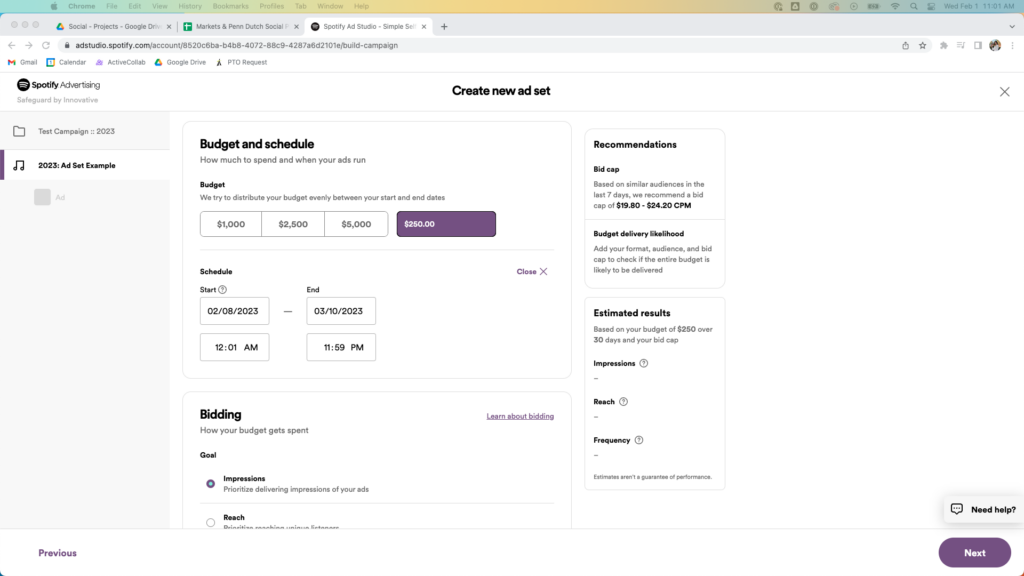
Time to determine how long you want your ad to run and how much money you’d like to spend. Remember, the minimum for an audio ad is $250, but you can enter a custom amount. 

Then set the start and end dates for your ad to run, along with the hours that you’d like it to deliver. Unless you’re putting together several ads within the same ad set, you can keep the delivery hours at Spotify’s default settings. You’d only need to change it if you have multiple ads that you’d like to rotate to listeners. 

The final step of updating the ad set is to set your bidding preferences. This includes setting a bid cap and a frequency cap. Spotify requires that you choose a bid cap, and before you panic — they will recommend an amount for you based on similar audiences. We suggest choosing a number in between the range that they offer. 

Setting a frequency cap is not required, but it might be something beneficial to consider. By doing so, you can control the maximum amount of times your ad is delivered to the target audience per day, week, or month. 

We’ve all experienced getting served the same ad over and over and over again. Eventually, it becomes a nuisance, and it could actually cause listeners to form a negative impression of your brand. Setting a frequency cap can help avoid this and gives you some more control over the delivery of your ad.

Screenshot 2023 02 01 at 11.01.31 AM 3 How To Create Spotify Ads: A Complete Guide on Leveraging Sound in the Age of Streaming

4. Build Your Ad

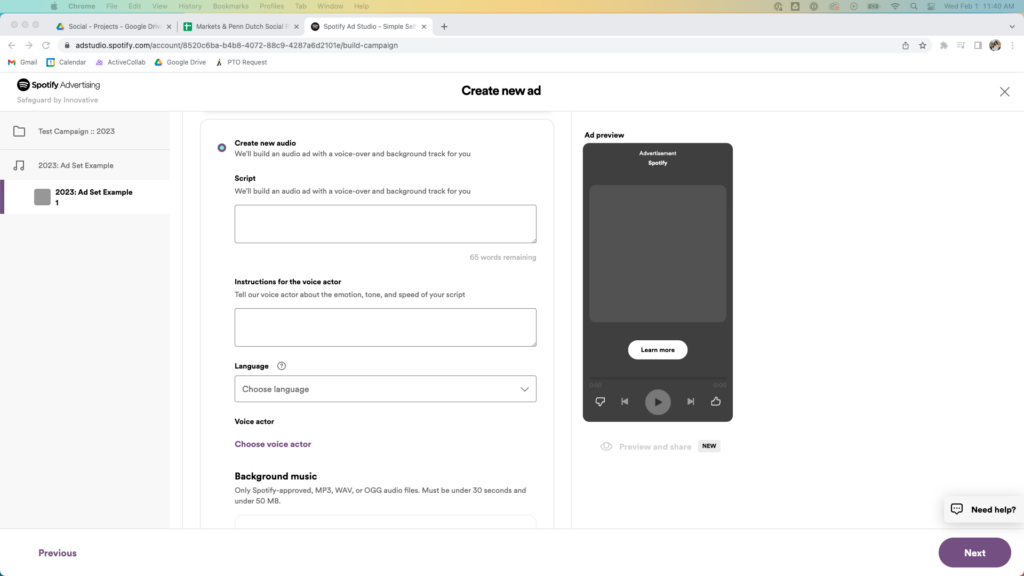
Now it’s time for the fun part: building your ad! If you already have an audio clip recorded and mixed, you can upload it directly to Spotify. If you don’t, you’ll have to write a script and Spotify will record the voiceover for you. 

The latter option comes with some additional decisions. You’ll have to choose a voice actor, which Spotify makes easy. Then, you’ll have to give the voice actor some context. You can instruct them on the tone, speed, and emotion you’d like your ad to deliver. 

Next, you’ll choose some background music. Spotify has a limited library of music that you can use, or you can upload your own. Tracks must be under 30 seconds long. If you’re uploading a file longer than that, you can edit which part of the song plays, but only after Spotify sends back your recording. 

The next step is to upload an image and update the text that will show on the listeners’ screens. If you have a branded photo you’d like to use, you can upload it to Spotify. If you don’t, Spotify also has a small library of generic ad images advertisers can choose from. 

Finally, you’ll add your brand’s name, choose your call-to-action button’s text, and the button language. If you use UTM tracking to gather information for Google Analytics, you can add your URL here, too.

Screenshot 2023 02 01 at 11.40.03 AM 3 How To Create Spotify Ads: A Complete Guide on Leveraging Sound in the Age of Streaming

5. Submit Your Ad For Review

When you’re satisfied with your ad, the final step is to submit it for review. Typically, it takes 1-3 days for Spotify to record and mix your ad. When your ad is ready for a final review, they’ll send it back to your dashboard where you can approve or revise the recording. 

Sometimes the Spotify voice actors send back recordings that don’t match the tone or pace that you intended. Luckily, Spotify allows advertisers to submit revisions for voiceovers, so you have the option to send the ad for a rerecording with different instructions. 

The only downside is that if you’re unhappy with the voice actor in general, Spotify doesn’t yet allow users to send a request for a new voice. If you want a new voice actor, you’ll have to reject the ad and start from the beginning.

Key Takeaways

At this point, you should have all the basic information you need to create a Spotify ad.  Like most new things you try, it’s going to take some time to perfect. Don’t be afraid to experiment and try something new with your targeting or your script! You always have the ability to edit the ad throughout the month if it’s not yielding the results you’d like. 

Are you ready to take your internet radio marketing to the next level? Reach out to a team member to start working with an experienced full-service agency.

Most people were unfamiliar with podcasts before 2005. But we don’t live in that world anymore. With over 383 million podcast listeners globally, it feels like everyone — from actors and comedians to talk show hosts and presidents — has a podcast of their own. While all this signal noise can make you feel like you’re too late to catch the podcasting wave, the data says differently.

In fact, that 383 million is expected to turn into 424 million in the coming year (with projections of continued annual growth). That’s why we’ve created a guide to starting a B2B podcast. We’ll help you understand what you need to get started, how to reach an audience, and how to track your results as you record, distribute, and record some more. Let’s get started.

B2B Podcasting — What Is It?

Before we dive into this guide to starting a B2B podcast, we first need to define the term. A B2B podcast is a podcast created and produced by a B2B (business to business) company. More often than not, it’s started with the intention of boosting brand awareness and building industry authority. It’s also a way to reach potential customers.

Different types of B2B podcasts will focus on different themes and subjects, and use different formats (audio or audio and video). The exact how and what of your podcast will depend on various factors we’ll cover below, including your vision, audience, and goals. However, at the heart of it, a B2B podcast is created with the intention of marketing your company by providing value to your target audience.

Is B2B Podcasting Worth It?

About 40% of all Americans listen to podcasts, a number that’s still on the rise. The audience is certainly there, so if you’re wondering if your podcast will disappear into the ether once you publish your first episode, it won’t (getting listeners is a different story, which we’ll cover below).

The most obvious reason to consider B2B podcasting is that it’s another weapon in the arsenal to help you get your business’s name, product, or service out there. It can help you attract new visitors, customers, and buyers. It can also serve as an excellent addition to your sales process. Additionally, podcasting can also help you network with other leaders in your industry.

Choosing a Team

Before you start thinking about equipment and distribution platforms, you need to think about building a strong team. Remember, your podcast host(s) make up the voice — and possibly, face — of your show. Decide whether you want to do a solo show or more of a roundtable discussion. 

There’s no right or wrong decision here, necessarily. However, unless someone on your team has enough of a personality to handle a whole podcast episode themselves, it may be better to start out with a few team members to keep the conversation alive.

If you’re leaning towards a group show, we recommend having no more than 3-4 people on at once. Too many voices on the show can make an episode feel crowded and chaotic.

Two young professionals recording a podcast in an office space with brick walls.

Getting Started: 3 B2B Podcast Tips

Okay, you’ve assembled the dream ensemble. Now what? Starting a podcast can feel overwhelming, and as B2B podcast production quality continues to improve, it’s natural to feel like there’s a lot to do just to get going. To help you on your way, below are 3 of the most important B2B podcast tips as you start your own podcasting journey.

1. Set Goals

Podcasting is great, but like any marketing initiative, you want to set clear, definable goals so you can make sure it’s worth your time. One way to do this is to use the SMART goals framework:

  • Specific. What needs to be accomplished? Who’s responsible for it? What steps need to be taken?
  • Measurable. Quantify your goals. Make it easy to track progress and reach the finish line.
  • Achievable. Is your objective something you can reasonably accomplish? Goals should be achievable and not too grandiose.
  • Relevant. Why are you setting the goals you’re setting? How do they fit into your business’s overall initiatives?
  • Time-bound. When will you know the project (i.e., podcast) has been a success? Set realistic goals so you don’t give up after a month but also don’t continue with the same strategy indefinitely if it’s yielding no results.

Also, this is a good time to ask yourself what exactly you want to get out of your podcast. For instance, do you want to:

  • Build relationships with your customers?
  • Grow your audience for brand awareness purposes?
  • Highlight your business’s product or service and drive demand to it?

If your answer is a mix of the above, that’s totally fine. Just be sure to define your goals ahead of time. Also, your goals may change along the way, which is totally normal. The only real failure at the outset of B2B podcast production is failing to set clear expectations and goals for yourself. Doing so could leave you 6 months down the line wondering if what you’re doing is having any effect at all.

2. Find Your Niche & Develop Your Vision

Next up on the list is finding your voice. Unless you want your podcast to speak very generally about your industry with no specific angle, you’ll need to find what makes you worth tuning into. To do this, ask yourself the following questions:

  • Who is my audience?
  • What is my expertise?
  • What value can I offer my audience?

Let’s start with the audience. If possible, reference your company’s buyer personas to help you understand who may tune into your podcast. This will help you craft your voice for the show (serious, light-hearted, somewhere in between) and understand what challenges the audience faces that you can speak to.

Next up, you need to be honest about your expertise. This can include any collective industry knowledge, career history, and anything your business brings to the table that speaks to the needs of your target audience. 

This question may also influence our section above on choosing your team. Having the host(s) of your podcast come to the podcasting table with enough industry knowledge and expertise to speak authentically and authoritatively can certainly impact the final product.

However, don’t allow a sense of imposter syndrome to prevent you from getting started. Nothing is perfect, and seldom is any endeavor excellent from the get-go. Sometimes the best way to learn is to five right in.

Finally, understanding the value you bring involves understanding what’s already been done among your industry’s top podcasts. While some overlap is natural, take this time to think of how to create something fresh. You certainly don’t need to reinvent the wheel, but a strict copycat model isn’t the most valuable approach. Instead of “brand-new”, think “brand-better”.

Take some time to listen to the top podcasts in your area of expertise. What are they doing right? Anything they’re doing wrong? From there, incorporate what works and learn to include what the current key players are missing.

3. Get Your Gear

When you’re brand new to starting a B2B podcast, you probably aren’t interested in contracting out and spending money recording at a third-party studio. In fact, one of the benefits of podcasting is the low-overhead it offers. Plus, given the fantastic tools on the market today to create a polished recording sound, you can get stellar sounds for relatively inexpensive.

To make sure you’ve got your tech stack covered before launching your podcast, you’ll want to have the following:

  • Recording software. For Mac users, Garageband is a free tool that comes with your computer that will suit all of your podcasting needs as your start out. Other popular recording software includes Audacity and Adobe Audition.
  • Editing software. This can and will often be the same as your recording software. Using a platform your can record and edit with makes the process even simpler, especially as you’re starting out. Riverside wrote a great blog on some of the top podcast recording software currently on the market!
A female business professional recording a podcast and filming herself on a digital camera.

Launching Your Podcast: 3 More Steps

The next steps in this guide to starting a B2B podcast is to focus on how to actually get your podcast up and listenable for your audience. From hosting to scheduling and style guides, here are 3 more B2B podcast tips to get you from the studio to the internet. 

1. Choose Your Hosting & Distributing Platforms

Wondering how to distribute a B2B podcast? It’s actually pretty simple, and there are more than a few platforms available to choose from. Below are five of the most popular podcast hosting platforms:

  1. BuzzSprout.Often ranked as the best overall hosting platform for podcasts.
  1. RSS.com. This platform is very affordable and easy to use.
  1. Podbean. Growing in popularity in recent years, this platform is easy to use. It also supports video.
  1. Libsyn. At $5 a month, this is one of the most affordable podcast-hosting platforms.
  1. Soundcloud.This platform offers you the opportunity to upload your podcast directly to Soundcloud and sync your RSS feed with distributing platforms like Apple Podcasts and Spotify.

All of the platforms mentioned above are known as hosting platforms. They allow you to upload your podcast so people can listen to it on the platforms they most frequently use. They’re not, in and of themselves, the platforms your listeners will most likely flock to.

This is where a podcast-distributing platform comes in. We recommend starting out with Apple Podcasts, Spotify, Google Podcasts, and YouTube (if you’re recording video). To get your podcast on a distributing platform, all you need is the RSS feed link generated by your podcast hosting service. From there, just submit the link to each aggregator.

2. Develop a Publishing Schedule

Once the more technical side of getting your podcast started is complete, you want to turn your attention to brainstorming B2B podcast topics and developing a schedule. Popular podcasts will often publish one episode a week. However, it may be better to start out by publishing one episode a month. Just figure out what works best for your schedule and do your best to stick to it.

From a branding perspective, it’s better to start by uploading less frequently but more regularly, instead of recording an episode every week and trailing off after two months. Everything — including the flow of your podcasts, the topics covered, and the production quality — will improve the more you stick with it.

Monday.com offers a great podcast planning template to help you get started!

3. Create a Style Guide

A style guide could include your podcast’s logo, the editing style, and even the set design if you’re doing a video podcast. Whatever it is, we recommend creating a style guide to make sure the podcasts stay consistent.

Something as simple as creating a folder in Google Drive is a good place to start. Have a folder for your podcast’s logo, a Google Doc that describes your podcast’s tone of voice/aesthetic, and anything else that can help other members of your team best represent your brand when they work on the podcast.

Remember, it doesn’t need to be anything too fancy at the start. It’s better to just get started and hone your craft from there, instead of waiting for all the housekeeping items to be in order.

An up-close picture of a studio microphone and a computer screen running recording software on it in the background.

Once you have your first episode uploaded (congratulations, by the way) you should consider how to promote your podcast. Sharing your podcast organically on social media platforms is a good way to get started (especially on LinkedIn). Instagram is another great platform for this, especially if you’re doing a video podcast since you can share smaller clips of each episode on your feed and your account’s story.

Once you have a few episodes recorded and you’re proud of the finished product, you may also consider turning to social media advertising to target a relevant audience. Once again, LinkedIn advertising is a great platform for this, but you may also consider Facebook ads and Google Ads.

Report & Measure the ROI

Any marketing initiative is best when backed by data. Recording your podcast may be fun, but as with any endeavor, you may get to the point where you’re wondering if the input is worth the output. How do you measure your podcast’s success? We recommend tracking ROI with these four frameworks:

  1. Track your show’s downloads over time.
  1. Compare your podcast data to your other marketing channels.
  1. Compare your podcast data to benchmarks of other shows.
  1. Track any leads/customers that found you through your podcast.

Taking a look at the world’s largest podcasts receiving millions of downloads in a month isn’t going to help you determine whether your podcast is successful or not. The only shows you should focus on are yours and podcasts very similar to yours. From there, simply focus on providing value and building relationships with your ideal customers and clients.

Welcome to the World Of Podcasting

While this guide to starting a B2B podcast has all the things you need to get started, it isn’t intended to be the be-all and end-all of your podcasting journey. Take the B2B podcast tips we’ve shared in this blog and apply them to your project. You’ll most likely experience some roadblocks along the way — and that’s okay. Just keep working at it and refining your strategy as you go. Happy ‘casting!
Join Team Tower over at After Hours to learn more about promoting your brand and elevating your business through content, social media, and PPC.

One of the first things a consumer will notice about your brand is your logo, which makes it so much more than just a symbol. It’s a visual depiction of your brand to help make it stand out and more easily recognizable.

However, you’re probably aware the biggest challenge of a logo is how easily it can be dated. If you’re thinking about redesigning yours and want a fresh look, this blog will help you understand the current logo design trends of 2023.

But more importantly, in the end, you’ll walk away with some tips on how to create a timeless logo that won’t become dated fast. And how to make a new one that represents your business well.

Trend #1: The Minimalist Logo

We’ve all heard the saying ’less is more’ and that’s what this trend is all about. Instead of using lots of color and contrast, a minimalist logo design tends to consist of simple fonts, small line strokes, and a limited color palette.

However, that doesn’t mean a logo like that can’t be interesting. Minimalist logos can actually have complex and even 3D elements (we’ll discuss this more below), without being overpowering.

The idea is to create something with less sensory overload for the viewer. A logo with just a few details creates a sense of breathing room for those seeing it, even if they aren’t design experts. Plus, having fewer details to load makes your logo more functional with screens and in other digital formats.

Minimalist logo design for bread shop

Trend #2: 3D Trendy Logo Design

In contrast to the first trend, three-dimensional design elements just started appearing in 2022 and are definitely here to carry into the upcoming years. 3D logos are iconic because they create a sense of realism that seemingly pops off the page, whether they’re online or on paper.

Adding depth or dimension to a logo can create opportunities for unique animation elements or simply to have a static, but eye-catching design. The 3D logo is a creative way to reach your viewer and engage them with your brand.

3d logo for bicycle shop

Trend #3: ’90s and 2000s Nostalgia

We’ve already been through the 80s influence of design and have definitely been moving through the ’90s and early 2000s inspiration. This period is often referred to as the Aughts time period.

If logos become dated so quickly, why reference vintage elements?

Well, truthfully, incorporating elements from the recent past and even what may be, for some of your audience, from the time of their youth, creates a sense of comfort. A vintage flair feels familiar and even may nod towards elements that have been lost in today’s heavily digital age.

Especially if your brand was founded several decades ago, a logo capturing nostalgic elements from that time may go a long way.

Nostalgia logo for beer company

Trend #4: Natural Patterns and Textures

If you want something that feels fresh and modern but can be paired with other trends, consider being inspired by nature! Natural-looking logos incorporate organic shapes that don’t feel so gridded.

And natural doesn’t mean it needs to contain the actual image of a plant. This trend can be accomplished simply by relying on earthy colors and organic-looking elements. As another way to make it pop, consider adding some textures like wood, grain, or stone, that create subtle elements to refresh your logo.

Nature inspired logo

Tips for Achieving a Timeless Logo: Balancing Trends with Needs

Redesigning your logo is a huge undertaking. And while modern logo design trends can influence the direction you go, it’s important to make sure your takeaway logo will last beyond the latest trends.

Logo design trends of 2023 are a great place to start and find inspiration, but you’ll want to make sure to take your actual project beyond them. Approach your project with the mindset of creating a logo that can survive the years to come. (Examples that come to mind include Apple or Levi’s.)

Below we’ll provide some simple tips to remember as you embark on the journey to find a new logo that makes your brand stand out.

1. Have a Long-Term Vision

Talk with your internal stakeholders and get a long-term vision of what you want the brand to look like. Do you want to be known as the funky 3-D nostalgic-looking brand forever? Make sure you all agree on what qualities you want to be known for and create a logo that accentuates that.

2. Base Your Design on Core Values and Products or Services

Who is your target audience and what kind of message are you projecting to them? Aim for a blend of trends and design that will make you look professional and evoke the right emotions in your audience when they see it.

3. Tell Your Story

Because who doesn’t love a story? Remember to avoid stuffing too much imagery or detail into your logo. If there’s too much going on, it can be difficult for viewers to understand what it all means or the story you’re trying to tell.

4. Keep it Simple

What does your new logo look like if it’s scaled up or down 50%? Will it look pixelated or shrunk?

Your logo will be used in a variety of digital and print mediums, so versatility is critical. Subtle elements and text are ideal if you need to use it across multiple platforms. And if your elements are vector, it’s even better for scaling your logo to any size.

5. Watch for Fonts

Fonts will make or break your logo. So make sure to not just pick the first you can find. Fonts also create emotion around your brand. For a more playful approach, try a script. Or for a more serious brand, a serif font may better convey your image.

Additionally, consider the readability. Make sure your font doesn’t just look appealing. It should also be legible.

6. Make it Hard to Imitate

Making sure your logo has a unique factor is about more than distinguishing you from the competition. It’s about making sure it can’t be easily copied. Plus, doing so ensures your new logo isn’t something that’s already been done or accidentally copied based on inspiration from a different company.

Most importantly, you want your logo to not be easily copied. If someone can take your logo and change the name, how will you be recognized? 

Having a one of a kind logo will definitely make you stand out from the rest of the competition and prevent others from taking it. If you make it as unique as your business you may only need slight changes as time goes on.

Ready to find a logo that reflects the message you want to send about your business? Speak with our team to see how our designers can help refine your logo and help it serve you better.

Creating a marketing video could be just the thing to bring your business to the next level. If done correctly, videos can be extremely effective marketing tools and ensure you’re getting the attention and revenue you deserve. 

However, before you dive into creating a marketing video, you should be familiar with the different factors that will affect your professional video production costs. In this blog, we will break down what goes into video production and how you can plan a realistic video budget. 

What are Marketing Videos?

The main purpose of marketing videos is to address your audience’s problem, propose how your product or service can fix it, and then explain why the audience should choose your company over your competitors. 

There are many different names or types of marketing videos, like: explainer videos, corporate videos, and promotional videos. However, all of these short films are primarily used to highlight a company’s product, service, or business idea. 

Your video may even be used to present your company’s financial results to stakeholders, highlight a new initiative your company is partaking in, or be used as a business introduction for potential clients. 

No matter what topic your video is focusing on, in order for it to be successful, it should be high quality, represent your company’s brand identity well, and incorporate a strong call to action. Your videos should be compelling and well executed, leaving your target audience informed, as well as intrigued. 

5 Major Stages of Marketing Video Production

Making a marketing video usually involves 5 stages. Below is an outline you can follow when going through your video production process. 

1. Development

The development stage of video production is all about your concept and end goal. You’ll want to decide what you plan to get from this video and how you plan to achieve that. 

This is also the stage where you can create a timeline and marketing budget for your project. (More on video marketing costs to follow below.) Understanding the purpose of your video is key, because it will serve as the foundation for the entire production process. 
2. Pre-Production

The pre-production stage is where you begin to figure out the details of your video. Preparing a schedule will help you stay organized and on track as you work. 

You’ll also need to finalize your video script, as well as hire any staff or actors you need for your production team. Make sure you gather whatever equipment you may need and decide on location(s) for your video to take place.

3. Production

The production stage is when filming happens. All of the raw footage and content that will be presented in your video is created. This includes any video, audio, B-roll, and/or cut-away shots. Depending on how long or complex your video is, production could take anywhere from one day to one week. 

4. Post-Production

The post-production stage involves all the editing. This includes video editing, mixing audio and sound, adding sound effects, color grading, and/or adding any animation or motion graphics.

Another piece of this stage is video rendering and compression. These steps involve transferring your footage into an editing system, rendering it into a presentable format post editing, and eventually uploading it to wherever it will be hosted. 

5. Marketing & Distribution

This stage should be where you share your final video to reach your target audience and the general public. Your end goal and overall purpose that you determined in the development stage should be fulfilled in your distribution of your video. 

Woman working on editing and distributing marketing video.

Professional Video Production Cost Breakdown

Professional video production cost can be broken down into different factors or categories. Not every element is necessary for every video, and depending on what type of video you’re creating, you may only have some of these expenses. 

The prices for different services will also vary depending on what type of video production team you use.  where your business is located. Below are the most common factors that will affect your professional video production cost. 

Project Management and Project Coordination Expenses

Project managers or project coordinators are necessary to ensure your production costs don’t exceed your video production budget. In addition, these individuals help to manage the production timeline. When you’re on a schedule, you want to be sure that everyone is meeting their deadlines and staying on track. 

Depending on who you hire for this role, you may spend anywhere from $25-$250 an hour. The experience of the project manager or project coordinator will be the deciding factor in how expensive their rate is. 

Script Development Costs

This cost is only necessary if your video project requires a script. Hiring a professional script writer will help coordinate what your on-screen speakers will say. These prices will vary depending on the length of the script and the experience of the script writer. 

If you choose to use an experienced script writer, you could spend anywhere from $50-$150 an hour. Many professional script writers will provide you with a video concept, storyboard, and script for your video project.
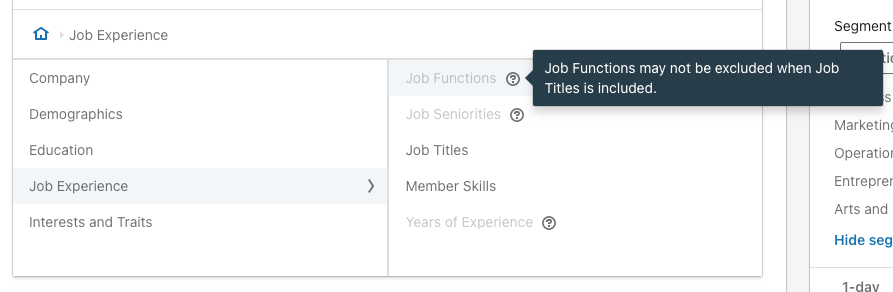
Cost of On-Screen Talent

On-screen talent is optional when it comes to video production. If you don’t want to be on screen, you’ll need to hire actors, models, or voice-over talent to be the face of the video. 

The factors that go into these costs depend on their experience, as well as how much time they will be spending working on the project. In addition, the price for on-screen talent varies greatly depending on where you’re located.
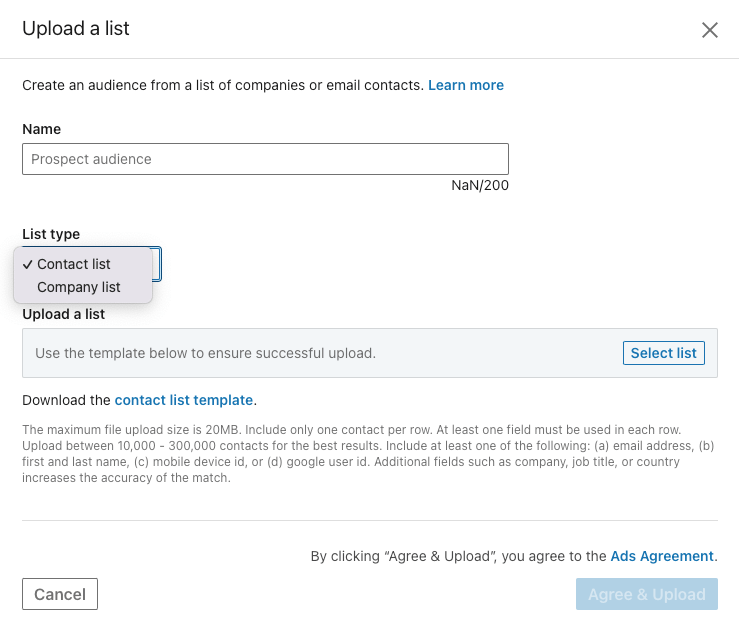
Costs Associated with Visual Assets

Marketing videos often incorporate shots that supplement what’s being said on screen. In the video production industry, these are known as B-roll or cut-away shots

These are visuals that can be used to describe a product or service in your video. Some of the most common types of supplemental visuals include:

  • Still images
  • Stock photos
  • Licensed photos
  • Custom photography
  • Video
  • Stock video
  • Licensed video
  • Custom video
  • Illustrations/3-D elements
  • Stock illustrations
  • Custom illustrations
  • Purchased 3-D models

The price of supplemental visuals will depend on the quality of the photos, videos, or illustrations, as well as the time needed to film the extra footage. Most often, cut-aways and B-roll shots make up about 15%-50% of your filming budget.

Costs to Add Special Effects

Depending on the type of video you’re producing, you may include special effects like animations, motion graphics, or title overlays. Using these elements will add to your overall video production budget. If you’re creating a brand video intended to sell a product or service, you may want to include a call to action with the help of special visual effects.

Some videos only require simple graphics, while others may be entirely animated. For basic special effects editing, you may spend anywhere from $65-$225 an hour. However, the cost of high-quality 3-D animation will depend on the complexity of the project and range anywhere from $95-$300 an hour. 

Man editing professional marketing video.

Location Costs 

The location of where you plan on shooting your video will also play a role in your production costs. There are multiple factors that will determine your video shoot location, such as: 

  • Are you shooting indoors or outdoors?
  • Do you need a sound stage or studio?
  • Will you be filming in more than one location?
  • Are you shooting with a green screen?
  • Will you need to travel between locations?

Considering these questions will help you decide what you have to incorporate into your budget. Studio rental, fees and permits, travel fees, and building rentals may be required depending on where you’re shooting. You’ll also need to take into account the total time you’ll need at your designated location. 

Music Licensing Fees

If you intend to have any special sound effects or music in your video, you’ll need to add certain music licensing fees to your budget. Some websites offer license-free music. Just make sure you read all of the fine print to ensure the music is legal to use. There are also other options you can use, such as:

  • Stock music (royalty-free)
  • Licensed music
  • Custom scores

Royalty free music could be anywhere from $11 for a 2-3 minute track. If you’re considering hiring an audio engineer, you could spend anywhere from $500-$1,000 or more depending on the ability, experience, and tools needed for the project. 
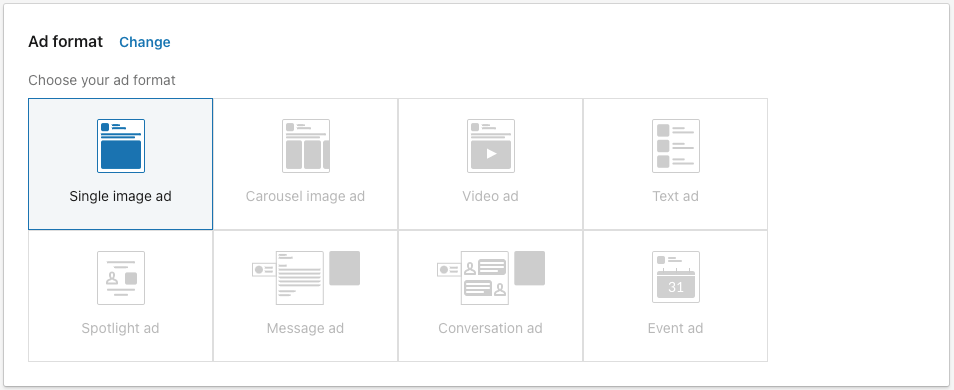
Video Production Crew Costs

The size of your production crew will depend on the complexity of the project, the length of the video, and your budget. The people involved in the production of your video may include:

  • Director
  • Director of photography
  • Camera operator
  • Lighting professional
  • Sound professional
  • Grip professional
  • Makeup/hair artist
  • Video editor
  • Motion graphics artist/animator

The cost of hiring any of these personnel will depend on where you’re located, their experience, and the amount of time they will be working for you. 

Overhead Costs of Video Production

The overhead costs include any equipment or insurance required for your video production. In terms of equipment, this may include cameras, lights, sound, computers, and software. When it comes to insurance, this covers liability and workers compensation. These costs will vary depending on what equipment you use and the quality of those products. 

Takeaway: How Much Does Marketing Video Production Cost?

There is no simple answer to the question, how much does a marketing video production cost? because of the variables that go into creating a video production budget. 

However, there are baseline costs which you can use as a starting point. According to most production companies, the average cost of video production is about $1,000-$5,000 per finished minute. 

Video production can be a valuable marketing tool, no matter how you decide to create one. The most important thing to remember is to set a realistic budget that will allow you to accomplish your goals and stick to it. 

Video production team filming.

Ready to take your business to the next level? Find out how our team can help execute your video project and achieve your marketing goals within your budget.

If you’re reading this blog, you probably already have a budget for marketing and a hunch that you need to find new ways to optimize your marketing budget. As an agency, we know that no matter the size of the budget, every dollar must bring value to the table.

But even after you’ve dotted your I’s and crossed your budget T’s, how can you stretch your marketing budget further? Here are some of our most practical tips for effectively using your marketing budget to get the best ROI on your investments.

1. Lay the Foundation for Your Optimal Marketing Budget

The key to any marketing budget is having a plan. You’ll want to analyze your company’s achievements, future goals, and areas for improvement. Asking these questions will help you lay a strategic foundation to effectively use your marketing budget.

It’s a general rule of thumb that your marketing budget on average should be 10% of your annual revenue. If you have more aggressive goals, you may want to consider adjusting to meet those objectives. More than half of that budget should be spent on digital marketing.

This can be nuanced, so comparing past years’ budgets and results with future goals can help you paint a more realistic picture of the means you’ll need to achieve that growth.

Be S.M.A.R.T. About Your Goals

When talking with clients about their goals, we often hear the phrase, “I want to generate more leads” or “I want to increase revenue.” These are important goals, but on their own, they aren’t specific enough to your business to carry you through the day-to-day. Consider the S.M.A.R.T. goals you can make that lead to those wins. 

As you paint your picture of success, consider including measurable goals – like gaining referrals, getting email signups, or increasing your organic web traffic each month. Now you know where to put the dollars in your budget.

How Will You Measure Your Goals?

In the words of Peter Drucker, “You can’t manage what you don’t measure.” Sounds easy enough, right? But as marketers, we often find ourselves passionate about a new initiative or content strategy and not so passionate about the detailed measurement of all those initiatives after they launch. It’s easy to be excited about the next idea.

And it makes sense – analyzing marketing data can feel like a big hill to climb. When you use tracking (we’ll get to that later!), it can help illustrate the value of your investment and reduce marketing waste. 

This is especially important if you need to stretch a tight marketing budget. Every business’ KPIs are different, but here are some to consider: 

  • Visitor-to-lead conversion rate
  • Opportunities generated
  • Revenue generated
  • Website traffic to blogs
  • Clicks generated from paid advertising

Consider the Season

If you’re using the same amount of ad spend or duplicate initiatives throughout every month of the year, you’re not optimizing your marketing budget. A great example of this is the tax industry. 

As you ramp up and prepare for the busy season, increasing your ad spend or awareness efforts at a higher level makes sense. But once you’re in the new year (when people need to have their taxes done), your spending probably doesn’t need to be quite as high. 

This shouldn’t be guesswork, however, which is why it’s so important to make sure you’re tracking what you do year-over-year and forecasting your digital marketing efforts for the future.

2. Invest Spend In Your Brand Equity

In marketing, large ticket efforts like social media or billboard ads are often top of mind. But what about your brand? What’s your reputation in your industry? Brand equity is based on the consumer’s perception of and experiences with your brand. And it’s important that your marketing spend supports your brand equity development.

Successful marketing should also translate to the customer’s attitude about your brand. This is helpful to your budget because organic digital marketing tactics will cost less over time compared to efforts like PPC.

Consider Factors Like Google E-A-T

Expertise. Authoritativeness. Trustworthiness. These three elements are essential to not only building brand equity online but achieving a great SEO ranking down the line. 

Rich content that contains valuable information and insights, such as optimized blog posts or case studies, shows a level of expertise. Authoritativeness is what happens as you develop a content library, by demonstrating your expertise above others in your industry. Trustworthiness comes from several factors, like how secure your site is or the number of positive vs. negative reviews.

Invest In the Right Quality and Quantity of Content

What defines quality content? Rather than giving us a step-by-step guide, Yoast tells us that “the easy answer is: your users.” But is that an easy answer? Yes and no. Various elements go into creating great content, but the end-user is always the key perspective to keep in mind. 

You’ll recall earlier we mentioned that at least 50% of your marketing budget should go towards digital marketing. When it comes to content marketing, we recommend at least 25% of that digital marketing umbrella be used towards the content budget.

Content marketing is a form of organic internet marketing. While this strategy is a long-term commitment, it can be a cost-efficient digital marketing effort because the actual costs are relatively low compared to efforts like billboards or TV ads. 

To see success, you need to generate a lot of content, but it also needs to be high quality. 

Phase 1

As you look to get started, take it back to the basics and make sure you’re using those dollars to invest in a strong foundation. That means optimizing the content on your existing web pages first and foremost.

Phase 2

Only after you’ve optimized your existing website pages to include SEO keywords and a greater wealth of quality content should you begin shifting your resources to producing new, quality content.

What does the breakdown of all that quality and quantity content look like for your budget? We’re about to take a look.

Let’s say you have 50 hours budgeted for your team to spend on content per month. You might consider using this strategy:

  • 25 hours, about 50% of that time, on blog writing and / or whitepapers
  • 2.5 hours, about 5% of the time, optimizing or rewriting one page on your website
  • At least 12 hours, about 25% of the time, for email marketing
  • Starting with 7 hours, about 15% of the time, each month depending on the season
  • And lastly, 2.5 hours or about 5% of the time to plan your upcoming month’s content

If you’re still unsure how to work content into your overall strategy, take a few minutes to read our blog on creating a content marketing strategy.

3. Test and Track Your Marketing

Earlier in this post, we talked about setting up ways of measuring your marketing goals so that you can stretch your marketing budget. As you launch your efforts, you’ll also want to track, A/B test, and review what you find.

Track Organic & Paid Digital Marketing in Google Analytics

Thanks to tools like Google Analytics and integrated CRMs, certain ROI tracking is easy. Google Analytics will allow you to track the leads and conversions from a variety of paid and organic initiatives. 

For example, tactfully tracking website visitors from your social media ad campaign and subsequent conversions helps put tangible value to your marketing spend.

Certain marketing initiatives, like a logo refresh or non-profit sponsorship, for example, are a little more difficult to track the ROI on. 

Now, that’s not to say that those less trackable efforts are any less valuable – they’re very important. Nonetheless, some marketing efforts will never have a clear, trackable line, and that’s okay. It’s also one of the reasons why it’s so important to track the ones that do.

Ultimately, at the end of the year, you’ll likely be taking the analytics data and pairing it with your KPIs to present to your executive team, CEO, or CFO. Proof of ROI from the marketing budget will help advocate for your marketing budget to stay the same or even grow in the future. 

A/B Test Your Advertising

New to A/B testing? Harvard Business Review has a great refresher on what this looks like. Essentially, it gives you room to be creative with your marketing and make small tweaks along the way that help you optimize your campaigns and spend your budget better. Here are some A/B testing examples: 

  • If you run a social ad, consider testing different verbiage with the same image or vice versa. 
  • In a PPC ad, consider the trends and test different keywords along with their subsequent combinations.
  • If you’re utilizing email marketing, send one variation of the campaign to a subset of your audience and another variation to the other subset. This will help you to see which performs better.

Invest Strategically

We know that ad time during March Madness might seem like a great and glamorous idea, and it very well may be. Nonetheless, investing a significant portion of your marketing dollars in a singular effort can be risky. That’s why it’s important to use testing, tracking, and measuring to inform your decisions and select the right mix of marketing tactics.

4. Don’t Underestimate Public Relations

To effectively use your marketing budget, a holistic approach is important. A mix of both paid and free public relations can complement your marketing efforts in calculated ways.

Positive Press

Launching a new product? Consider a press release to accompany your campaign. Have a team member who’s great at public speaking? Check with your local chamber about doing a presentation on an area of your business’ expertise. 

On the other hand, consider using your existing resources creatively towards a local non-profit’s fundraising campaign or by participating in a benefit golf tournament. 

There are four primary types of sponsorships to consider.

  • Financial Sponsorship: The business pays money in exchange for benefits outlined in the sponsor package.
  • In-kind Sponsorship: The business donates goods or services instead of a monetary amount.
  • Speaker Sponsor: The business pays the expense (travel/accommodations) for a speaker to present at an event.
  • Venue or Location Sponsor: The business covers the venue fee or allows the use of a venue they own/occupy.

These various options allow you to find the perfect match for your resources. By donating something you already have, like a few hours in your venue, to an event with attendees that are your ideal client, you’ve been able to stretch a tight marketing budget in a creative way.

Referrals

Since we already know that people talk to each other about their favorite – or not-so-favorite – products, brands, and experiences, why not ask your customers for a referral?

As you look at your budget, consider the cost per cold lead vs. the investment in rewarding your clients and the warm leads they refer. Is that reward a complimentary service? An upgrade? Make sure that whatever you choose has the potential to be good for you, your client, and the lead.

You might be fortunate enough to already see this happening organically, but if not, consider creating a referral program.

Awards and Recognition

If you need to stretch a tight marketing budget, awards and recognition within your community and industry can be a helpful complement to your traditional efforts. Consider checking with your local chamber of commerce, business journal, or reader’s choice awards for free entries while exploring industry awards for paid entries. 

If you work with an agency or consultant, see if you can partner together on this initiative and share the entry fees.

Project management team working together

Getting Started: Putting Your Budget In Place

Every business has different needs, strategies, and circumstances. This isn’t a hurdle, but a unique puzzle we as marketers get to pull out and put together. No marketing budget is one-size-fits-all, even a small marketing budget. 

The ideas and strategies we just reviewed will help you consider your unique business needs and challenges so that you can save time, money, and produce results.

Not seeing the results you want or need to elevate your efforts? We can help with a free audit of your marketing budget. You’ll get an unbiased, third-party view on your spending and efforts, along with third-party pricing.