
 By Lauren
 Conversational Commerce: How AI Is Changing the Consumer Buying Journey
- AI (AEO & GEO)
- eCommerce
Join Our Newsletter List

Online shopping journeys used to start with a search. Now they start with a conversation!
AI is changing the consumer buying journey at every single stage, from initial research to post-purchase communication and support.
Customers are no longer searching for product names. Instead, they’re describing uses, asking follow-up questions, and wanting personalized, immediate answers.
This dramatic shift in the product discovery process means that eCommerce businesses either need to adapt quickly, or watch their sales plummet.
Keep reading to discover examples of how to increase online sales through conversational commerce, and the role it plays in developing your AI business strategy.
What Is Conversational Commerce?
Conversational Commerce is any eCommerce experience that’s driven by a conversation, whether that’s a live chat with an actual person or an AI chat assistant. Conversational Commerce can also take the form of quizzes to help you narrow down your options of products to buy.
This sales journey can help your customers get more personalized recommendations faster, increasing retention and completed purchases.
Conversational Search Shifts: From Keywords To Conversations
A bold take: Conversational AI isn’t a feature. It’s replacing your homepage entirely.
Users used to do very specific searches, click onto your homepage, and navigate through the site to buy the product.
But now? You’re lucky if users even click onto your website at all.
The rise in zero-click searches means that you’re going to need to be creative in engaging an audience that expects instant information without explicitly saying what they’re looking for.
Wondering how to be found in search results now that AI overviews and AI chatbots are taking over?
Alex and Lauren dive into this topic in depth on the Tower After Hours podcast.
AI Now Influences Every Stage in the Consumer Buying Journey
1. Product Discovery
From online quizzes to related product recommendations, users can discover products they didn’t know they needed.
2. Comparison & Research
During the decision-making process, users can easily compare different products through AI shopping assistants, chatbots, and guided selling tools.
3. Purchase
In-cart support tools and recommended upgrades can help increase purchases at the time of decision.
4. Post-Purchase Communication
The conversation isn’t over yet! After the purchase is complete, automated order updates, review requests, and customer service chatbots for ecommerce sales can assist with returns, reorders, and issue resolutions.
AI Conversational Commerce Examples Throughout The Consumer Buying Journey
Example 1: Noble Knight Games – Product Discovery Through Vague Conversational Queries
Noble Knight Games, which boasts the world’s largest selection of games, allows you to discover new releases without knowing the exact titles.
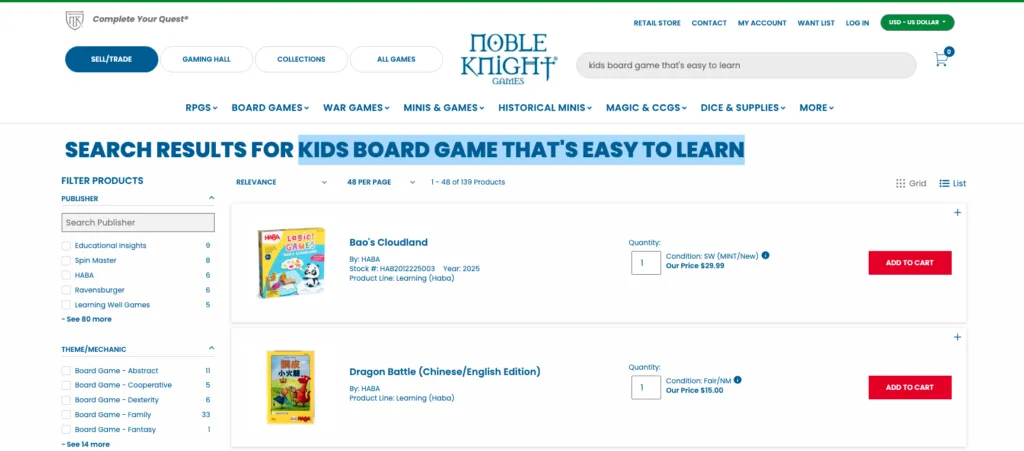
While normal search bars require specific keywords or titles, Zoovu’s AI-powered conversational search option allows you to type things like skill levels, number of players, genre, etc. to discover a new game you might not know.
In the screenshot below, you can see that we used a conversational query of “kids board game that’s easy to learn.” The system is able to understand game difficulty and age appropriateness to suggest new games to try.
Example 2: StitchFix – Integrating AI & Real People in Conversational Commerce
StitchFix, a subscription clothing service for people who don’t enjoy the hassle of retail shopping, is an impressive example of integrating both AI-powered customer engagement and real people. They’ve been successful in this personalized model for years, even before conversational commerce became popular.

The consumer buying journey starts with users taking a simple quiz on their clothing preferences – styles, budget, fit, and lifestyles. The results then get sent to a live, human stylist who creates curated styles based on their preferences. As this is a subscription service, the stylist becomes an expert on your preferences over time, creating even stronger selections that increase the likelihood of purchase.
Proprietary tools like Vision allow users to see an actual photo of themselves wearing the clothing choices, and AI shopping assistants generate outfit options based on the user’s StyleFile.
Example 3: UberEats – Post-Purchase Conversational Commerce
Many businesses think about conversational commerce as just a way to get users to complete the purchase, but follow-up conversations after the purchase has been made might even be more important. UberEats is a great example of post-purchase communication:
- Delivery updates
- Order changes
- Refund requests
- Driver communication
- Customer support
UberEats gathers feedback through surveys and ratings immediately after your order has been delivered. They also continue to re-engage users by remembering their favorite orders and restaurants, suggesting repeat purchases.
The Future of eCommerce Is Conversational
eCommerce is no longer simply a browsing experience. It’s a conversation-driven journey that begins long before a customer reaches your website and continues long after the purchase is complete.
The brands that are successful will combine AI-powered customer engagement with live human interaction. AI is an essential part of any conversational commerce strategy, and it’s important to ensure you’re using AI tools responsibly to enhance the human experience, not replace it entirely.
Need some guidance on how to do this effectively? Start the conversation with one of our Tower experts and learn how to develop your conversational AI eCommerce strategy.
 Tim
Tim  Kelly H
 What You Need to Know About Building an eCommerce Website
- eCommerce
- Web Design
- Web Development