
 By Sierra
Are ChatGPT Ads The Future of Paid Search?
- AI (AEO & GEO)
- Marketing Strategy
- PPC: Paid Advertising
Join Our Newsletter List
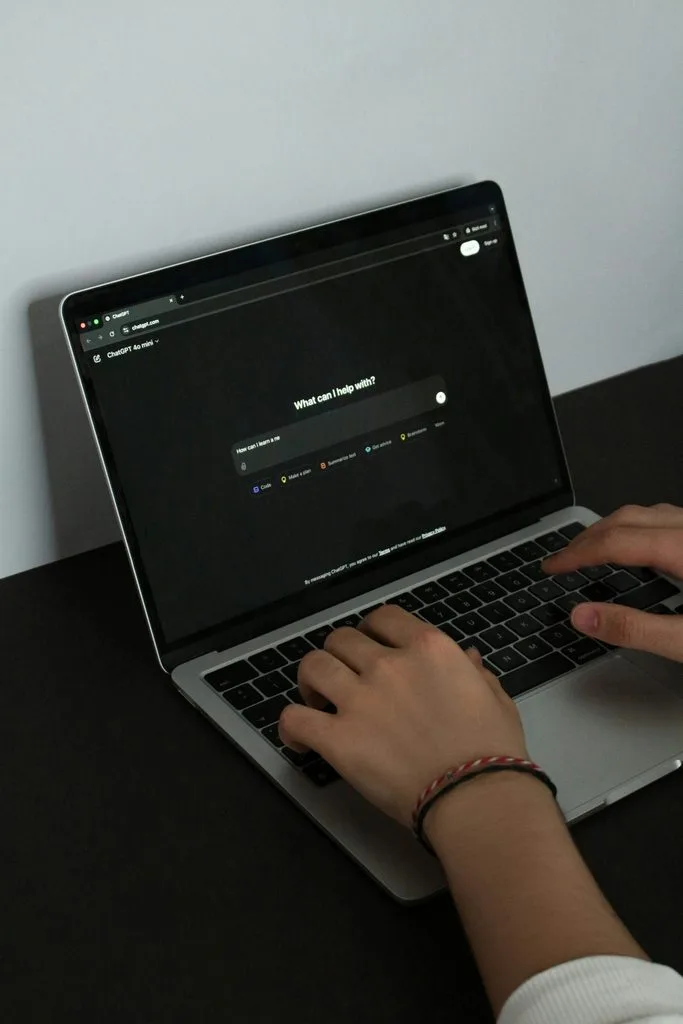
Google AdWords launched in 2000. Facebook opened its ad platform in 2007. TikTok started selling ads in 2019. Each of those channels took years to go from a passing curiosity to an absolute necessity.
ChatGPT Ads did it in about six months.
Ads began showing up for logged-in U.S. users on ChatGPT’s free tiers around February 2026. By late August, OpenAI announced the platform had crossed a $1 billion annualized revenue run rate in under 200 days. Tens of thousands of advertisers are already running campaigns across more than 40 countries.
That kind of growth curve naturally gets attention. It’s exactly why I’ve been fielding the same question from clients all year: Should we be advertising on ChatGPT?
My honest answer?
Momentum and maturity are two completely different things. Right now, ChatGPT Ads have a lot of the first, and not much of the second.
I’ll admit, I frequently find myself bypassing traditional search engines to ask ChatGPT directly, saving me from scrolling through endless sites to find what I need. Trust me, I wish I could say I was innocent here, but it’s changing how users behave. This shift directly impacts PPC, meaning businesses have to get creative with how they promote their services.
In this blog, I’ll walk through what ChatGPT Ads actually are, how they behave differently from your current paid channels, what the early performance data really tells us, and whether this platform deserves a slice of your budget today.
What Are ChatGPT Ads, and How Do They Work?
ChatGPT Ads are sponsored placements that appear directly underneath ChatGPT’s generated answer. They’re clearly labeled and visually separated from the response. It’s important to note that they are only shown to users on the ad-supported Free and Go plans; Plus, Pro, and Enterprise subscriptions stay entirely ad-free.
OpenAI has been explicitly clear on one critical point: ads do not influence the AI’s answer. The model’s response is generated independently, and the ad simply sits below it.
There are two main ways to get onto the platform:
The Partner Path: This runs through ad tech vendors like Criteo and Pacvue. These are sponsored product placements that surface when a user asks for a recommendation. They are generated from the same catalog file you likely already send to Google Shopping—meaning no separate creative build is required.
The Self-Serve Ads Manager: This will feel familiar if you’ve run paid search before. You set up campaigns, ad groups, budgets, and bidding. The core ad unit is a compact card (a 50-character headline, 100 characters of body copy, a small square image, and a destination URL). Merchants can also run product-feed campaigns that auto-generate ads from an existing catalog.
What About Keywords?
Here’s where things get wild: you don’t buy keywords.
Instead of bidding on specific search terms, ChatGPT Ads use contextual targeting based on conversation intent. The system reads the context of the user’s prompt and matches an ad to it. There is no exact match, no phrase match, and no negative keyword lists. Advertisers never actually see the conversations themselves; OpenAI just reports back aggregated impressions and clicks.
Pricing has shifted rapidly. Initially launching at roughly a $60 CPM, it quickly eroded into the $25 to $45 range as inventory expanded. Now, the platform is moving toward a cost-per-click (CPC) model, with recommended bids hovering in the $3 to $5 window.
Enter: Sponsored Agents
On September 16, OpenAI announced they are testing “Sponsored Agents” with a small group of U.S. advertisers (including Wayfair and Angi).
Here’s the catch: when a user clicks your ad, instead of landing on your website, ChatGPT opens a clearly labeled conversation with an AI agent your brand sponsors. The user can ask follow-up questions, describe their specific needs, and then follow a link to your site when they’re fully ready to convert.
How Does Advertising on ChatGPT Differ from Other Paid Media?
The clearest distinction I’ve heard is this: “Google captures demand, Meta creates demand, and ChatGPT meets people at the decision.”
The Meta Buyer: A homeowner is scrolling through Instagram on their couch at 8 p.m., watching DIY home renovation Reels. They aren’t actively looking to buy anything right now. Suddenly, a highly targeted sponsored video for a sleek, easy-to-install bathroom vanity pops up. It catches their eye, they stop scrolling, and they click through. Meta just created demand out of passive interest.
The Google buyer: A homeowner types “emergency plumber Lancaster PA” at 11 p.m. The intent is explicit, urgent, and unambiguous.
The ChatGPT buyer: A marketing director spends 11 minutes describing her team’s workflow, asking which CRM handles multi-touch attribution, and questioning what happens to her data if she migrates. She never types a traditional “keyword.” She is describing a problem.
Both scenarios are incredibly valuable, but they aren’t the same signal, and they require completely different playbooks.
Here’s how the three channels roughly stack up:
ChatGPT Ads
- Intent Type: Conversational, decision-stage
- Targeting: Conversation context (no keywords)
- Ad Slots: One per response
- Average CTR: 0.5% to 1.5%
- Average CPC: $3 to $5 bid range
- Average CPM: $25 to $45
Google Search
- Intent Type: Explicit search intent
- Targeting: Keyword bidding + audiences
- Ad Slots: Multiple SERP positions
- Average CTR: 3% to 8%
- Average CPC: $5.42 median
- Average CPM: $100 to $1,000 effective
Meta Feed
- Intent Type: Behavioral & interest-based
- Targeting: Demographics & lookalikes
- Ad Slots: Multiple feed placements
- Average CTR: 0.5% to 1.5%
- Average CPC: $0.70 median (traffic)
- Average CPM: $5 to $20
(Data compiled from Similarweb, WordStream, and LocaliQ benchmarks.)
What the table doesn’t show:
Loss of control: You give up the precision you’re used to having. If strict keyword-level bidding is what makes you comfortable, this platform will feel like a step backward. data when possible (like CRM offline conversions and profit margins), and giving the algorithm the creative assets and callouts it needs to test and win.
Only ONE ad slot: There is exactly one ad slot per response. No “position two,” no bottom-of-page clutter. It’s great visibility for the winner, but dramatically less inventory for everyone else.
Longer sessions: Typical ChatGPT sessions last 8 to 13 minutes, compared to seconds on a search results page. People arrive in deep research mode.
Which Types of Businesses or Campaigns Could Benefit Most?
Early signals suggest this channel heavily favors specific verticals. Based on projected conversion comparisons, here are the businesses we’d encourage to start testing right now:
- Education and training providers: Prospects are already deep in research mode.
- High-consideration B2B and SaaS: Perfect for targeting decision-makers using ChatGPT during their workday.
- Local and home services: The new Sponsored Agent format can smoothly carry someone from a general question directly to a booked lead.
- Ecommerce brands with clean product feeds: Because the catalog work is already done via Google Shopping.
- Consultative sales models: Anyone whose sales cycle requires answering a few nuanced follow-up questions before a user converts.
Want help figuring out whether ChatGPT Ads deserve a slice of your paid media budget? Our PPC experts at Tower are here to help you navigate the shift.
Could ChatGPT Ads Shift Budget Away from Google, Microsoft, or Meta?
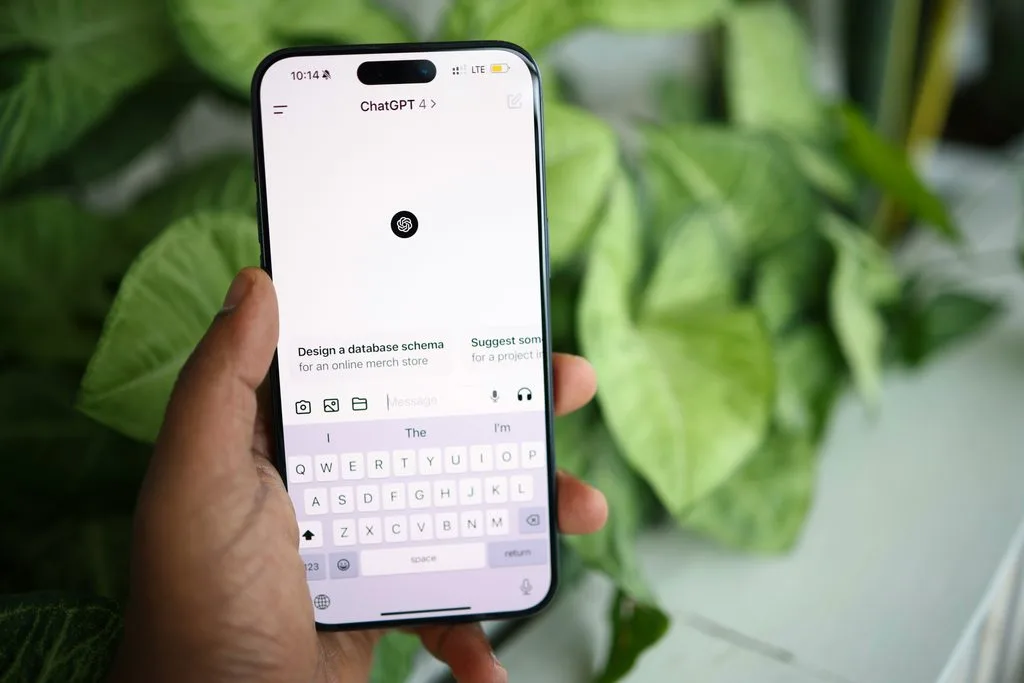
Could ChatGPT Ads completely replace your Google or Meta budget? Not yet. But as an additional layer? That’s a different conversation.
While OpenAI’s ad-supported tier reaches over a billion weekly active users, OpenAI’s own data shows that only about 2% of ChatGPT prompts involve purchasable products. A billion users does not mean a billion addressable ad moments.
Because official benchmarks don’t exist yet, we have to rely on early practitioner data. Here is the uncomfortable truth about current performance and limitations:
- Click-through rates are low: Averaging around 0.50% to 0.68%, ChatGPT’s click behavior looks a lot more like passive social scrolling than active search behavior.
- Relevance is a live problem: Contextual matching sounds great in theory, but recent data shows that over 14% of ChatGPT ad placements are off-topic or unrelated to the user’s actual prompt.
- Attribution will undercount you: Roughly 60% of ChatGPT ad conversions land outside the immediate click window. If you judge this channel on a last-click basis, you will wrongly conclude it doesn’t work. You must plan for a 7- to 14-day attribution window.
- You don’t get cited in the answer: In over 96% of placements, the advertiser paying for the ad slot is not cited anywhere in ChatGPT’s actual AI-generated answer. Paying for the slot below the text does not buy you a mention inside it. Organic AI visibility (AEO) is a completely separate battle.
For now, the realistic move is budget layering. We recommend allocating 5% to 10% of your existing paid media spend to test this space, allowing you to learn the platform without touching the campaigns that already drive your core revenue.

Before you spend anything, open ChatGPT and ask it three questions your best customers would ask before buying from you. Does a competitor’s sponsored card appear underneath the answer? Does your brand show up in the answer itself? That five-minute exercise will tell you more about your real opportunity here than any benchmark report.
Key Takeaways
Before we dive into our final recommendations, here is the TL;DR:
- Explosive Growth: ChatGPT Ads scaled to a $1 billion run rate in under 200 days, but it behaves exactly like a channel still in its first year.
- A New Mechanic: Targeting relies on contextual conversation intent, not keyword bidding, with only one ad slot per response.
- Different Intent: Google owns explicit search intent, Meta owns cheap behavioral reach, and ChatGPT occupies the mid-conversation “decision moment.”
- Limited Inventory: Only about 2% of prompts currently involve purchasable products.
- Organic vs. Paid: Paying for an ad placement rarely earns you a mention inside the actual AI answer. Securing organic AI visibility is a separate, vital project.
Tower Marketing’s Take
What Excites Us
The conversational moment is incredibly real. When a user spends 11 minutes describing a nuanced problem and your brand appears exactly at the point of decision, that is a qualitatively different impression than a standard SERP keyword match. Furthermore, the velocity of the platform’s updates, like the direct HubSpot and Shopify integrations, removes massive barriers for small and mid-sized businesses.
What Concerns Us
The irrelevance rate and measurement gaps are real hurdles. A 14% irrelevance rate isn’t just noise; it’s a structural issue that hits ROI and wastes spend. Furthermore, seeing that 96% of advertisers aren’t even mentioned in the AI’s response proves that organic AI optimization might actually be the more durable, long-term play here.
Who Should Test, and Who Should Wait
Test now if you’re in higher education or training, B2B SaaS selling to workday decision-makers, ecommerce with a healthy feed, or local and home services, and you have a testing budget you can genuinely afford to spend on learning rather than on returns.
Wait if you have a tight budget where every dollar must be attributable, sell something that rarely surfaces in conversational queries, need keyword-level control to feel confident, or operate in a regulated category where the current safety guardrails aren’t sufficient.
What to Do Today (Even If You Don’t Spend a Dollar)
- Audit your organic AI visibility first. Ask ChatGPT the questions your best customers ask. Does your brand show up in the answer itself? Does a competitor’s ad show up below it?
- Clean up your product feed. ChatGPT’s product ads run on the same catalog data as Google Shopping. One cleanup feeds two channels.
- Prepare conversational landing pages. These visitors are arriving mid-thought with specific context. A generic hero image and a contact form will severely underperform.
- Fix your attribution. Tag everything and configure a 7- to 14-day conversion window before you launch a test.
Need an AI-readypaid media strategy?
 Grace H
AI Overviews, SEO, & Your Content: What’s Happening With Organic Search Right Now?
- AI (AEO & GEO)
- Content Marketing
- SEO
 Alex D
How AI is Changing PPC Strategy in 2026
- AI (AEO & GEO)
- Marketing Strategy
- PPC: Paid Advertising
 Trevor